
Breaking Through the Language Barrier in Divorce
Looking for a Spanish speaking divorce attorney? Here’s what you need to know:
- Language Skills: Find an attorney who is truly fluent in Spanish, not just conversational
- Legal Expertise: Ensure they specialize in family law and divorce specifically
- Cultural Competence: Look for understanding of Hispanic cultural nuances that may impact your case
- Local Knowledge: Choose someone familiar with your state’s specific divorce laws
- Communication Style: Select an attorney who explains complex legal concepts clearly in Spanish
Going through a divorce is challenging enough without adding a language barrier to the mix. A Spanish speaking divorce attorney provides more than just translation services—they offer cultural understanding, clear communication, and specialized legal expertise that can significantly impact the outcome of your case.
When facing the end of a marriage, being able to express your concerns, understand your rights, and steer complex legal processes in your native language is invaluable. Research shows that having direct attorney-client communication in Spanish eliminates interpreter barriers and leads to better legal outcomes for Spanish-speaking clients.
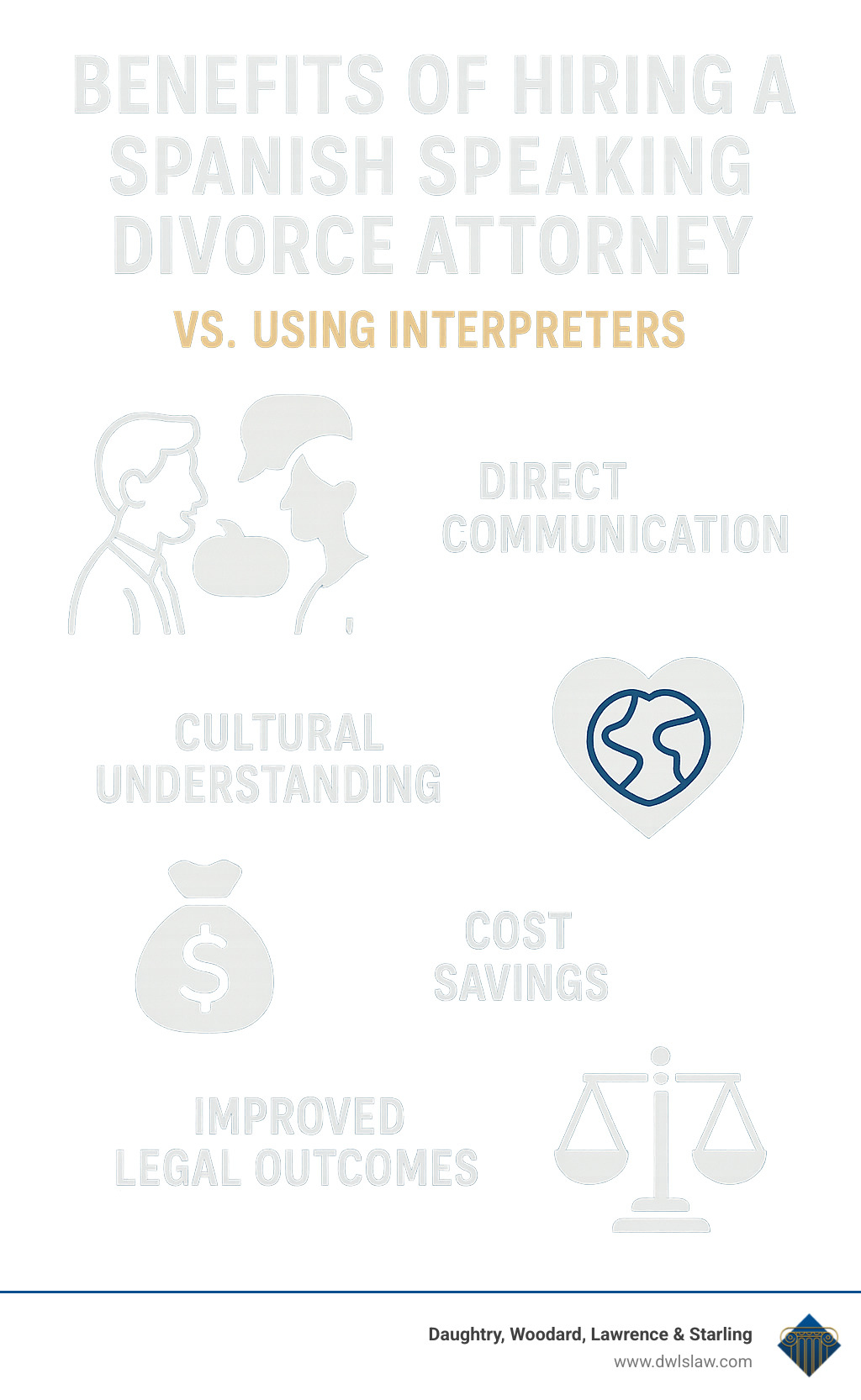
The ability to communicate directly with your attorney without an interpreter means your case moves more efficiently, with fewer misunderstandings and unnecessary complications. This direct communication can save you time, money, and emotional stress during an already difficult period.
I’m Kelly K. Daughtry, and as part of our firm’s commitment to serving North Carolina’s diverse communities, I’ve worked alongside our Spanish speaking divorce attorneys to ensure clients receive culturally competent legal representation during divorce proceedings. Our team at Daughtry, Woodard, Lawrence & Starling understands that effective legal advocacy begins with clear communication in your preferred language.
Spanish speaking divorce attorney terms to learn:
– Board certified divorce lawyer
– Divorce Lawyer Clinton NC
– fayetteville nc attorneys family law
Why a Spanish Speaking Divorce Attorney Can Make or Break Your Case
Imagine trying to explain your deepest concerns about your children’s future or your financial security – but doing it through someone else’s words. For Spanish speakers navigating divorce, having a Spanish speaking divorce attorney isn’t just helpful—it can completely transform your case outcome.
The real work of divorce happens far beyond the courtroom walls. Those critical late-night phone calls, detailed document reviews, and emotional strategy sessions all happen without court interpreters present. While courts provide translation services for formal hearings, they typically don’t extend to these make-or-break moments that shape your case.
Research has consistently shown that clients working directly with a Spanish speaking divorce attorney experience fewer misunderstandings and achieve more favorable outcomes. When discussing sensitive topics like who will care for your children or how to divide the home you’ve built together, direct communication allows for those subtle but crucial nuances to be understood.
Consider how these approaches compare in real life:
| Aspect | Spanish Speaking Attorney | Non-Spanish Attorney + Interpreter |
|---|---|---|
| Communication | Direct, immediate, nuanced | Delayed, filtered, potential for error |
| Cost | One professional fee | Two professional fees (often higher total) |
| Legal Strategy | Seamless development | Fragmented, with potential misunderstandings |
| Document Review | Direct explanation in Spanish | Translated explanations, potential for misinterpretation |
| Client Comfort | Higher, with cultural understanding | Lower, with communication barriers |
| Case Efficiency | Streamlined process | Delays due to interpreter scheduling |
Benefits Over Using an Interpreter
While court interpreters are valuable professionals, they simply can’t replace the relationship you build with a Spanish speaking divorce attorney who understands both your language and your legal needs.
Direct communication means your attorney catches the emotion in your voice when discussing your children. They understand cultural contexts that might affect how you view property division or family support. And most importantly, they can explain complex legal concepts using references that make sense to you.
Beyond the emotional comfort, there are practical advantages too. You’ll likely save money by avoiding interpreter fees. Your case will move more efficiently without scheduling delays. And perhaps most importantly, you’ll have true confidentiality when developing sensitive case strategies around issues like domestic violence or contested custody.
When you’re sharing your most personal struggles with someone, being able to express yourself in your native language provides immeasurable comfort during what might be the most difficult chapter of your life.
Key Family Law Areas They Cover
A bilingual attorney doesn’t just translate words – they steer you through every aspect of family law. Whether you’re concerned about custody arrangements (custodia de los hijos), financial support (manutención), or dividing property (división de bienes), a Spanish speaking divorce attorney provides comprehensive guidance.
Our bilingual attorneys at Daughtry, Woodard, Lawrence & Starling handle everything from straightforward divorces to complex cases involving domestic violence protection, mediation between high-conflict parties, and post-divorce modifications when life circumstances change.
We understand that family law isn’t just about legal procedures – it’s about reshaping your future. That’s why our attorneys take time to explain options in language you fully understand, ensuring you make informed decisions about matters that will affect you and your children for years to come. More info about our services
When emotions run high and the stakes are even higher, having an attorney who truly understands both your words and your cultural perspective isn’t just a convenience—protecting your rights and securing your future.
Finding the Best Spanish Speaking Divorce Attorney Near You
Finding a qualified Spanish speaking divorce attorney in your area takes some effort, but the peace of mind you’ll gain is priceless. When you can communicate freely in your native language about something as personal as divorce, you’re setting yourself up for a better experience and potentially better outcomes.
I’ve found that many clients feel overwhelmed when starting their search for legal help, especially when language is a factor. Your best starting point is often your state bar association, which typically maintains searchable directories where you can filter attorneys by both practice area and language skills. Local Hispanic Chambers of Commerce are another valuable resource, as they maintain connections with Spanish-speaking professionals across many fields.
Online legal directories like Avvo, FindLaw, and Justia make it easy to search specifically for bilingual attorneys in your area. Don’t overlook community resources either – Hispanic community centers and advocacy groups often maintain relationships with trusted legal professionals who serve their communities.
Sometimes the most valuable leads come from personal connections. If you have friends or family members who’ve worked with a Spanish speaking divorce attorney before, their experience can tell you much more than any online profile.
When you’re making initial contact with potential attorneys, be direct about your language needs. There’s a world of difference between an attorney who can handle basic conversation in Spanish and one who can fluently discuss complex legal concepts and emotional nuances in your native language.
Credentials & Experience to Look For
Not all attorneys are created equal, and this is especially true when looking for a Spanish speaking divorce attorney. Board certification in family law is a gold standard credential that shows an attorney has gone above and beyond in their specialization. In North Carolina, board-certified specialists have demonstrated extensive experience, passed rigorous examinations, and maintain ongoing education in family law.
Experience specifically in divorce cases matters tremendously. An attorney who primarily handles other types of cases might not have the depth of knowledge needed for your situation. When we meet with new clients at Daughtry, Woodard, Lawrence & Starling, we’re transparent about our board-certified divorce lawyers and their specific experience with cases like yours.
Beyond legal expertise, the quality of language skills varies widely. Some attorneys grew up speaking Spanish, while others learned it academically or conversationally. Don’t be shy about asking where and how they learned Spanish – this can give you insight into their true fluency level.
Cultural competence goes hand-in-hand with language skills. A truly effective Spanish speaking divorce attorney understands not just the words you’re saying, but the cultural context behind them. This can be particularly important when discussing family dynamics, religious considerations, or financial arrangements that may have cultural dimensions.
While most divorce cases settle before reaching trial, you want an attorney who’s ready and able to advocate for you in court if necessary. Ask potential attorneys about their trial experience, particularly in cases similar to yours.
Client reviews, especially from other Spanish speakers, can provide valuable perspective on how an attorney communicates in real-world situations. Membership in Hispanic bar associations or family law organizations also suggests a commitment to serving your community and staying current in their field.
Regions With High Availability of Bilingual Counsel
The availability of Spanish speaking divorce attorneys varies significantly depending on where you live. States with the largest Hispanic populations – California, Texas, Florida, and New York – naturally have the most bilingual legal professionals. However, the landscape is changing as Hispanic communities grow throughout the country.
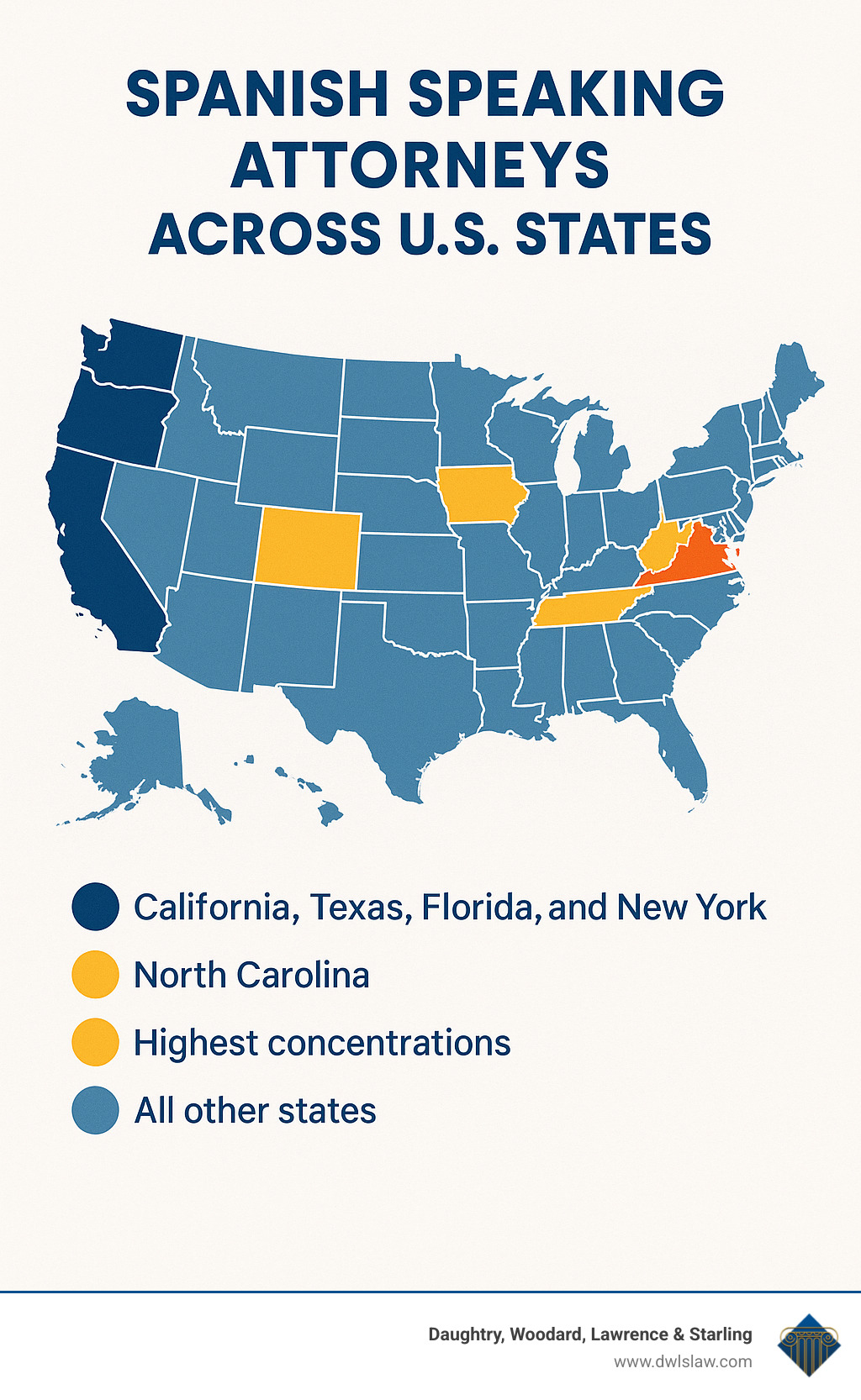
Here in North Carolina, we’ve seen tremendous growth in our Hispanic population over the past two decades, which has led to increased availability of Spanish-speaking legal services. Urban areas like Raleigh, Charlotte, and the Research Triangle typically offer more options than rural communities, though this gap continues to narrow as more bilingual professionals establish practices in smaller communities.
In Smithfield, Clinton, and throughout Sampson County, NC, our firm at Daughtry, Woodard, Lawrence & Starling has responded to our community’s evolving needs by ensuring we can provide bilingual legal services. We’ve seen how having a Spanish speaking divorce attorney can transform the legal experience for our clients, removing barriers and creating a more comfortable, productive attorney-client relationship.
According to recent research on divorce costs, clear communication with your attorney can also help manage expenses by reducing misunderstandings and unnecessary complications. This is yet another reason why finding the right bilingual attorney matters – it’s not just about comfort, but potentially about your bottom line as well.
Language, Culture, and Case Outcomes
The impact of language on legal outcomes isn’t just theoretical—it’s very real, especially in divorce cases where emotions run high and details matter. When every word counts, having a Spanish speaking divorce attorney can dramatically change your experience and results.
The Power of Direct Communication
Imagine trying to explain your deepest concerns about your children’s future through a third party. Now imagine doing it directly with someone who truly understands both your words and cultural context. The difference is remarkable.
When your attorney speaks your language, they capture not just what you say, but how you say it. This direct connection means they can craft arguments that truly represent your position and concerns. Your attorney becomes not just your legal representative, but your voice in the legal system.
Cultural understanding goes beyond mere translation. Family values, approaches to child-rearing, and even financial expectations often have cultural dimensions that can significantly impact divorce proceedings. A Spanish speaking divorce attorney recognizes these nuances and can explain them to the court when necessary, ensuring your perspective is fully understood.
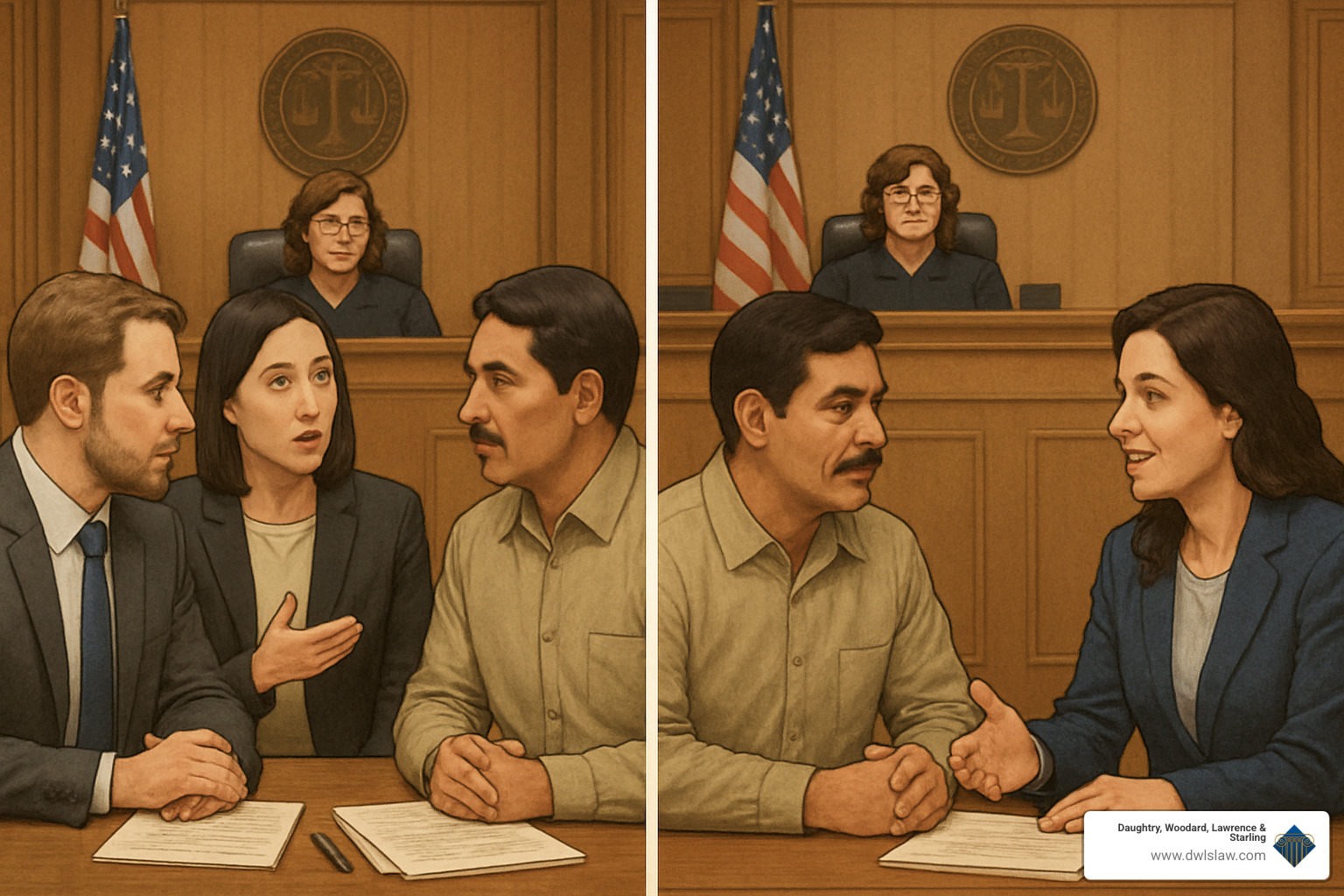
Understanding court procedures becomes much easier when explained in your native language. Missing deadlines or misinterpreting requirements can derail your case, but direct communication helps prevent these costly mistakes. Your attorney can ensure you’re fully prepared for each step in the process, from filing initial paperwork to finalizing your divorce decree.
According to scientific research on language access, language barriers in legal settings can significantly impact case outcomes, with clients who receive services in their native language reporting better understanding and more active participation in their cases.
Risks of Relying Solely on Court Interpreters
Court interpreters are trained professionals, but they simply can’t provide the comprehensive support that a Spanish speaking divorce attorney offers.
The most significant limitation? Most court-provided interpreters only assist during official hearings. But as experienced divorce attorneys know, “most of the work to obtain a favorable outcome happens outside the courtroom”—during client meetings, document preparation, and settlement negotiations—precisely where court interpreters aren’t available.
Scheduling challenges create another hurdle. Court interpreters must be booked in advance and may not be available for emergency hearings or last-minute consultations. This can delay critical proceedings or force you to proceed without adequate language support.
Even the most skilled interpreters occasionally struggle with specialized legal terminology or regional Spanish variations. These translation errors can lead to misunderstandings about important aspects of your case, potentially affecting custody arrangements, financial settlements, or property division.
Interpreters translate language but cannot provide legal advice. They can’t ensure you understand the implications of legal decisions or help you weigh options—that’s your attorney’s job. When your attorney speaks your language, these crucial conversations happen directly, without a middleman.
How Bilingual Attorneys Empower Clients
A Spanish speaking divorce attorney does more than communicate—they empower you to actively participate in your case and shape your future.
Know-your-rights education becomes much more effective when delivered in your native language. Understanding what you’re legally entitled to regarding property division, spousal support, and parental rights forms the foundation of any successful case. With clear communication, you’ll know exactly what to expect and what’s possible.
Making informed decisions is crucial during divorce. When you fully comprehend the potential consequences of each choice—from settlement offers to custody arrangements—you can make decisions that truly align with your long-term goals. Direct communication ensures nothing gets lost in translation when making these life-changing choices.
Your confidence in court matters. When you understand the proceedings and can communicate effectively with your attorney, you’ll feel more at ease during court appearances. This confidence often translates to more compelling testimony and a stronger presence in the courtroom.
At Daughtry, Woodard, Lawrence & Starling, we’ve witnessed how our bilingual services help Spanish-speaking clients steer the divorce process with greater confidence. Our clients tell us that being able to express complex emotions in their native language provides invaluable comfort during this challenging time.
We believe everyone deserves equal access to justice, regardless of the language they speak. That’s why we’re committed to providing truly bilingual legal representation that addresses both the legal and emotional aspects of divorce.
Costs, Timelines, and What to Expect in North Carolina
Navigating divorce in North Carolina involves understanding both financial realities and legal timelines. Having clear expectations about these practical matters can help ease your journey through this challenging transition.
Financial Considerations
The national average cost for divorce representation hovers around $7,000, though this figure varies widely depending on your specific circumstances. In North Carolina, attorney hourly rates typically range from $100 to $400, with factors like experience, location, and case complexity influencing where your attorney falls on this spectrum.
Contrary to what some might assume, hiring a Spanish speaking divorce attorney doesn’t necessarily mean paying premium rates. In fact, the direct communication often leads to more efficient case management, potentially reducing the total hours billed. You’ll also avoid the additional expense of hiring private interpreters for out-of-court meetings and document reviews—a hidden cost many don’t consider until they’re deep in the process.
“When clients can express their concerns directly to me in Spanish, we resolve issues more quickly and with better understanding,” explains one of our bilingual attorneys. “This efficiency often translates to cost savings for the client.”
North Carolina Divorce Timeline
North Carolina has specific requirements that shape your divorce timeline:
The one-year separation requirement stands as the most significant timing factor in our state. Before filing for divorce, you must live separately from your spouse for at least one continuous year—a period that cannot be shortened regardless of circumstances.
You’ll also need to satisfy the residency requirement, with either you or your spouse having lived in North Carolina for at least six months before filing your divorce petition.
Once you’ve filed the necessary paperwork, an uncontested divorce typically takes between 30-90 days to finalize. Contested matters involving property division, support calculations, or custody arrangements can extend this timeline significantly, sometimes lasting a year or more.
It’s worth noting that in North Carolina, the court that initially handles your divorce maintains what we sometimes call “court memory”—continuing jurisdiction over related matters even if you later relocate. This affects everything from enforcement to future modifications of your divorce decree.
Step-by-Step Divorce Process With a Spanish Speaking Divorce Attorney
Working with a Spanish speaking divorce attorney in North Carolina typically unfolds through these stages:
The process begins with your initial consultation, where you’ll discuss your situation and goals with your attorney in Spanish. They’ll explain North Carolina’s divorce laws and outline how these laws apply to your specific circumstances.
During the mandatory one-year separation period, your attorney can help negotiate and draft a separation agreement. This document serves as a roadmap for handling temporary arrangements regarding property, financial support, and children while you wait for the divorce to be finalized.
Financial disclosure represents a critical phase where you’ll compile and review all financial information—assets, debts, income, and expenses. Your Spanish speaking divorce attorney will explain these often complex documents in your native language, ensuring you truly understand your financial picture.
After completing the separation period, your attorney will prepare and file the divorce complaint. They’ll walk you through each document in Spanish before you sign, giving you confidence in what you’re agreeing to.
If aspects of your divorce remain unresolved, your attorney will represent you in negotiations or mediation sessions, communicating directly in Spanish throughout these crucial discussions where details matter tremendously.
When settlement isn’t possible, your attorney will represent you in court hearings. The ability to consult with you in Spanish during proceedings gives you a significant advantage in responding to developments in real-time.
Once your divorce is granted, your attorney will explain the final decree and any ongoing obligations in Spanish, ensuring you fully understand the outcome and your responsibilities moving forward.
Even after your divorce is final, your attorney remains available to assist with post-divorce matters like modifications to support, custody, or other arrangements as your life circumstances change.
At Daughtry, Woodard, Lawrence & Starling, we guide our Spanish-speaking clients through each step with clarity and compassion. More info about the divorce process
Your First Consultation Checklist
Making the most of your initial meeting with a Spanish speaking divorce attorney requires some preparation. Coming organized helps your attorney understand your situation more quickly and provide better guidance from day one.
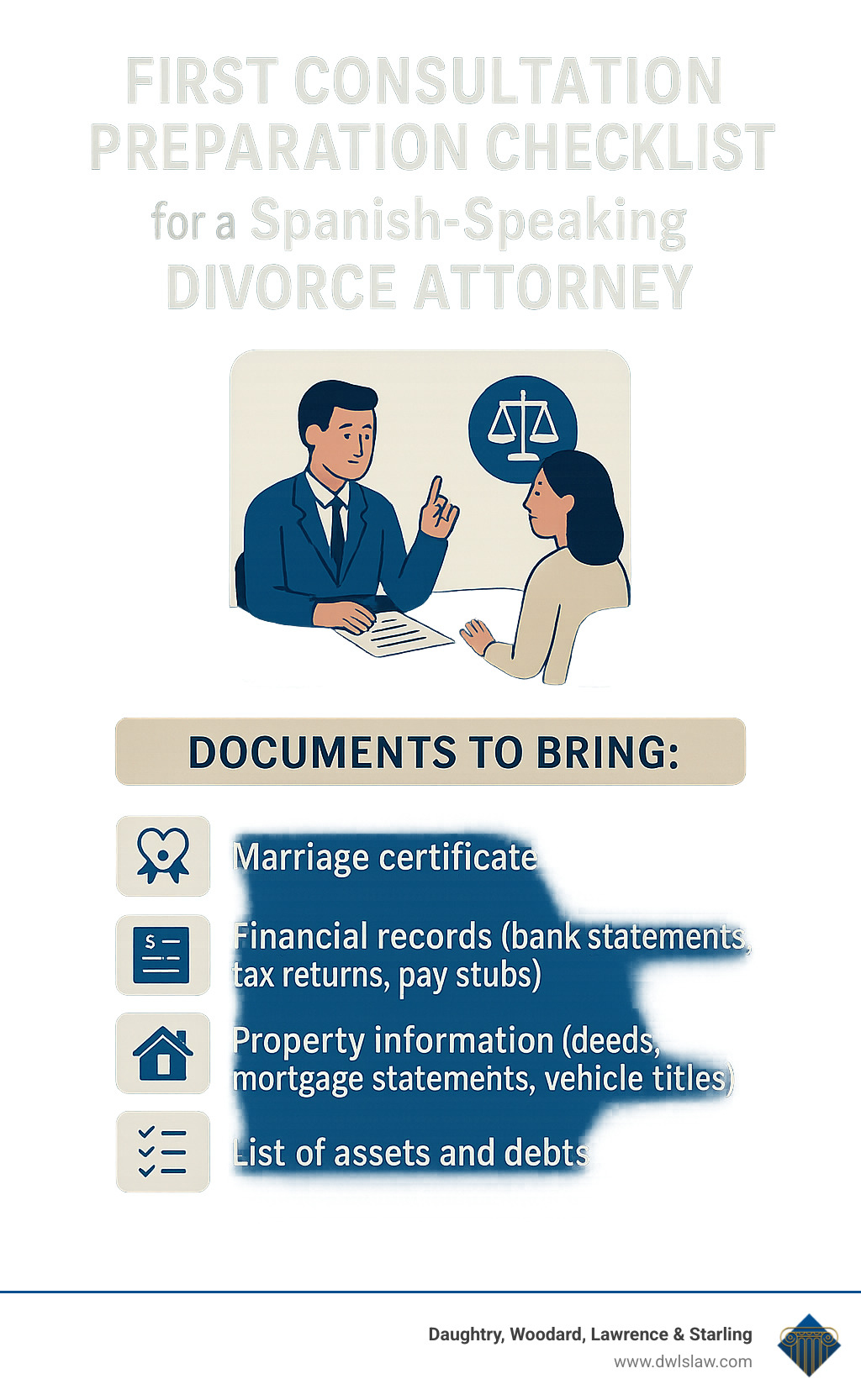
Documents to Bring:
Gather important papers like your marriage certificate, recent financial records (bank statements, tax returns, pay stubs), property information (deeds, mortgage statements, vehicle titles), a comprehensive list of assets and debts, information about your children if applicable, any existing agreements with your spouse, and any court documents already filed.
Questions Worth Asking:
Prepare to ask about your attorney’s experience with cases similar to yours, their fluency in Spanish legal terminology, their approach to divorce cases, realistic expectations for your situation, how you’ll communicate throughout your case, and likely outcomes regarding custody, support, and property.
Beyond documents and questions, personal preparation makes a difference. Write down your goals and concerns beforehand, so you don’t forget important points during the conversation. Be ready to discuss sensitive issues honestly—attorney-client confidentiality protects everything you share. Consider your priorities regarding children, finances, and property, as these will guide your attorney’s strategy. Bringing a notebook helps you record important information during what can be an emotionally charged and information-dense meeting.
“The first consultation sets the foundation for our entire working relationship,” shares one of our family law attorneys. “When clients come prepared with both documents and thoughtful questions, we can accomplish so much more in that initial meeting.”
Everything you discuss with your attorney is protected by confidentiality. Being completely honest, even about difficult topics, is essential for effective representation and achieving the best possible outcome for your case.
Conclusion
Divorce is never easy, but when you’re navigating it in a language that isn’t your first, the challenges multiply. A Spanish speaking divorce attorney brings so much more to the table than simple translation—they provide a bridge between cultures, legal systems, and emotional realities that can truly transform your experience.
Throughout this article, we’ve explored how direct communication in your native language creates a foundation for better legal outcomes. When you can express your concerns, understand your rights, and actively participate in your case without language barriers, you gain confidence during an otherwise uncertain time.
The benefits of working with a bilingual attorney touch every aspect of your divorce journey. You’ll experience clearer understanding of complex legal concepts, more efficient case progression without interpreter delays, and the comfort of discussing sensitive family matters in the language that feels most natural to you. This direct connection with your attorney often leads to more favorable settlements and less stress throughout the process.
Cultural understanding matters too. A Spanish speaking divorce attorney recognizes the unique family dynamics, values, and priorities that might influence your case. Whether it’s approaches to child-rearing, family business considerations, or cultural views on marriage and divorce, these nuances can significantly impact how your case should be presented.
At Daughtry, Woodard, Lawrence & Starling, we’ve seen how our bilingual services have helped Spanish-speaking clients in Smithfield, Clinton, and across Sampson County steer divorce with dignity and success. Our team understands both the legal landscape of North Carolina family law and the unique needs of our Hispanic community members.
We believe deeply that justice should never be limited by language. Everyone deserves equal access to skilled legal representation, especially during life-changing events like divorce. Our Spanish speaking divorce attorneys are committed to providing compassionate guidance that honors your voice and protects your future.
If you’re facing divorce or other family challenges and would feel more comfortable working with an attorney who speaks your language, we’re here to help. We’ll listen carefully to your story, explain your options clearly, and work together to create a path forward that respects your goals and priorities—all in the language that feels like home.
More info about our divorce team
Frequently Asked Questions
What types of family law cases can a bilingual attorney handle?
When you’re working with a Spanish speaking divorce attorney, you’re not just getting help with divorce—you’re gaining an ally for all your family law needs. These professionals can guide you through the entire spectrum of family-related legal matters.
Beyond handling your divorce or legal separation, bilingual attorneys can help establish fair child custody and visitation arrangements that honor your relationship with your children. They’ll work to secure appropriate child support and spousal support, ensuring your family’s financial stability during this transition.
Property division can be especially complex, with cultural factors sometimes influencing what’s considered fair. Your Spanish speaking divorce attorney understands these nuances while dividing assets and debts according to North Carolina law.
If safety is a concern, these attorneys can help obtain domestic violence protective orders. They also assist with forward-looking legal planning through prenuptial and postnuptial agreements, as well as adoption and guardianship matters when you’re growing your family.
At Daughtry, Woodard, Lawrence & Starling, our bilingual team doesn’t disappear after your divorce is finalized. We remain available for post-divorce modifications and enforcement of court orders as your life circumstances change over time.
Does hiring a Spanish speaking divorce attorney cost more?
One of the most common misconceptions I hear from clients is that bilingual legal services must come with a premium price tag. The truth might surprise you—hiring a Spanish speaking divorce attorney typically doesn’t cost more than working with an English-only attorney. In fact, it often results in cost savings.
Think about it—without a bilingual attorney, you might need to hire a private interpreter for every meeting, document review, and preparation session. Those interpreter fees add up quickly. Direct attorney-client communication in Spanish eliminates this expense entirely.
There’s also the efficiency factor. When you and your attorney understand each other perfectly, meetings are more productive and take less time. This can actually reduce your billable hours compared to sessions that require translation pauses.
Clear communication from day one means fewer expensive misunderstandings. We’ve seen cases where language barriers led to errors that required costly corrections or extended the legal process unnecessarily. A Spanish speaking divorce attorney helps you avoid these pitfalls.
What truly determines your legal costs are factors like your attorney’s experience level, where you live, and how complex your case is—not their language abilities. The comfort of discussing sensitive matters in your native language? That’s priceless.
How soon should I hire one after separation?
If you’re considering separation in North Carolina, don’t wait to consult with a Spanish speaking divorce attorney. While our state requires a one-year separation before you can file for absolute divorce, those twelve months are critically important to your case’s outcome.
Meeting with an attorney early allows them to help draft a comprehensive separation agreement that protects your interests during the waiting period. This document can address temporary arrangements for everything from housing to finances, creating stability during an uncertain time.
For parents, establishing clear temporary custody arrangements early helps provide children with consistency and security. These initial arrangements often influence permanent orders later, so getting them right matters.
Financial decisions made during separation can have long-lasting consequences. Early legal guidance helps prevent choices you might later regret, especially regarding shared assets or debts.
Your attorney can also advise you on preserving important evidence and documentation while it’s still readily available. The separation year provides valuable preparation time—use it wisely with proper legal guidance.
In North Carolina, the separation clock restarts completely if you resume marital relations, even briefly. Your Spanish speaking divorce attorney can explain these and other important legal nuances that might affect your timeline and case.
At Daughtry, Woodard, Lawrence & Starling, we’ve seen how early intervention helps our Spanish-speaking clients steer this challenging year with confidence and strategic purpose, setting the foundation for a smoother divorce process when the time comes.


