

Why Finding the Right North Carolina Probate Attorney Matters More Than You Think
Finding a qualified North Carolina probate attorney can feel overwhelming when you’re already dealing with the loss of a loved one. Here’s what you need to know:
Quick Answer for North Carolina Probate Attorney Search:
- What they do: Handle court filings, creditor notifications, asset distribution, and protect executors from personal liability
- When you need one: If you’re named executor, facing family disputes, or dealing with complex estates
- Cost range: Varies by complexity – simple estates may take 6 months, complex ones over a year
- Key qualifications: Board certification in estate planning/probate law, malpractice insurance, local court experience
- Getting started: Bring death certificate, asset lists, and prior wills to your first consultation
The reality is stark. Nearly 60% of Americans don’t have an estate plan in place, making probate a common legal need across North Carolina. Even a modest estate can demand 10-20 hours per week of an executor’s attention during the probate process.
Privacy is another concern. Probate becomes public record in North Carolina, exposing your family’s financial details to anyone who wants to look them up.
The good news? The right attorney can handle court filings, shift liability away from you through their malpractice insurance, and potentially save both time and money through their expertise with North Carolina’s specific probate laws.
As Kelly K. Daughtry with over five decades of experience at Daughtry, Woodard, Lawrence & Starling, I’ve guided countless families through North Carolina’s probate process and understand the challenges executors face. My goal is to help you find the right North Carolina probate attorney who will protect your interests and simplify this complex legal journey.
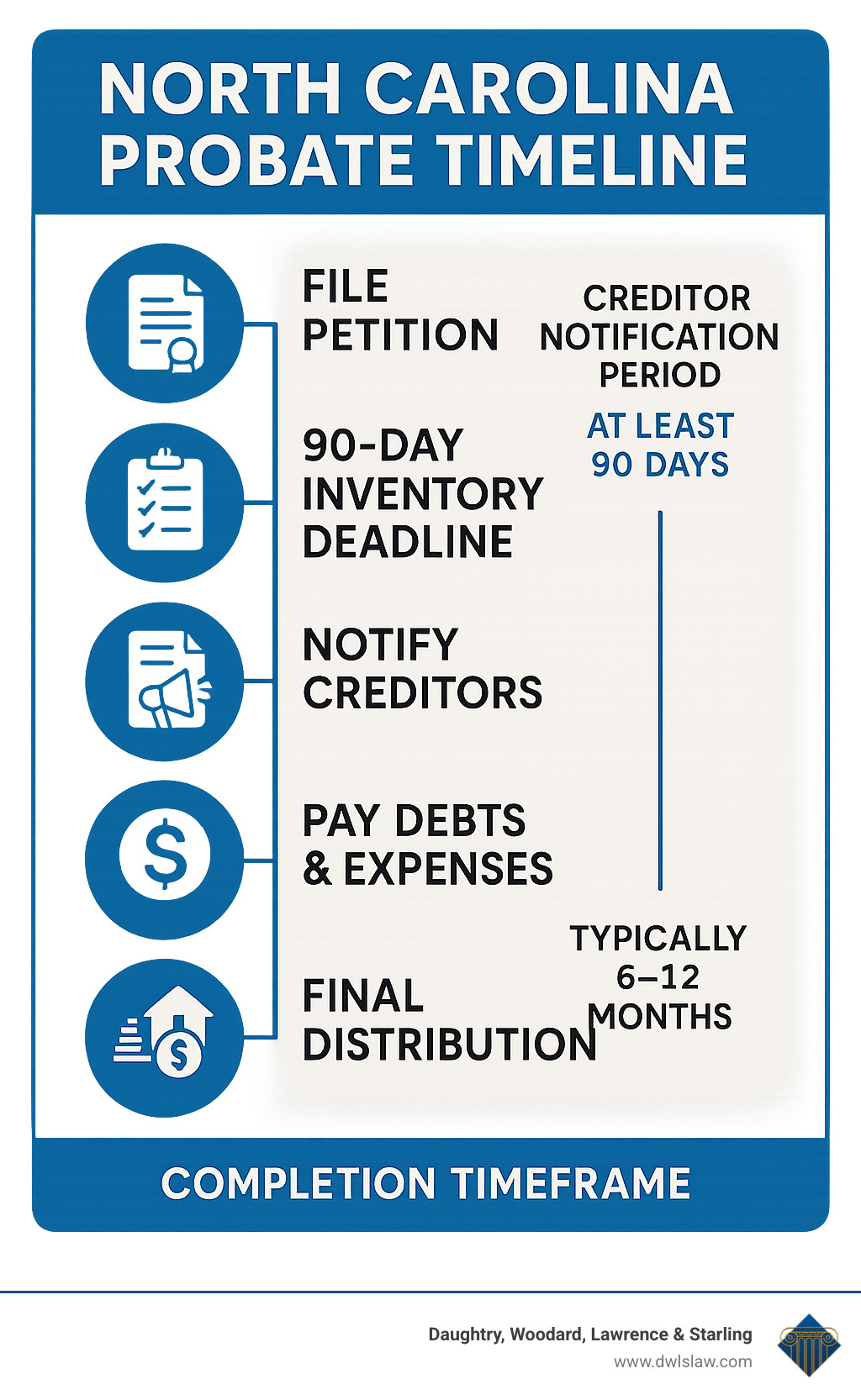
What Exactly Is Probate in North Carolina?
Think of probate as the court-supervised legal process that makes sure your loved one’s final wishes are properly carried out. In North Carolina, this process happens under the watchful eye of the Clerk of Superior Court – which is actually pretty unique since most other states use separate probate courts.
When someone passes away, probate steps in to handle the important but complex job of transferring their assets to the right people. The court validates the will (assuming there is one), officially appoints an executor or administrator, takes inventory of everything the person owned, notifies creditors about the death, pays off valid debts, and finally distributes what’s left according to the will or North Carolina’s intestacy laws if there’s no will.
Here’s the reality: Most estates in North Carolina do go through probate, and the process typically takes anywhere from several months to over a year depending on how complicated things get. Even if your loved one had a trust, there are often still some assets that need probate administration.
The small estate thresholds in North Carolina can sometimes simplify things, but many families find that working with a North Carolina probate attorney helps steer the creditor claims process and court requirements much more smoothly.
More info about Estate Planning FAQ
When Is Probate Required?
The simple answer? Probate is required when someone dies owning assets in their name alone. This includes their house, bank accounts, investment accounts, personal belongings, and any business interests that were held solely in their name.
But here’s where it gets interesting – not every asset your loved one owned will go through probate. Probate vs non-probate assets is a crucial distinction that can save families time, money, and stress.
Assets with survivorship rules or designated beneficiaries typically pass directly to the surviving owner or beneficiary without any court involvement. Payable-on-death accounts, for example, transfer automatically to the named person.
The key question to ask is: “Does this asset have a built-in mechanism for automatic transfer when someone dies?” If yes, it probably skips probate entirely.
Assets That Skip the Line
Several types of assets get to bypass the probate process entirely, which can be a huge relief for grieving families:
Joint tenancy properties and bank accounts automatically transfer to the surviving joint owner – no court needed. Living trusts are another powerful tool; assets properly titled in a revocable living trust avoid probate completely.
Beneficiary designations work like magic for certain accounts. Life insurance policies go directly to named beneficiaries, as do retirement accounts like 401(k)s and IRAs. Investment accounts with transfer-on-death designations and bank accounts with payable-on-death features also transfer automatically.
Understanding these distinctions early on helps families determine whether probate is necessary and, if so, how extensive the process might be. Sometimes what initially looks like a complex probate situation turns out to be much simpler once you identify which assets actually need court supervision.
Why You Might Need a North Carolina Probate Attorney
Let’s be honest—becoming an executor sounds simple until you’re actually doing it. What seems like “just distributing some assets” quickly becomes a mountain of legal paperwork, court deadlines, and decisions that could leave you personally liable if you get them wrong.
In North Carolina, executors carry a fiduciary duty—which is lawyer-speak for “the highest legal responsibility possible.” You’re legally required to act in good faith and put the estate’s and beneficiaries’ interests above everything else, including your own convenience.
The time commitment alone can be shocking. Even a straightforward estate often demands 10-20 hours per week of your attention, especially in those first few months. Opening an estate properly takes at least six weeks if everything goes perfectly. Make a mistake on the paperwork? You might be starting over from scratch.
Scientific research on probate delays shows that executor errors are one of the leading causes of extended probate timelines, sometimes adding months or even years to the process.
Here’s where hiring a North Carolina probate attorney becomes a smart financial decision rather than just a luxury. When you work with a properly insured attorney, much of the liability for mistakes shifts to their malpractice insurance. That means if something goes wrong due to legal errors, you’re not personally on the hook financially.
How a North Carolina Probate Attorney Saves Time & Money
Think of a probate attorney as your guide through a legal maze you’ve never steerd before. They handle the complex requirements that can overwhelm even detail-oriented people.
Court filings become their responsibility, ensuring every document reaches the right place at the right time with the right information. Inventory preparation requires properly valuing and cataloging estate assets—something that’s trickier than it sounds when you’re dealing with everything from antique furniture to business interests.
Tax returns for estates involve forms most people have never seen, with rules that change regularly. Creditor negotiations can turn contentious quickly, especially when questionable claims arise. Asset distribution must follow precise legal requirements to avoid challenges later.
An experienced attorney often spots tax-saving opportunities you’d miss and prevents costly mistakes that could expose you to personal liability. The money you spend on legal fees often pays for itself through avoided errors and efficient handling.
North Carolina Probate Attorney vs. Estate Planning Attorney
Many people wonder about the difference between these two roles. While some attorneys handle both (like our team at Daughtry, Woodard, Lawrence & Starling), the focus areas are quite different.
Probate attorneys step in after someone dies to settle their estate. They’re your post-death specialists, handling court proceedings, asset distribution, and creditor claims. They work with whatever planning documents exist—or help steer intestacy laws when there aren’t any.
Estate planning attorneys work before death to structure assets and create planning documents. They focus on minimizing taxes, avoiding probate where possible, and planning for incapacity. They’re your prevention specialists, creating wills, trusts, and other documents to make things easier for your family later.
The beauty of working with a firm that handles both areas is continuity. When the same legal team that helped create an estate plan also handles the probate process, they already understand the family’s goals and the reasoning behind planning decisions. This familiarity can significantly streamline the entire process.
The Probate Process Step-by-Step
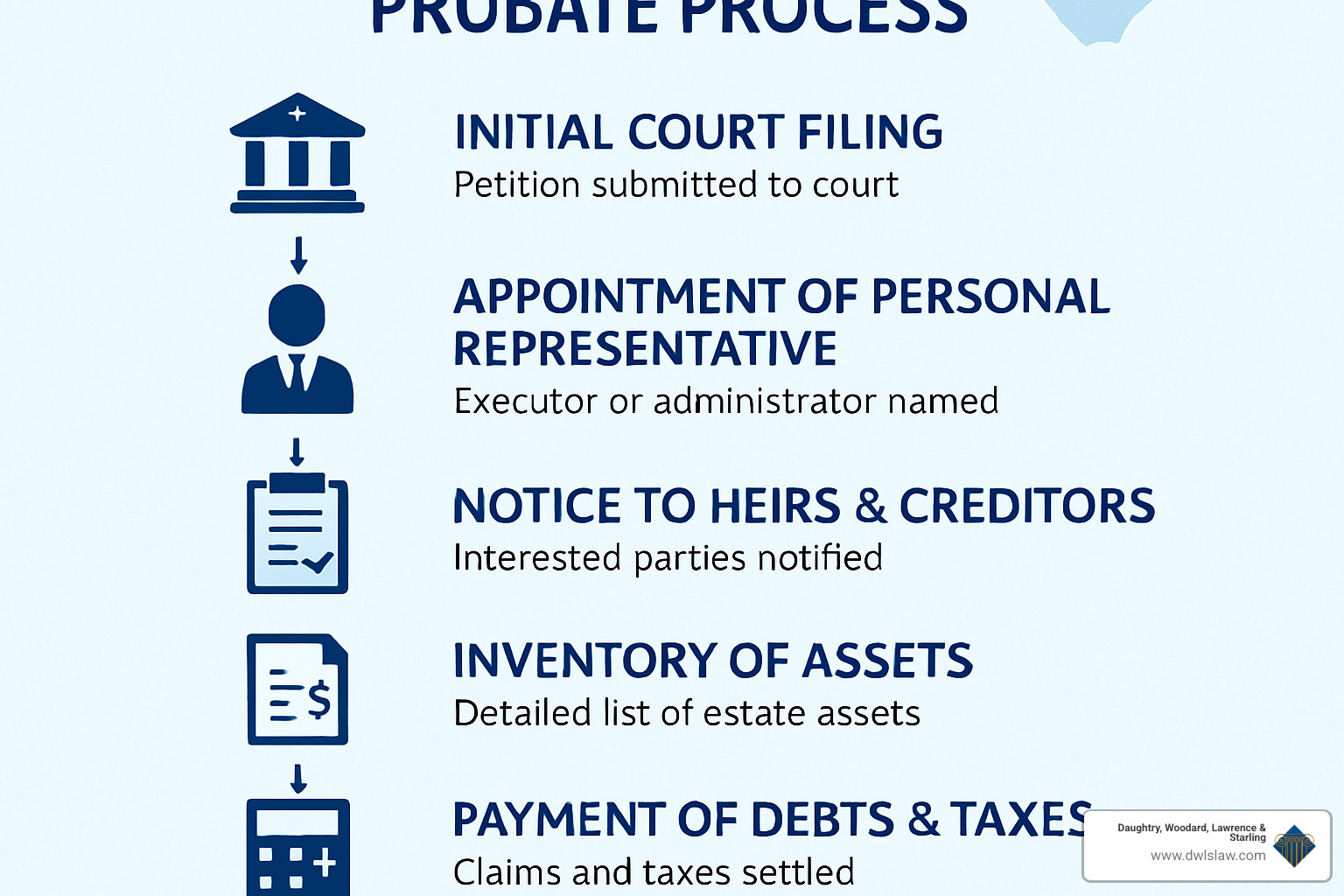
Understanding the probate process helps you appreciate what you’re asking an attorney to handle:
- Open the estate: File petition with the Clerk of Superior Court
- Executor appointment: Court officially appoints the executor
- Notice to creditors: Public notice published in local newspaper
- Asset inventory: Complete within 90 days of appointment
- Creditor claims period: Creditors have specific time to file claims
- Interim accountings: Periodic reports to the court if required
- Final distribution: Assets distributed according to will or law
- Estate closure: Final accounting and court approval
Each step has specific deadlines and requirements. Missing deadlines or filing incorrect paperwork can significantly delay the process and potentially expose the executor to liability.
Special Rules for Small Estates
North Carolina provides simplified procedures for smaller estates:
- Small estate affidavit: For personal property worth $20,000 or less
- Summary administration: Available for certain qualifying estates
- Surviving spouse procedures: Streamlined process when assets pass to surviving spouse
These alternatives can save time and money, but determining eligibility requires understanding North Carolina’s specific requirements.
What If There’s No Will?
When someone dies without a will (intestate), North Carolina law determines who inherits and in what proportions. The court appoints an administrator rather than an executor to handle the estate.
Intestate succession follows a specific hierarchy:
- Surviving spouse and children
- Parents if no spouse or children
- Siblings if no parents
- More distant relatives in prescribed order
This process often requires additional court proceedings, especially when minor children are involved and guardianship appointments are necessary.
Roundup: Top Tools & Tips for Choosing the Right Attorney
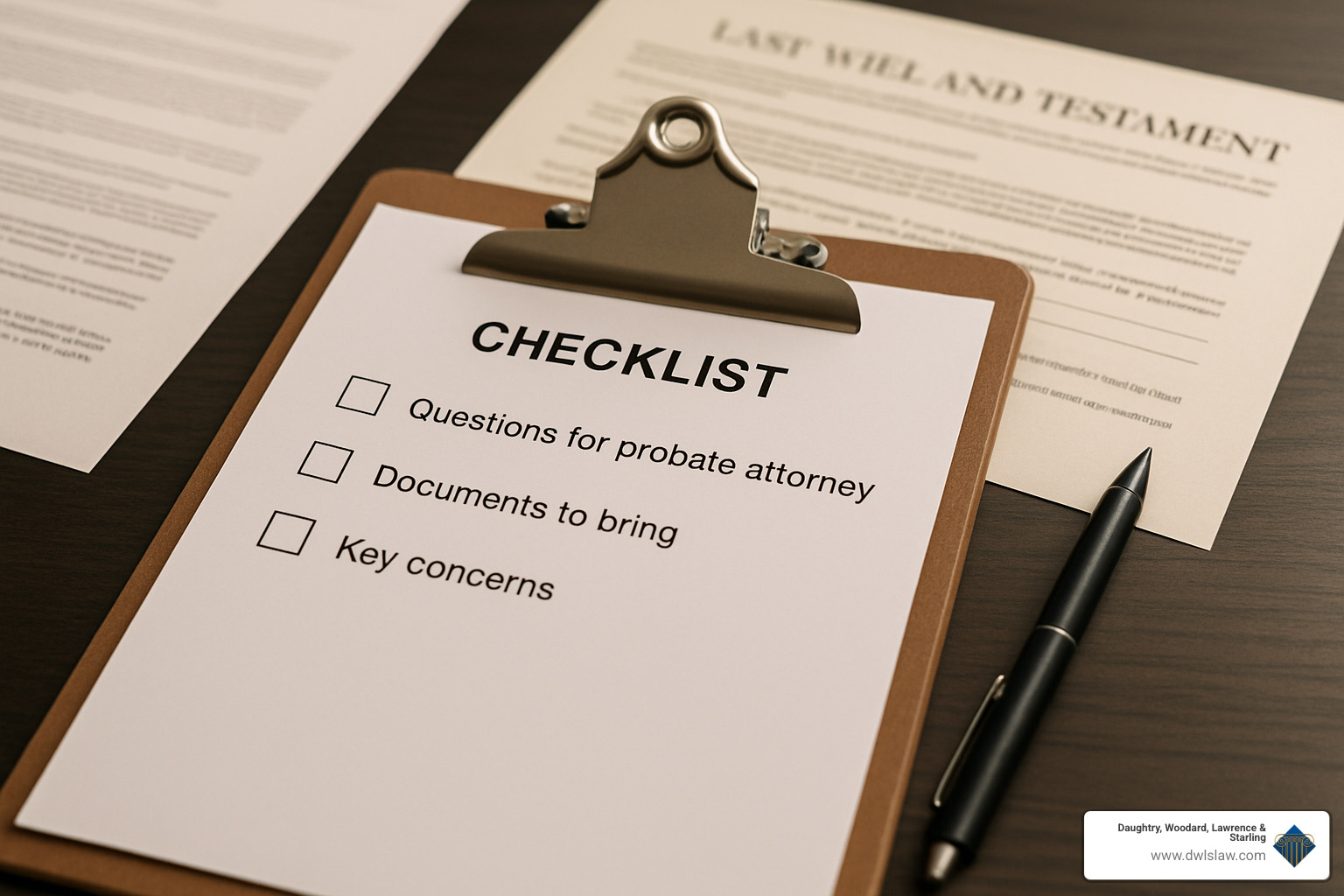
Finding the right North Carolina probate attorney doesn’t have to feel like searching for a needle in a haystack. The key is knowing what to look for and asking the right questions.
Board certification is your first green flag. Attorneys who’ve earned board certification in estate planning and probate law have demonstrated specialized knowledge and experience that goes beyond general practice. This certification isn’t just a fancy title—it means they’ve met rigorous standards and stay current with changing laws.
Bilingual support can be crucial if your family includes non-English speakers. Estate matters are complex enough without language barriers adding confusion. Many firms, including ours at Daughtry, Woodard, Lawrence & Starling, offer bilingual services to ensure everyone understands what’s happening.
Don’t be shy about asking for peer reviews and client testimonials. A good attorney will happily share references from recent probate clients. After all, if they’ve done right by other families, they’re likely to do right by yours too.
Free consultations are often available and give you a chance to get a feel for the attorney’s communication style. You’ll be working closely with this person during a difficult time, so comfort and trust matter as much as legal expertise.
The beauty of modern technology means video conferencing options can save you trips to the office while still maintaining that personal connection. This flexibility can be especially helpful when you’re juggling probate responsibilities with work and family obligations.
Here are the essential questions to ask any potential probate attorney:
- How many probate cases do you handle each year?
- Are you board certified in estate planning and probate law?
- What’s your typical timeline for completing probate administration?
- How do you keep clients informed throughout the process?
- Do you carry professional malpractice insurance?
- Can you provide references from recent clients?
Documents to Bring to Your First Meeting
Walking into your first attorney meeting with the right paperwork shows you’re serious and helps the attorney give you better guidance. Think of it as bringing all the puzzle pieces so they can see the full picture.
The death certificate is your starting point—bring several certified copies since you’ll need them for various purposes throughout the process. The original will and any amendments (called codicils) are obviously crucial, but don’t panic if you can’t locate them immediately. Your attorney can help track down missing documents.
Asset lists save everyone time and help the attorney understand the estate’s scope. This includes real estate deeds, bank statements, investment accounts, and even that classic car sitting in the garage. Don’t forget about debt statements either—credit cards, mortgages, and other obligations all factor into the probate process.
Having beneficiary information and contact details ready speeds things along. Your attorney will need to communicate with these folks eventually, so accurate phone numbers and addresses help avoid delays later.
Insurance policies and retirement account statements often have their own beneficiary designations that bypass probate entirely. Bringing these documents helps your attorney determine what actually needs to go through the court process versus what transfers automatically.
Cost, Fees & How Long It All Takes
Let’s be honest—nobody enjoys talking about legal fees, but understanding the investment upfront prevents surprises later. Probate costs in North Carolina include court fees (which are relatively modest) plus attorney fees that vary based on your estate’s complexity.
Simple estates typically wrap up in six to twelve months. These are usually straightforward situations with a clear will, cooperative beneficiaries, and minimal complications. Think of it as the “easy button” version of probate.
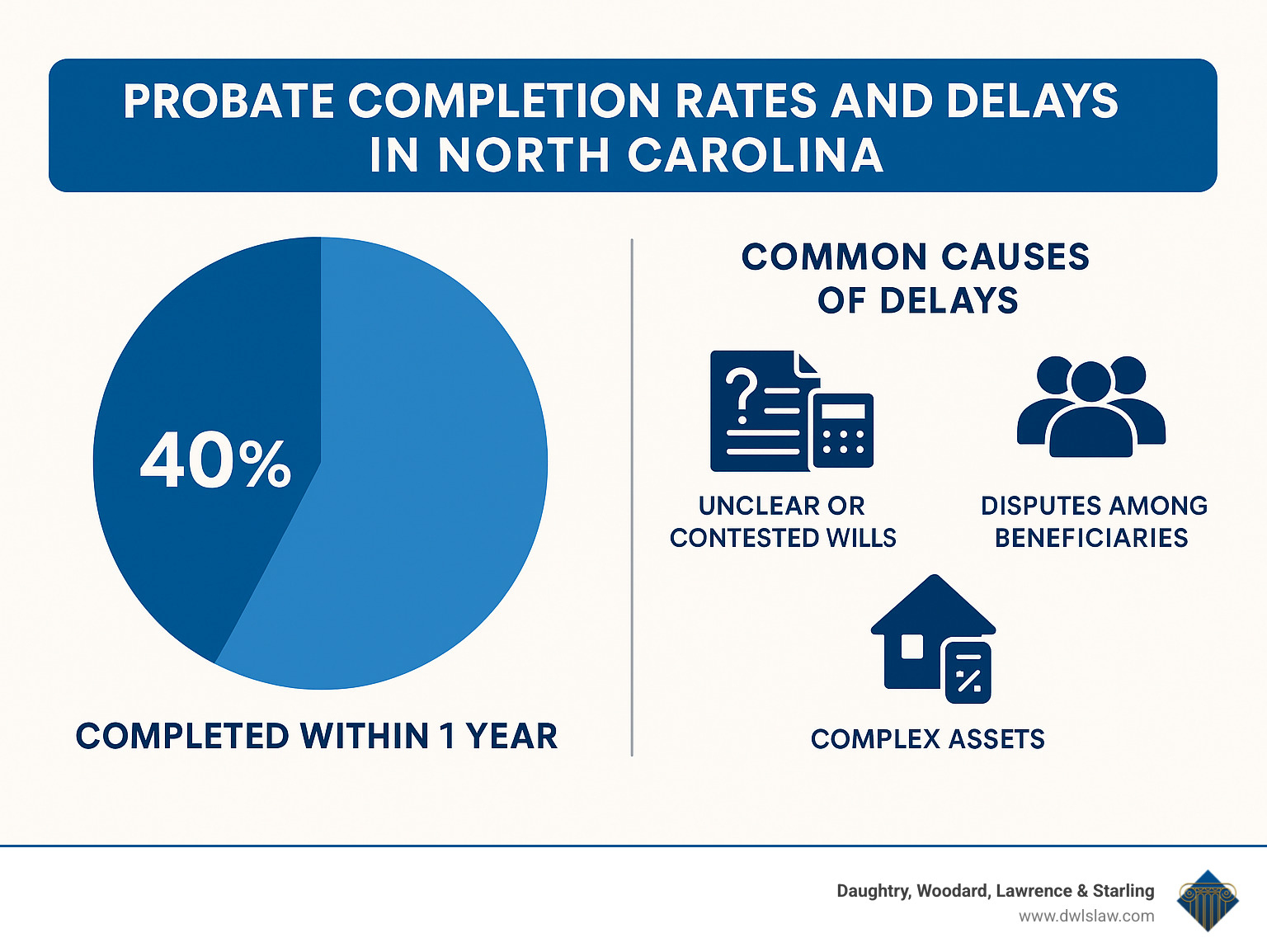
Complex estates can stretch beyond a year, especially when they involve business interests, out-of-state property, or family disagreements. The timeline extends because each complication adds extra steps and court requirements.
Several factors influence how long your probate takes. Estate size and complexity obviously matter, but the number of beneficiaries can also slow things down—more people means more coordination and potential for disagreements. Creditor claims and disputes add time, as does dealing with tax complications for larger estates.
Family conflicts can turn a straightforward probate into a marathon. While nobody expects disputes, having an experienced attorney from the start can often prevent small disagreements from becoming major battles.
The investment in qualified legal counsel typically pays for itself through avoided mistakes, efficient processing, and protection from personal liability. Plus, you’ll sleep better knowing a professional is handling the legal complexities while you focus on grieving and supporting your family.
More info about The Pros And Cons Of Probate
Avoiding Disputes & Keeping the Peace

Nobody wants their family’s final memories of a loved one to be overshadowed by bitter legal battles. Yet probate disputes happen more often than you might think, turning what should be a time of healing into months or years of courtroom drama.
The most common family conflicts I’ve seen revolve around disagreements over asset distribution, questions about whether the will is valid, and concerns about undue influence. Sometimes it’s as simple as one sibling feeling the executor isn’t communicating enough, or family members finding they’ve been treated differently than they expected.
Watch for these red flags that often signal trouble ahead: a history of family conflicts, recent changes to estate documents, questions about the deceased’s mental capacity when they signed their will, or allegations that someone pressured them into making certain decisions. If any of these sound familiar, it’s especially important to work with an experienced North Carolina probate attorney who can steer these sensitive situations.
The good news is that most disputes can be prevented through clear communication and transparent administration. When I work with families, I make sure everyone understands what’s happening and why. Sometimes a simple explanation of North Carolina probate law clears up misconceptions that could otherwise explode into major conflicts.
When disputes do arise despite our best efforts, we don’t have to head straight to court. Mediation and collaborative law offer ways to resolve conflicts while preserving family relationships. These approaches often save both money and emotional energy compared to traditional litigation.
More info about What Are Potential Warning Signs Of Undue Influence?
How Estate Planning Helps You Skip Probate
The best way to avoid probate disputes? Avoid probate altogether when possible. Smart estate planning can minimize or completely eliminate the need for court supervision of your assets.
Revocable living trusts are one of the most effective tools for this. When you properly transfer assets into a living trust, they pass directly to your beneficiaries without any court involvement. You maintain complete control during your lifetime, but your family enjoys privacy and efficiency after you’re gone.
Joint ownership with right of survivorship works well for married couples and other close relationships. When one owner dies, the property automatically belongs to the survivor—no probate required.
Don’t overlook the power of beneficiary designations on your bank accounts, retirement plans, and life insurance policies. These simple forms ensure your assets go directly where you want them without any court delays.
Transfer-on-death deeds are relatively new in North Carolina but incredibly useful for real estate. They allow your home or other property to transfer directly to named beneficiaries while letting you maintain full ownership during your lifetime.
More info about 3 Ways To Avoid Probate
Executor Liability Shields
If you’re serving as an executor, you’re probably worried about making a mistake that could cost you personally. That’s a legitimate concern, but North Carolina law provides several important protections when you handle your duties properly.
Court-required bonds might seem like an extra expense, but they actually protect you by providing insurance coverage if something goes wrong. When you follow your attorney’s guidance and obtain court approval for major decisions, you create a legal shield against later challenges from unhappy beneficiaries.
Proper notice procedures are crucial for protecting against creditor claims. Miss a required notice, and you might face personal liability for debts you could have legally avoided.
Working with a qualified North Carolina probate attorney ensures you take advantage of all these protections. The peace of mind alone is worth the investment, knowing that you’re fulfilling your duties correctly and protecting yourself from potential liability.
Frequently Asked Questions about North Carolina Probate Attorneys
Do I always need a North Carolina probate attorney?
Here’s the honest answer: North Carolina law doesn’t require you to hire an attorney for probate. But after helping families through this process for decades, I can tell you that going it alone is often like trying to perform surgery on yourself—technically possible, but not advisable.
The reality is that most executors are dealing with grief while learning a complex legal process that has serious consequences for getting it wrong. Personal liability is real, and mistakes can cost you financially.
There are a few situations where you might consider handling probate yourself. Very small estates using North Carolina’s simplified procedures might be manageable if all beneficiaries agree and no complications exist. But even then, one missed deadline or incorrectly filed document can turn a simple case into a legal nightmare.
Most executors find that the 10-20 hours per week the process demands, combined with the stress of potential personal liability, makes hiring a North Carolina probate attorney a smart investment rather than an expense.
How are attorney fees calculated in NC probate?
Unlike some states that set specific percentage fees for probate work, North Carolina gives attorneys flexibility in how they structure their fees. Most probate attorneys use either hourly rates or flat fees depending on your situation.
Hourly billing works well when the estate’s complexity is unclear upfront. You pay for the actual time spent on your case, which can be more cost-effective for straightforward estates.
Flat fee arrangements provide predictability for routine probate work. You know your total cost upfront, which helps with budgeting and peace of mind.
Several factors influence what you’ll pay. Estate size and complexity matter, but so do the number of beneficiaries involved, potential family disputes, required court appearances, and whether tax returns need preparation.
The key is discussing fee structures during your initial consultation. Any reputable attorney will provide a clear, written fee agreement so you understand exactly what you’re paying for. Don’t be shy about asking questions—transparency about costs is a sign of a trustworthy attorney.
Can probate be avoided entirely in North Carolina?
Complete probate avoidance is possible, but it requires thoughtful advance planning. Think of it like weatherproofing your house—the work happens before the storm hits.
The most comprehensive approach involves creating a revocable living trust and properly titling all assets in the trust’s name. This lets your successor trustee distribute assets without court involvement, maintaining privacy and often saving time and money.
Other effective strategies include using joint ownership with right of survivorship for real estate and bank accounts, naming beneficiaries on all retirement accounts and life insurance policies, and utilizing transfer-on-death deeds for real estate.
But here’s what many people don’t realize: even with excellent planning, some probate may still be necessary. Assets finded after death, final tax obligations, or the need to handle unexpected creditor claims can require court involvement.
The realistic goal is minimizing probate rather than complete elimination. A well-designed estate plan can reduce a year-long probate process to perhaps a few months of simple administrative tasks.
If you’re thinking about probate avoidance strategies, the time to act is now, while you’re healthy and have time to implement plans properly. Once someone passes away, your options become much more limited.
Conclusion & Next Steps
The journey through probate doesn’t have to feel like navigating a maze blindfolded. When you’re searching for the right North Carolina probate attorney, the best choice combines technical expertise with genuine care for your family’s situation.
Your ideal attorney should check these boxes: board certification in estate planning and probate law, solid malpractice insurance coverage, and deep familiarity with North Carolina’s unique probate procedures. Beyond credentials, look for someone who communicates clearly, explains fees upfront, and has a proven track record of guiding families through successful estate administrations.
Here’s the thing about estate planning—it’s like an umbrella. You don’t think about it until you need it, but when that storm hits, you’re incredibly grateful to have it. The absolute best time to address estate planning is when you’re healthy, clear-minded, and not under the pressure of grief or family stress.
Smart planning today prevents headaches tomorrow. Thoughtful estate planning can dramatically reduce probate requirements, minimize family conflicts, and ensure your wishes are carried out exactly as you intended. It’s one of the greatest gifts you can give your loved ones.
At Daughtry, Woodard, Lawrence & Starling, we’ve been walking alongside families through both the planning and probate processes for decades. Our offices in Smithfield and Clinton serve families throughout North Carolina, and our board-certified specialists understand the specific challenges that North Carolina families face.
Whether you’re dealing with immediate probate needs or looking ahead to protect your family’s future, we bring both expertise and compassion to every situation. Our bilingual support team ensures that language is never a barrier to getting the legal help you need.
The path forward doesn’t have to be complicated. A simple conversation can bring tremendous clarity and peace of mind to your estate planning journey. We’re here to help you understand your options, protect your family’s interests, and steer whatever legal challenges come your way.
More info about Estate Planning


