

Why You Need a Car Accident Lawyer Smithfield After a Crash
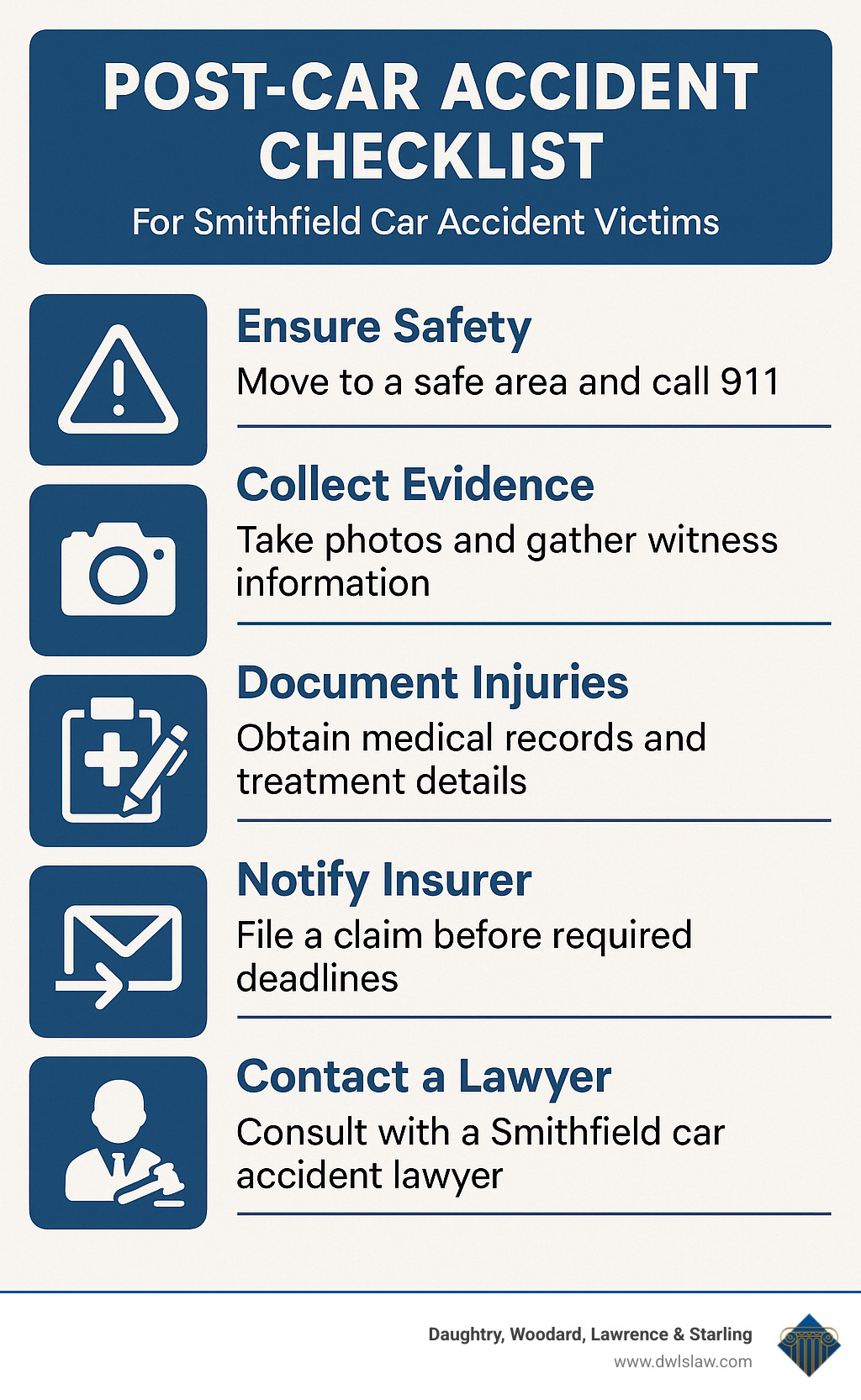
Finding a car accident lawyer in Smithfield becomes critical when dealing with North Carolina’s strict contributory negligence laws and complex insurance procedures. Here’s what you need to know immediately after a Smithfield crash:
Key Steps After a Car Accident:
• Call 911 for police and medical response
• Document everything with photos and witness contacts
• Seek medical attention even for minor injuries
• Contact a qualified car accident lawyer before speaking to insurers
• File insurance claims within required deadlines
When to Hire a Lawyer:
• Serious injuries requiring ongoing medical care
• Disputes over who caused the accident
• Insurance company settlement offers seem too low
• Other driver was uninsured or underinsured
In 2021, Smithfield experienced 2,529 auto crashes and 396 injuries, averaging over 6 accident injuries per day in the area. These numbers highlight why having proper legal representation matters so much.
North Carolina’s contributory negligence rule means that if you’re even slightly at fault for an accident, you could lose your right to recover compensation entirely. Insurance companies know this and often use it to their advantage when negotiating with unrepresented victims.
The sooner you contact legal counsel, the better your chances of preserving evidence and protecting your rights. Most personal injury lawyers in Smithfield work on a 33.33% contingency fee basis, meaning you pay nothing unless they recover money for your case.
I’m Kelly K. Daughtry, a Smithfield lawyer, and I’ve been helping Smithfield car accident victims steer North Carolina’s complex legal system for years through our established practice at Daughtry, Woodard, Lawrence & Starling. Our team understands the unique challenges that come with finding the right car accident lawyer smithfield residents can trust during their most difficult moments.
What to Do Right After a Smithfield Crash
Picture this: you’re driving through Smithfield, maybe heading to the Ham & Yam Festival or just running errands on Market Street, when suddenly—crash. Your heart is pounding, your hands are shaking, and you’re not sure what to do next. We get it. These moments are scary and confusing, but the steps you take right now can make all the difference for your health and your legal rights.
Call 911 immediately, even if the accident seems minor. Trust us on this one—we’ve seen too many cases where what looked like a “fender bender” turned out to involve serious injuries or significant damage. Emergency responders will make sure everyone gets the medical attention they need and create an official police report. That report becomes incredibly important later, especially when dealing with North Carolina’s tough contributory negligence laws.
While you’re waiting for help to arrive, take a deep breath and check yourself and others for injuries. Here’s the thing about adrenaline—it’s sneaky. You might feel perfectly fine right now, but we’ve represented clients who walked away from accidents feeling great, only to find hours later they had concussions, whiplash, or internal injuries that didn’t show symptoms immediately.
Now comes the detective work. Start documenting everything you can safely see and reach. Take photos of all the vehicles involved—get those damage shots from multiple angles. Snap pictures of the accident scene itself, including traffic lights, road conditions, street signs, and any landmarks that might help tell the story later.
Exchange information with the other drivers. You’ll need their names, phone numbers, driver’s license numbers, insurance companies, and policy numbers. Don’t forget about witnesses—their contact information could be golden if there’s a dispute about what happened.
Here’s something crucial: never admit fault or say you’re sorry, even if you think you might have made a mistake. We know you’re probably a polite person, but even innocent comments like “I’m sorry this happened” can come back to haunt you when insurance companies start looking for ways to deny your claim.
More info about important steps people should take after being in car accident
Vital Evidence to Collect
Beyond the basic photos and phone numbers, there’s some evidence that could make or break your case—but it disappears fast if you don’t act quickly. Modern cars are basically computers on wheels, and many have event data recorders (think airplane black boxes) that capture crucial details about speed, braking, and steering right before impact. This information can vanish if a car accident lawyer, located nearby in Smithfield, doesn’t preserve it quickly.
Got a dashcam? The other driver have one? This footage is like having an unbiased witness who never forgets what they saw. Ask for copies right away—some systems automatically delete older footage to make room for new recordings. Don’t forget about nearby businesses or traffic cameras either. They might have caught the whole thing, but that footage usually gets erased within days or weeks.
Take photos of any injuries you can see, even tiny cuts or bruises that seem like no big deal. What looks minor today might indicate something more serious underneath. Keep photographing your injuries over the next few days and weeks as they develop—sometimes the full extent of damage doesn’t show up immediately.
Keep every piece of medical paperwork from the scene, including ambulance reports and emergency room records. Even if you feel fine and decline the ambulance ride, plan to see a doctor within a day or two. Insurance companies love to argue that if you didn’t seek immediate medical care, your injuries must not be serious or weren’t caused by the accident.
Should You Speak to Insurers?
Your phone will probably start ringing pretty quickly after the accident, and one of those calls will likely be from the other driver’s insurance company. The person on the other end will sound friendly and helpful—they might even express genuine concern for your wellbeing. But here’s what they’re not telling you: their job is to pay you as little as possible, not to make sure you get fair compensation.
We strongly recommend avoiding recorded statements to the other driver’s insurance company without having legal representation first. These conversations aren’t casual chats—they’re carefully planned fishing expeditions designed to get you to say something that can be used against you later. Insurance adjusters go through extensive training on exactly which questions to ask to protect their company’s bottom line.
Remember North Carolina’s contributory negligence rule? It’s harsh. If you accidentally admit even the tiniest bit of fault—like saying “I guess I didn’t see the stop sign clearly” or “Maybe I was going a little over the speed limit”—the insurance company might use that to argue you were partially responsible and therefore entitled to absolutely nothing.
Your own insurance company is a different story. You usually have a contract that requires you to cooperate with their investigation. But even when talking to your own insurer, it’s smart to chat with an attorney first before diving into detailed discussions about fault or how badly you’re hurt.
More info about should you talk to the other driver’s insurance company after an accident?
Fault, Contributory Negligence & Deadlines in North Carolina
If you’ve been in a car accident in Smithfield, understanding North Carolina’s legal landscape could mean the difference between receiving fair compensation and walking away with nothing. Our state has some of the toughest laws in the country when it comes to car accident claims.
North Carolina follows what’s called pure contributory negligence—and frankly, it’s not very forgiving. Unlike most other states that use comparative negligence (where you can still recover some compensation even if you’re partially at fault), North Carolina takes an all-or-nothing approach. If you bear even 1% of the responsibility for the accident, you cannot recover any compensation from the other driver.
This harsh rule makes insurance companies particularly aggressive when investigating claims. They know that if they can pin even a tiny bit of blame on you, they don’t have to pay anything. That’s why having an experienced car accident lawyer becomes so important—we know how to build cases that protect you from these tactics.
The good news is that there are some exceptions to this tough rule. If the other driver was engaged in willful or wanton conduct (like drunk driving or road rage), you may still recover compensation even if you were partially at fault. There’s also something called the “last clear chance” doctrine, which can help when the other driver had the final opportunity to avoid the accident but didn’t take it.
You have three years from the date of your accident to file a lawsuit in North Carolina. While that might sound like plenty of time, we’ve learned that waiting often hurts your case. Evidence disappears, witnesses move away or forget details, and your medical records become less compelling as time passes.
More info about limits and deadlines that can impact North Carolina vehicle accident claims
How Fault Is Determined
Figuring out who caused an accident involves detective work, and every piece of evidence matters. The police officer who responds to your crash will investigate and often issue citations for traffic violations. While these tickets don’t automatically prove legal fault, they carry serious weight when determining who was negligent.
Traffic law violations provide a clear framework for establishing fault. When someone runs a red light, fails to yield right-of-way, follows too closely, or speeds, they’ve violated their duty to drive safely. But fault determination goes deeper than just looking at who got a ticket.
Every driver has what the law calls a “duty of care”—basically, the responsibility to operate their vehicle safely and reasonably. This means more than just following traffic signs. It includes staying alert, maintaining control of your vehicle, and adjusting your driving for weather or road conditions. When someone breaches this duty and causes an accident, they become liable for the resulting damages.
In complicated cases, we sometimes work with accident reconstruction experts who can analyze the physical evidence scientifically. These specialists examine skid marks, study vehicle damage patterns, and consider road conditions to determine exactly how the crash happened. They can calculate speeds, analyze impact angles, and provide expert testimony that helps establish fault clearly.
Key Filing Deadlines
That three-year deadline for filing a lawsuit isn’t the only time limit you need to worry about. Several other deadlines can significantly impact your case, and missing them could cost you dearly.
Most insurance policies require you to report accidents promptly—usually within 24 to 72 hours. This might seem unreasonable when you’re dealing with injuries and trauma, but failing to notify your insurance company quickly could jeopardize your coverage entirely.
If your accident involved a government vehicle (like a city bus, police car, or road maintenance truck), special rules apply. You typically have only 30 days to file a formal notice of claim against the government entity. Even more challenging, the statute of limitations for these cases is often shortened to just one year instead of three.
Uninsured or underinsured motorist claims with your own insurance company often have different deadlines too. These claims sometimes have shorter limitation periods, and some policies require arbitration instead of going to court.
Don’t forget about medical payment coverage and personal injury protection benefits either. These have their own specific deadlines for filing claims and submitting medical bills. Since you’ve already paid for these benefits through your premiums, missing these deadlines means losing money that’s rightfully yours.
Choosing and Working With a Car Accident Lawyer Smithfield
Finding a car accident lawyer you can rely on feels overwhelming when you’re already dealing with injuries, medical bills, and insurance hassles. The good news? You don’t have to steer this alone, and the sooner you get help, the better your chances of a successful outcome.
Timing matters more than you might think. We recommend reaching out to an attorney within the first day or two after your accident. This isn’t about rushing into anything—it’s about protecting evidence before it disappears and making sure insurance companies don’t take advantage of you during a vulnerable time.
Here’s something that surprises many people: most personal injury consultations are completely free. At Daughtry, Woodard, Lawrence & Starling, we sit down with accident victims at no charge to explain their rights and options. There’s no pressure, no fine print—just honest answers about whether you have a case worth pursuing.
You’ll want to look for attorneys who are board-certified in personal injury law. This certification isn’t just a fancy title—it means the attorney has extensive experience handling cases like yours, stays current with changing laws, and has been recognized by their peers for their expertise. It’s like choosing a specialist doctor over a general practitioner for a serious medical condition.
Language shouldn’t be a barrier to getting quality legal help. Our team provides Spanish-English bilingual support because we believe Smithfield’s diverse community deserves to understand their legal rights clearly. Legal jargon is confusing enough in your native language—it shouldn’t be made worse by translation issues.
The financial aspect often worries people most. Here’s the reality: most car accident attorneys work on contingency fees, meaning you pay nothing unless they win your case. This arrangement levels the playing field, allowing you to get experienced representation without upfront costs. The standard rate in North Carolina is one-third of any recovery, but this only comes out of money the lawyer actually gets for you.
What to Expect at Your First Meeting
Your initial consultation serves as a fact-finding mission for both sides. We’re evaluating whether we can help you, and you’re deciding whether we’re the right fit for your situation. Come prepared, but don’t stress about having everything perfect.
Bring whatever documentation you have from the accident. This might include the police report, insurance cards, photos from your phone, medical records from the emergency room, or correspondence from insurance companies. If you haven’t gotten the police report yet, don’t worry—we can help you request it from the appropriate agency.
Write down your questions beforehand. Pain medication, stress, and the overwhelming nature of legal proceedings can make it easy to forget important concerns. Ask about our experience with cases similar to yours, how we communicate with clients, and what the timeline might look like for your situation.
We’ll walk you through North Carolina’s contributory negligence rule and explain how it affects your specific case. This includes discussing any potential arguments the other side might make about your role in the accident and our strategy for addressing those challenges.
Every case moves at its own pace, but we can give you realistic expectations about timing. Some cases resolve in a few months through negotiations, while others requiring litigation might take a year or more. We’ll explain the factors that influence timing in your particular situation.
How Lawyers Maximize Settlements
Experience makes a huge difference in the final outcome of your case. Insurance companies approach cases differently when they know an experienced attorney is involved—they can’t use the same tactics they might try with unrepresented claimants.
We dig deeper than the basic police report. Our investigation might involve accident reconstruction experts who can analyze skid marks and vehicle damage patterns, medical specialists who understand the long-term implications of your injuries, or economists who calculate the true cost of your lost earning capacity.
Building a compelling demand package requires more than just adding up medical bills. We document how the accident has affected every aspect of your life—your ability to work, enjoy hobbies, maintain relationships, and handle daily activities. These human elements often matter more to settlement negotiations than people realize.
The willingness to go to trial provides crucial leverage in settlement negotiations. Insurance companies know which attorneys are prepared for litigation and which ones always settle. Our reputation for thorough trial preparation often leads to better offers during negotiations.
We work with medical professionals to ensure your current and future medical needs are properly valued. Many injuries require ongoing treatment, physical therapy, or even future surgeries. Settling too quickly without understanding these long-term costs can leave you financially responsible for expenses that should be covered by the settlement.
Evidence, Insurance Tactics & Compensation
After experiencing a car accident in Smithfield, understanding what compensation you might recover helps you make informed decisions about settlement offers. North Carolina law recognizes different types of damages, and knowing the difference can mean thousands of dollars in your final settlement.
Economic damages represent the concrete financial losses you can document with receipts and records. These include medical bills, prescription costs, lost wages, and property damage. While these might seem straightforward, calculating future economic losses requires careful analysis. For instance, if your injuries prevent you from returning to your previous job, an economist might need to calculate your lost earning capacity over your entire career.
Non-economic damages compensate for the intangible ways the accident has affected your life—your pain and suffering, emotional distress, and loss of enjoyment in activities you once loved. These damages often represent the largest portion of significant injury settlements, yet they’re also the most challenging to quantify.
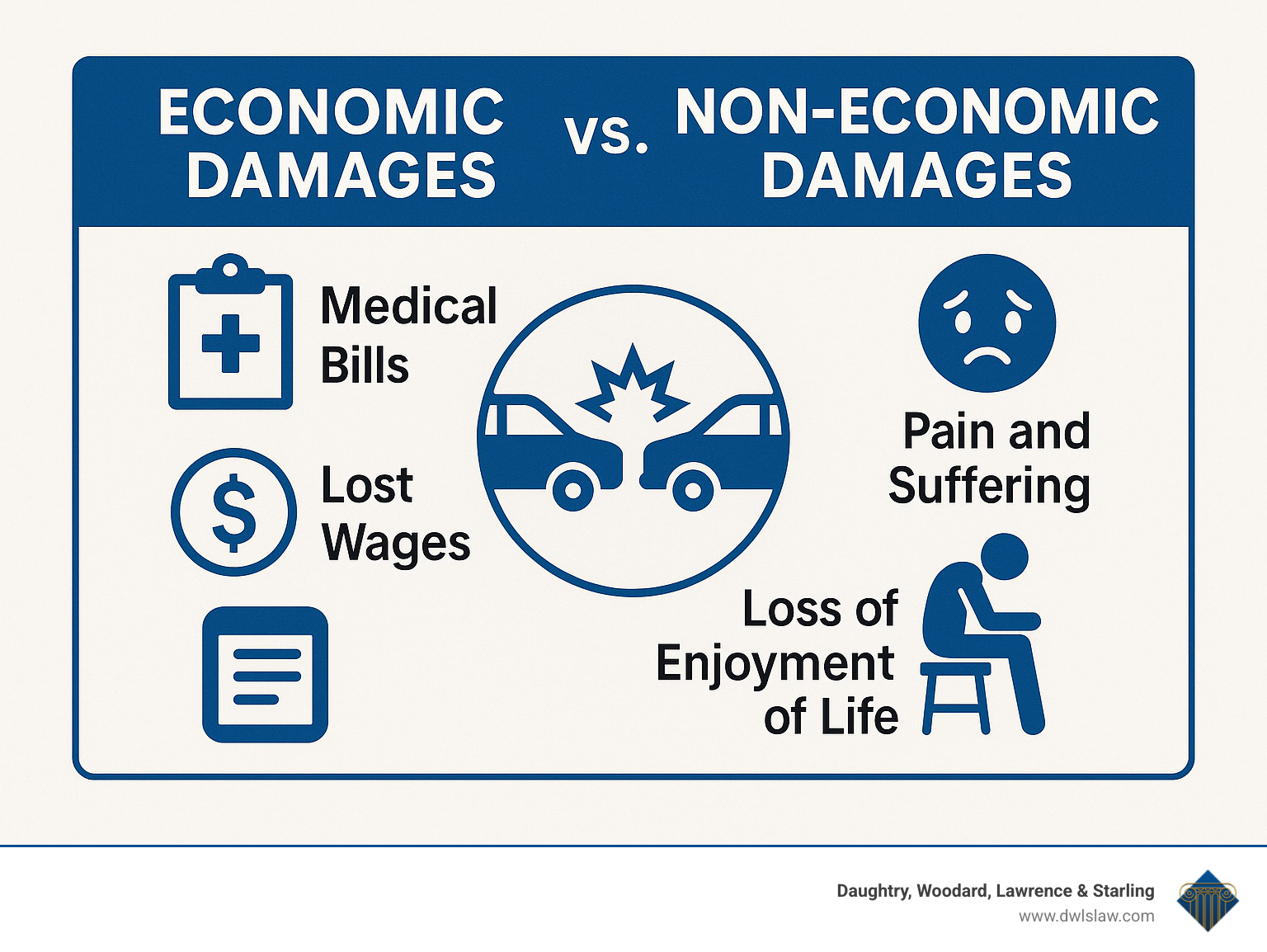
Punitive damages rarely come into play in typical car accident cases. North Carolina reserves these for situations involving particularly reckless behavior, like drunk driving or road rage incidents. When punitive damages are awarded, they’re designed to punish the wrongdoer rather than compensate you for your losses.
Insurance companies know that most accident victims don’t understand the true value of their claims. They use this knowledge to their advantage, often making quick settlement offers that seem generous but fall far short of fair compensation. One common tactic involves rushing you to settle before you understand the full extent of your injuries or their long-term impact on your life.
Another strategy involves requesting excessive documentation, hoping to frustrate you into accepting a lower offer. They might also argue that your injuries existed before the accident or weren’t actually caused by the crash. Having a qualified car accident lawyer Smithfield residents trust can help counter these tactics effectively.
We’ve seen insurance companies delay payments hoping you’ll become desperate for money, or they’ll minimize your pain by suggesting that your injuries “aren’t that serious” compared to other cases they’ve handled. These adjusters work for the insurance company, not for you.
More info about Car Accident FAQ
Common Injuries in Smithfield Crashes
The reality of car accident injuries often surprises people. What seems like a minor fender-bender can result in injuries that affect you for months or even years. Understanding common injury patterns helps you recognize symptoms that might not appear immediately.
Whiplash remains the most frequent injury we see in Smithfield car accidents. This happens when your head snaps back and forth during impact, damaging the muscles and ligaments in your neck. The tricky thing about whiplash is that you might feel fine immediately after the accident, only to wake up the next morning barely able to move your neck.
Traumatic brain injuries can occur even when your head doesn’t strike anything. The sudden stopping motion can cause your brain to bounce around inside your skull, leading to concussions or more severe TBI. Symptoms like headaches, confusion, memory problems, or changes in mood might not appear for days after the accident.
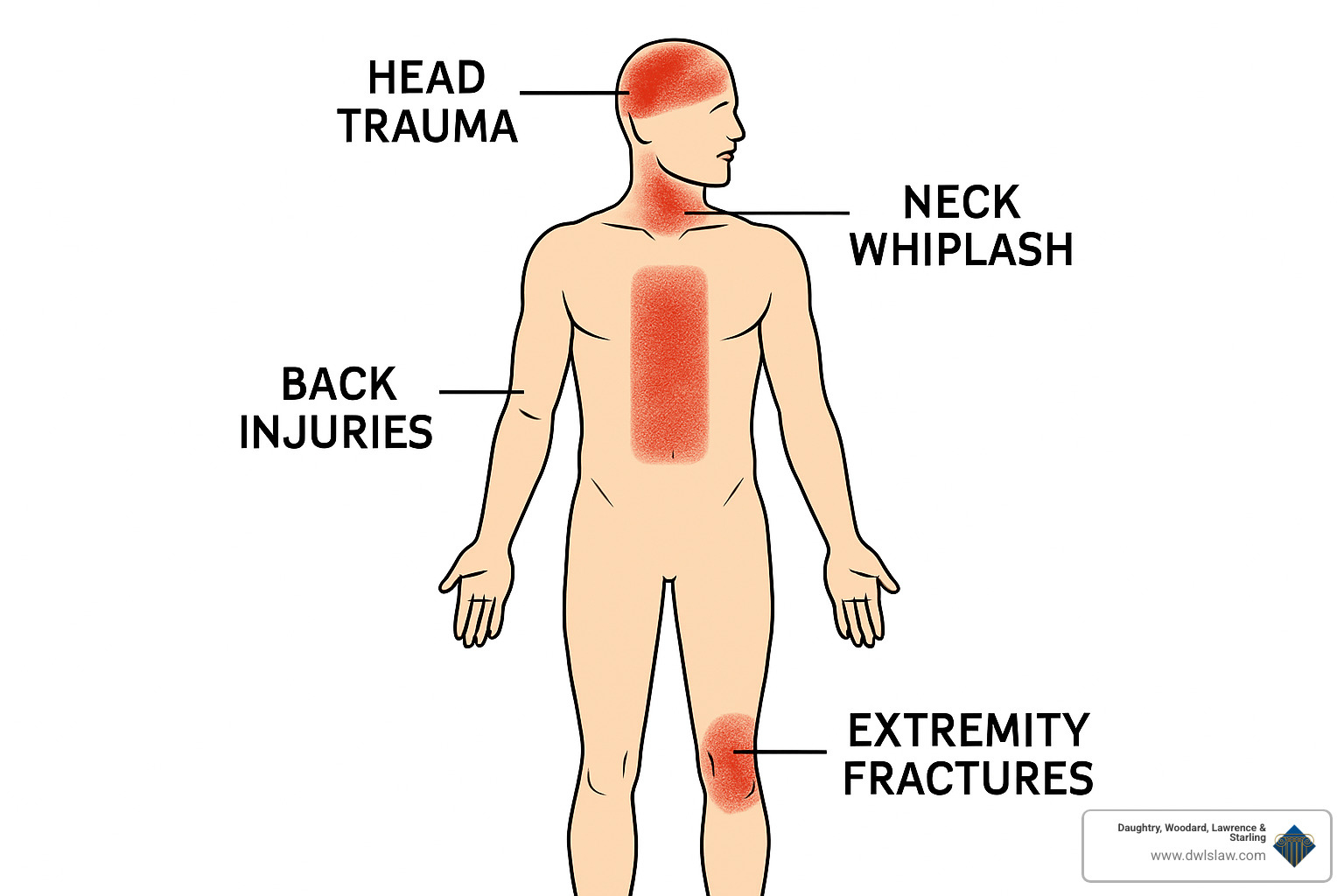
Broken bones and fractures are obvious in severe crashes, but stress fractures or hairline breaks might not show symptoms immediately. We’ve represented clients who walked away from accidents thinking they were fine, only to find fractures during follow-up medical exams.
Back and spinal injuries can range from minor muscle strains to life-changing paralysis. Herniated discs are particularly common and can cause chronic pain that radiates down your arms or legs. These injuries often require extensive physical therapy or even surgery.
Don’t overlook the psychological impact of a serious car accident. Many of our clients develop anxiety about driving, experience panic attacks, or struggle with depression following their crash. These psychological injuries are real, compensable damages under North Carolina law, but they require proper documentation from mental health professionals.
The key is seeking medical attention promptly, even if you feel fine initially. Adrenaline can mask serious injuries for hours or even days after an accident. Having medical records that document your injuries close to the accident date strengthens your case significantly.
Handling Settlement Offers
That first settlement offer from the insurance company might arrive faster than you expect—sometimes within days of your accident. While quick resolution sounds appealing, accepting these early offers almost always means leaving money on the table.
Insurance companies make early offers for one simple reason: they know that once you accept a settlement, you can’t come back for more money if your injuries prove more serious than initially thought. They’re essentially betting that your injuries will cost more to treat than their low-ball offer.
Never accept a settlement before reaching maximum medical improvement—the point where your doctors can accurately assess your long-term prognosis and any permanent limitations. This might take weeks or months, depending on your injuries.
When we prepare a demand package for our clients, we’re telling your complete story in a way that demonstrates both the other party’s liability and the full impact of the accident on your life. This includes not just your medical bills and lost wages, but also how your injuries have affected your relationships, your ability to enjoy hobbies, and your overall quality of life.
Mediation often provides an effective middle ground between quick settlement and lengthy litigation. In mediation, both sides meet with a neutral mediator who helps facilitate negotiations. Many cases that seem headed for trial ultimately resolve during mediation when everyone has a clearer picture of the risks involved.
Before accepting any settlement offer, we’ll help you understand how various liens and claims might affect your net recovery. Your health insurance company might have a right to reimbursement from your settlement, and medical providers often assert liens for unpaid bills. Experienced attorneys can frequently negotiate reductions in these liens, putting more money in your pocket.
The decision of when to accept a settlement offer ultimately belongs to you, but having an experienced car accident lawyer Smithfield families trust ensures you’re making that decision with complete information about your options and the true value of your claim.
Local Crash Trends & Prevention Tips
Living in Smithfield means navigating a unique mix of small-town charm and growing traffic challenges. Our community sits at the crossroads of major transportation routes, and frankly, that creates some tricky driving situations that every local driver should understand.
Head-on collisions might not happen as often as fender-benders, but when they do occur on our rural roads, the results are devastating. We’ve seen too many cases where drivers attempted risky passing maneuvers on two-lane roads around town, misjudging oncoming traffic with tragic consequences.
T-bone accidents at intersections tell a different story. Smithfield’s busy commercial areas mixed with quiet residential streets create numerous intersections where out-of-town visitors might not expect local traffic patterns. Even longtime residents can get caught off guard when familiar intersections suddenly become busy due to new development.
Sideswipe incidents frequently happen during lane changes, especially on busy corridors like US-70 where local traffic mixes with through traffic. What seems like a minor scrape can quickly escalate when vehicles lose control or create chain-reaction collisions.
The I-95 corridor running through Johnston County brings its own set of challenges. We’re talking about massive commercial trucks, tired long-distance travelers, and drivers unfamiliar with our area all sharing the same roads with local commuters. During peak travel seasons, this combination creates genuinely dangerous conditions.
Recent statistics paint a concerning picture for our community. In 2019, Smithfield reported 494 traffic accidents resulting in 1 fatality and 215 injuries. By 2021, we saw 2,529 auto crashes and 396 injuries across the broader area. That’s more than one injury per day, which hits close to home when you realize these numbers represent our neighbors, friends, and family members.
Most Dangerous Roads in Smithfield
Market Street consistently ranks among our most accident-prone areas, particularly near shopping centers and restaurants. The constant flow of pedestrians combined with drivers entering and exiting parking lots creates a perfect storm for accidents. We’ve handled numerous cases where drivers became distracted by storefronts or were searching for parking spots when collisions occurred.
US-70 Business presents ongoing challenges as one of our highest-risk corridors. This stretch sees an unfortunate mix of commercial delivery trucks, through traffic heading to other destinations, and local drivers who know every shortcut mixing with confused visitors trying to find their way around town.
Brightleaf Boulevard and similar residential arteries experience their share of accidents, often involving speeding and aggressive driving during rush hours. Commuters trying to avoid congestion on main highways sometimes treat these residential roads like racetracks, forgetting that families live and walk in these neighborhoods.
School zones throughout Smithfield deserve special mention. During drop-off and pick-up times, even the most careful parents can become distracted while managing children and schedules. We’ve seen accidents occur when drivers fail to notice reduced speed limits or don’t account for children who might unexpectedly enter roadways.
Staying Safe on Busy Festival Weekends
Smithfield’s beloved Ham and Yam Festival and other community celebrations bring wonderful energy to our town—along with thousands of additional vehicles and pedestrians. These events create unique safety challenges that require extra awareness from everyone.
Festival weekends typically see increased DUI patrols and checkpoints throughout the area. While this improved law enforcement helps keep our roads safer, it also reflects the real risks that come with celebratory events. If you’re planning to enjoy adult beverages at festival activities, arrange alternative transportation beforehand.
Parking becomes a genuine nightmare during major events, leading some visitors to make questionable decisions about where to leave their vehicles. We’ve seen people park in unsafe locations or attempt to walk long distances along roads without proper sidewalks. Always use designated crosswalks and stay aware of your surroundings when walking near busy streets.
The traffic congestion during and after events can test anyone’s patience. Allow extra time for travel and remember that many drivers around you might be lost, confused, or unfamiliar with local routes. Road rage incidents spike during these busy periods, so take a deep breath and remember that getting home safely is more important than getting home quickly.
As your local car accident lawyer smithfield team, we’ve unfortunately seen how quickly festival fun can turn into tragedy when people don’t adjust their driving habits for increased pedestrian activity and unfamiliar traffic patterns. A little extra caution during these special weekends can help ensure everyone gets to enjoy what makes our community special.
Frequently Asked Questions about Car Accident Lawyer Smithfield
When you’re dealing with the aftermath of a car accident, questions start piling up faster than medical bills. We understand that you need clear answers during this stressful time, so let’s address the most common concerns we hear from Smithfield accident victims.
How long do I have to file a lawsuit?
The clock starts ticking the moment your accident happens, and in North Carolina, you have three years from the date of the accident to file a personal injury lawsuit. While three years might sound like plenty of time, this deadline can sneak up on you faster than you’d expect—especially when you’re focused on recovering from your injuries.
Here’s where things get tricky: if a government vehicle was involved in your accident, the rules change dramatically. Whether it’s a city bus, police car, or state maintenance truck, you might have as little as 30 days to file a formal notice of claim. Even more concerning, your lawsuit deadline shrinks from three years to just one year.
The three-year deadline applies specifically to filing a lawsuit, not settling your case. Most of our clients never see the inside of a courtroom because we resolve their cases through negotiations with insurance companies. However, having that lawsuit option available gives us powerful leverage when insurance companies try to lowball your claim.
Don’t make the mistake of waiting until year two or three to contact a car accident lawyer smithfield residents trust. Evidence has a way of disappearing, witnesses move away or forget details, and building a strong case takes time. The sooner we can start working on your behalf, the better positioned we’ll be to protect your interests.
What compensation can I recover?
The financial impact of a car accident goes far beyond the initial crash, and North Carolina law recognizes this reality by allowing you to recover compensation for multiple types of damages. Understanding what you can recover helps you evaluate whether settlement offers are truly fair.
Economic damages cover your measurable financial losses—the bills and receipts that pile up after an accident. This includes all your medical expenses, from the ambulance ride to ongoing physical therapy. If your injuries prevent you from working, you can recover lost wages and even diminished earning capacity if you can’t return to your previous job.
Property damage compensation covers vehicle repairs or replacement, plus any personal items damaged in the crash. Don’t forget about rental car expenses while your vehicle is being repaired—these costs add up quickly and are part of your recoverable damages.
Non-economic damages address the ways the accident has affected your quality of life. Pain and suffering compensation recognizes that injuries hurt, both physically and emotionally. Loss of enjoyment of life damages acknowledge when injuries prevent you from participating in activities you once loved.
These non-economic damages often represent the largest portion of significant injury settlements, but they’re also the most subjective. Insurance companies know that unrepresented victims often don’t understand the true value of these damages and accept settlements that fall far short of fair compensation.
In cases involving particularly outrageous conduct—like drunk driving or intentional misconduct—punitive damages may be available. While these damages are rare, they serve to punish the wrongdoer and deter similar behavior. North Carolina caps punitive damages at three times your compensatory damages or $250,000, whichever is greater.
What if I was partially at fault?
This question strikes fear into the hearts of many accident victims, and unfortunately, North Carolina’s legal system makes this concern very real. Our state follows contributory negligence, one of the harshest rules in the nation for accident victims.
Under this rule, if you bear any responsibility for the accident—even just 1%—you could be completely barred from recovering compensation from the other driver. It’s an all-or-nothing system that insurance companies love to exploit.
But don’t panic if you think you might have contributed to the accident. There are important exceptions to this harsh rule that could still protect your right to compensation. If the other driver’s conduct was willful or wanton—such as drunk driving, racing, or intentional misconduct—you may still recover damages even if you were partially at fault.
The “last clear chance” doctrine provides another potential lifeline. If the other driver had the final opportunity to avoid the accident but failed to act, you might still have a valid claim despite any earlier negligence on your part.
Insurance companies and defense attorneys know about contributory negligence and will aggressively investigate any possible way to shift blame to you. They’ll scrutinize everything from your speed to whether you were using your phone, looking for any argument that you contributed to the accident.
This is exactly why experienced legal representation becomes so crucial. We know how to counter these blame-shifting arguments and present evidence that establishes the other driver’s complete responsibility. Often, facts that seem damaging to you aren’t legally significant, and there may be aspects of the accident you haven’t considered that actually support your case.
Even if you’re convinced you made a mistake that contributed to the accident, don’t give up hope. The legal analysis of fault involves complex questions about traffic laws, duty of care, and accident causation that require professional evaluation. What seems obvious to you might not reflect the true legal picture of what happened.
Conclusion
When a car accident disrupts your life in Smithfield, you’re facing more than just vehicle damage and medical bills. North Carolina’s unforgiving contributory negligence rule means that even a small mistake on your part could eliminate your right to compensation entirely. Insurance companies know this and will use every tool at their disposal to shift blame your way.
That’s exactly why having an experienced car accident lawyer smithfield residents trust becomes so crucial. The legal landscape here isn’t just complex—it’s designed in ways that can work against accident victims who don’t understand their rights or know how to protect them.
At Daughtry, Woodard, Lawrence & Starling, we’ve spent years helping our neighbors in Smithfield and Johnston County fight back against unfair insurance tactics and recover the compensation they deserve. Our board-certified specialists understand the local court system, know how insurance companies operate in our area, and have the experience to build strong cases even under North Carolina’s challenging laws.
The numbers tell a sobering story about our community’s need for legal protection. With over 2,500 crashes and nearly 400 injuries in Smithfield during 2021 alone, car accidents touch far too many families in our area. When these traumatic events happen, having the right legal team can mean the difference between getting the medical care you need and struggling with overwhelming debt.
We believe that quality legal representation shouldn’t depend on your ability to pay upfront. That’s why we offer free consultations to accident victims and work on a contingency fee basis—you don’t pay attorney fees unless we successfully recover compensation for your case.
Time moves quickly after an accident, and not in your favor. Evidence gets cleaned up, witnesses move away or forget details, and important deadlines start approaching faster than you might expect. The sooner you contact our team, the better positioned we’ll be to preserve crucial evidence and build the strongest possible case.
Don’t let insurance companies pressure you into quick settlements that don’t reflect the true impact of your injuries. Contact our Smithfield attorneys – Johnston County legal experts – at Daughtry, Woodard, Lawrence & Starling today for your free consultation. We’ll review your case, explain your options in plain English, and help you understand what fair compensation should look like for your specific situation.
Your recovery matters to us because our community matters to us. Let us handle the legal complexities while you focus on healing and getting your life back on track.
Learn more about personal injury legal services – or reach out now to request an initial legal consultation.


