
When Your Family Needs Legal Protection
When searching for a family attorney NC, you need someone who combines legal expertise with compassion for your unique situation. Family law matters are deeply personal and often emotionally challenging.
North Carolina Family Attorney Quick Facts:
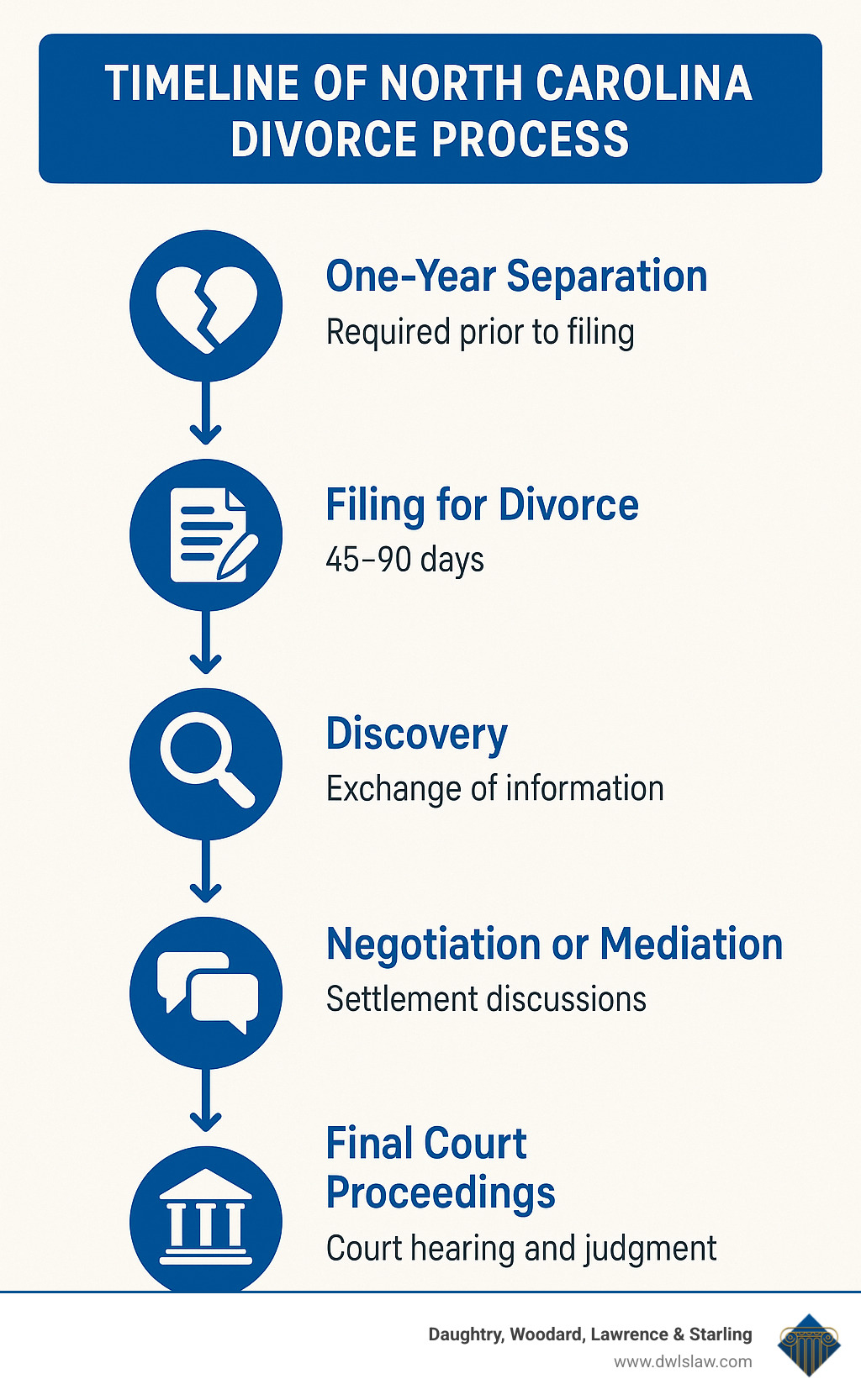
– Requirements: North Carolina requires a one-year separation period before filing for divorce
– Expertise: Only about 1% of NC lawyers are Board Certified Family Law Specialists
– Property Division: NC follows equitable distribution laws (fair but not necessarily equal)
– Practice Areas: Divorce, custody, support, adoption, domestic violence protection
– Timeline: Simple divorces typically take 45-90 days after filing following the separation period
Family law matters affect the most important aspects of your life – your children, your finances, and your emotional well-being. Whether you’re facing divorce, a custody dispute, adoption challenges, or domestic violence issues, having the right legal guidance is crucial to protecting your family’s future.
North Carolina’s family laws have specific requirements that differ from other states. For example, the mandatory one-year separation period before filing for divorce can significantly impact your planning timeline. Additionally, the state’s equitable distribution approach means property division focuses on fairness rather than an automatic 50/50 split.
Working with an experienced family attorney NC means having someone who understands both the technical legal requirements and the emotional aspects of your case. The right attorney will guide you through complex legal processes while providing the support you need during this challenging time.
I’m Kelly K. Daughtry, a family law attorney at Daughtry, Woodard, Lawrence & Starling where we’ve been serving North Carolina families since 1969, bringing decades of specialized experience as a family attorney NC to help clients steer their most challenging legal matters with compassion and expertise.
Family attorney nc vocab explained:
– attorneys in johnston county nc
– family law attorneys in smithfield nc
What Does a Family Attorney Do in North Carolina?
When life throws family challenges your way, a family attorney NC becomes your guide through legal complexities while supporting your emotional journey. At Daughtry, Woodard, Lawrence & Starling, we walk beside you during life’s most significant transitions, offering both legal expertise and a compassionate ear.
Think of us as your family’s legal protectors. Our attorneys help you steer everything from divorce proceedings to creating new families through adoption. We understand that behind every case file is a real family facing real challenges.
Our comprehensive services include divorce guidance through North Carolina’s unique requirements, child custody arrangements that prioritize your children’s wellbeing, and child support calculations that ensure financial stability. We also handle alimony determinations, equitable distribution of marital assets, and facilitate adoption journeys that create forever families.
For families facing crisis, we provide domestic violence protection, while for those seeking amicable solutions, we offer mediation and collaborative divorce approaches. Our practice extends to safeguarding your family’s future through estate planning and establishing guardianship for vulnerable loved ones.
Our Family Law practice blends decades of legal experience with genuine human understanding. We recognize that you’re not just seeking legal solutions—you’re protecting the relationships that matter most.
Core Case Types Handled
Creating legally binding separation agreements is one of our most important services. These documents serve as roadmaps for your separation period, covering everything from who keeps the family home to how you’ll share time with your children. While North Carolina doesn’t require these agreements, having one can save significant heartache and protect your interests during the mandatory one-year separation.
We also help couples prepare for marriage or address concerns within marriage through prenuptial and postnuptial agreements. These documents aren’t about planning for failure—they’re about honest communication and mutual protection. Our attorneys ensure these agreements meet North Carolina’s requirements for fairness, full disclosure, and voluntary participation.
In more serious situations, we guide families through the termination of parental rights process. This permanent legal step might be necessary in cases of severe abuse, abandonment, or as part of an adoption plan. We approach these sensitive cases with the utmost care, always focusing on what serves the child’s best interests.
Specialized Proceedings & Alternative Paths
Not every family dispute belongs in a courtroom. As experienced family attorneys NC, we offer several alternatives to traditional litigation that can save you time, money, and emotional energy.
Collaborative law brings both parties and their attorneys together with a shared commitment to resolve issues without court intervention. This team approach often includes financial advisors and child specialists working cooperatively to find solutions that benefit everyone—especially the children.
For families who need a binding decision but prefer to avoid court, arbitration offers a private alternative with a neutral third party making the final call. This approach typically moves faster than traditional court proceedings while maintaining your privacy.
In high-conflict custody situations, parenting coordination provides ongoing support to help parents implement custody orders and resolve minor disputes without returning to court. This child-focused approach helps parents develop better communication skills while reducing conflict.
At Daughtry, Woodard, Lawrence & Starling, we tailor our approach to fit your family’s unique needs. Whether you need a fierce advocate in court or a skilled mediator to help find common ground, our family attorneys NC bring both legal expertise and human understanding to your case. We believe that even in difficult times, legal solutions should preserve dignity and respect for all family members involved.
Navigating Divorce and Separation in North Carolina
When marriages end in North Carolina, the path forward follows unique rules that might surprise those familiar with divorce in other states. As your family attorney NC, I want to help you understand what makes our state’s divorce process different.
The cornerstone of North Carolina divorce law is patience. Unlike states with “quickie” divorces, our state believes in giving marriages time—specifically, one year and one day of physical separation before you can file for divorce. This isn’t just a suggestion; it’s a requirement that courts take seriously.
Beyond the separation period, you should know that at least one spouse must have called North Carolina home for at least six months before filing. Once these prerequisites are met, you can pursue what we call an “absolute divorce”—the legal ending of your marriage.
One bright spot for many clients is that North Carolina accepts “no-fault” divorce. This means you don’t need to prove your spouse did something wrong to obtain a divorce—the year-long separation itself is sufficient grounds.
As your family attorney NC, I’ll help you determine which divorce path makes sense for your situation:
Most couples hope for an uncontested divorce, where both parties agree on all major issues. These divorces move more quickly, cost less, and typically involve minimal court time. Many of my clients find that creating a solid separation agreement helps pave the way for this smoother process.
Sometimes, however, a contested divorce becomes necessary when spouses can’t see eye-to-eye on important matters. These cases may require more intensive negotiation, mediation, or ultimately, courtroom litigation. While more complex and typically more expensive, sometimes this path is necessary to protect your rights and future.
5 Steps to File for Divorce in NC
The divorce filing process in North Carolina follows a predictable pattern that I’ve guided hundreds of clients through:
- Establish Separation: You must physically live apart with the intention that the separation is permanent for at least one year and one day. Weekend visits or intimate reconciliations can restart this clock, so clarity about the separation is crucial.
- Draft and File Complaint: Once the waiting period ends, we’ll prepare and file your divorce complaint with the clerk of court in the appropriate county.
- Serve Your Spouse: North Carolina law requires formal delivery of divorce papers, typically through sheriff service or certified mail with return receipt requested.
- Wait for Response: Your spouse has 30 days to respond (60 days if served outside North Carolina). This response time allows them to contest the divorce or raise other issues.
- Attend Hearing and Receive Judgment: Finally, you’ll appear before a judge who reviews your case and, assuming all requirements are met, grants your divorce decree.
For more detailed guidance through each step, visit our comprehensive guide on 5 Steps to File for Divorce in NC.
The Importance of the Date of Separation
The day you and your spouse physically separate isn’t just an emotional milestone—it’s a legal line in the sand that affects nearly every aspect of your divorce.
First, this date creates a clear division for your property. Assets you acquire after separation typically remain yours alone, while those obtained during marriage (up to separation) are considered marital property subject to division. Similarly, debts you take on after separation usually stay with the person who incurred them.
For alimony considerations, the length of your marriage—calculated from your wedding day until your separation date—can significantly impact whether support is awarded, how much you might receive or pay, and for how long these obligations continue.
Perhaps most importantly for planning purposes, your one-year waiting period begins on your separation date. This period requires actual physical separation (living under different roofs) with the intent that the separation is permanent. Even if both spouses agree, this waiting period cannot be shortened—it’s a mandatory cooling-off period under North Carolina law.
As your family attorney NC, I’ll help you document this critical date clearly to protect your interests throughout the divorce process.
Separation Agreements: Do You Need One?
While North Carolina doesn’t legally require a separation agreement, I strongly recommend considering one. Think of it as creating your own roadmap rather than leaving your future to a judge’s discretion.
A separation agreement is essentially a voluntary contract between you and your spouse that addresses the major issues you’ll face during separation and after divorce. It can cover everything from who keeps the family home to how you’ll handle holidays with the children.
The beauty of these agreements is their flexibility and control. Together, you can create arrangements for dividing property (from real estate to retirement accounts), allocating debts, establishing custody and visitation schedules, setting child support amounts, and determining whether alimony will be paid.
When thoughtfully crafted, these agreements reduce conflict during an already stressful time. They provide clarity about expectations and responsibilities, which often prevents misunderstandings that could otherwise lead to costly court battles.
At Daughtry, Woodard, Lawrence & Starling, I take pride in drafting comprehensive separation agreements that protect my clients’ interests while fostering peace of mind during this challenging transition. Having helped countless North Carolina families steer divorce, I understand that each situation is unique—and I’m committed to finding solutions that work for your specific circumstances.
Protecting Children & Vulnerable Family Members
When families face legal challenges, protecting vulnerable family members—especially children—becomes the highest priority. As family attorneys NC, we focus on securing outcomes that safeguard children’s well-being and protect those at risk.

Child Custody in North Carolina
Nothing tugs at the heartstrings quite like concerns about your children’s wellbeing during family transitions. North Carolina courts make custody decisions based on what they believe serves the “best interest of the child.” This isn’t just legal jargon—it’s a genuine attempt to place children in situations where they’ll thrive.
When determining custody, judges consider the whole picture of a child’s life. They look at each parent’s ability to provide daily care and supervision, the emotional bonds between children and parents, and the stability of each home environment. They also evaluate how well children are connected to their schools and communities, because maintaining these relationships provides crucial stability during challenging times.
In more concerning situations, courts carefully examine any history of domestic violence or substance abuse. And yes, if your child is mature enough, their preferences may be taken into account too.
As your family attorney NC, we’ll help you understand the two primary types of custody recognized in our state. Legal custody involves decision-making authority for major life areas like education, healthcare, and religious upbringing. Physical custody determines where your child actually lives and spends their time.
Most families end up with some form of joint custody where responsibilities are shared, though the court may award primary custody (where one parent has the majority of time) or even sole custody (where one parent has exclusive authority) when circumstances warrant it.
Want to understand more about how these determinations are made? Visit our detailed guide on How Does North Carolina Determine Child Custody?
Grandparents’ Rights in North Carolina
Grandparents often form deep, meaningful bonds with their grandchildren. North Carolina law recognizes these special relationships and provides pathways for grandparents to maintain them, even during family disruptions.
If you’re a grandparent seeking time with your grandchildren, you may petition for visitation rights when there’s already an ongoing custody case between the parents. In more serious situations where parents are unable or unwilling to fulfill their responsibilities, grandparents can even seek custody.
Courts carefully weigh the existing relationship between grandparent and child, particularly looking at whether you’ve essentially functioned as a parent figure. The bottom line always comes back to what serves the child’s best interests.
At Daughtry, Woodard, Lawrence & Starling, we’ve helped many grandparents steer these emotionally charged situations with sensitivity and legal skill, ensuring those special bonds remain intact whenever possible.
Child Support Calculation & Collection
Supporting your children financially shouldn’t be a mystery or a battlefield. North Carolina uses what’s called the “Income Shares Model” to calculate fair child support amounts. This approach considers both parents’ incomes because, after all, both parents share responsibility for meeting their children’s needs.
The calculation also factors in practical realities like childcare costs, health insurance premiums, and how many overnight stays children have with each parent. These guidelines create a framework that’s both predictable and adaptable to your family’s unique situation.
When support payments aren’t being made, North Carolina offers several enforcement tools. Wage withholding directly from paychecks is common and effective. For more persistent non-payment, consequences can escalate to intercepting tax refunds, suspending various licenses, or even contempt proceedings for willful non-payment.
Need help with child support matters? Our family attorneys NC have guided countless parents through these systems. Check out our practical guide on Enforcing Child Support Orders for more information.
Domestic Violence Safeguards
Family law takes on its most urgent dimension when safety is at stake. If you or your children face threats or violence at home, North Carolina law offers immediate protections through what are called “50-B Protective Orders.”
These orders can quickly remove an abuser from your shared home, grant you temporary custody of children, prohibit all contact, and even restrict firearm possession. In emergencies, we can often obtain temporary orders without the other person present, providing immediate safety while awaiting a full hearing.
For parents concerned about their children’s safety, emergency custody orders offer another vital protection when children face substantial risk of harm. These temporary measures bridge the gap until more permanent arrangements can be made through proper legal channels.
Beyond the courtroom, we connect clients with practical resources like safe housing options and support services for children affected by violence. As your family attorney NC, we approach these sensitive situations with both urgency and compassion, keeping your family’s safety at the forefront of everything we do.
Adoption in North Carolina
Few family law matters bring as much joy as adoptions. Whether you’re building your family through agency adoption, welcoming a stepchild legally into your family, or formalizing a relationship with a relative’s child, the process creates permanent, loving bonds recognized by law.
North Carolina recognizes several adoption pathways, each with its own requirements. Agency adoptions work through licensed public or private organizations. Independent adoptions arrange directly between birth and adoptive families. Stepparent adoptions create legal parent-child relationships with a spouse’s children. Relative adoptions formalize care arrangements within extended families. And yes, even adult adoptions are possible to establish legal family connections later in life.
The adoption journey typically involves home studies to ensure children are placed in safe, nurturing environments. Legal processes include terminating birth parents’ rights when necessary, court hearings, and ultimately the joyful finalization day when families are legally complete.
For comprehensive information about adoption in our state, visit Adoption in North Carolina.
At Daughtry, Woodard, Lawrence & Starling, we consider it a privilege to guide families through these life-changing processes, protecting the most vulnerable while building stronger families for the future.
Property, Alimony & Agreements: Financial Stakes in NC Divorce
When couples divorce, the financial implications can be just as significant as the emotional ones. As family attorneys NC, we guide clients through these complex financial waters with care and expertise.
Equitable Distribution in North Carolina
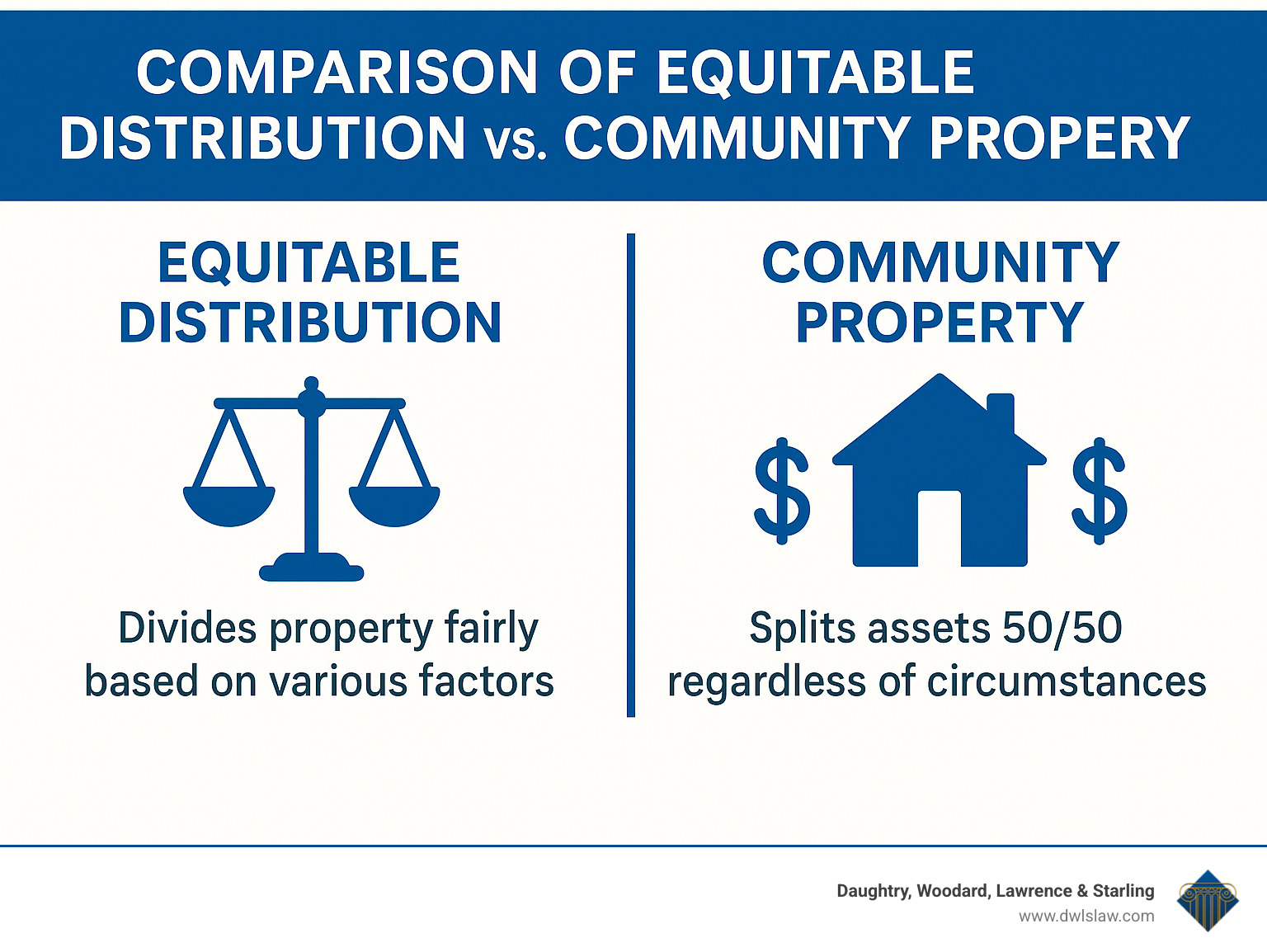
North Carolina follows “equitable distribution” principles when dividing property in divorce. This means marital property is divided fairly—though not necessarily equally—between spouses.
The process involves three essential steps that can significantly impact your financial future. First, we identify and classify all property. Marital property includes assets acquired during the marriage, while separate property covers assets acquired before marriage or through gifts and inheritance. There’s also divisible property, which refers to changes in value of marital assets during the separation period.
Next comes valuation, where we determine what everything is worth as of the date of separation. This often requires expert appraisers for businesses, real estate, and other complex assets. It’s crucial to get this right—undervaluing assets could cost you thousands.
Finally, the distribution phase begins. While North Carolina courts start with a presumption of 50/50 division, they consider factors like marriage duration, each spouse’s age and health, income levels, and contributions to the marriage before making a final determination. A stay-at-home parent’s contributions are valued equally to financial ones.
For more comprehensive information about how property division works in our state, visit our Property Division page.
Alimony in North Carolina
“Will I have to pay alimony?” or “Am I entitled to support?” These are often among the first questions clients ask us. The answer depends on one spouse’s need and the other’s ability to pay.
North Carolina courts weigh several factors when determining alimony, including how long you were married, the standard of living you established together, each spouse’s earning capacity, your ages and health conditions, and contributions to the marriage—financial and otherwise. Marital misconduct can also influence alimony decisions.
Alimony comes in different forms to address different situations. Temporary support helps during the divorce process itself. Rehabilitative alimony provides support until the recipient becomes self-supporting, perhaps after completing education or training. Permanent alimony continues until death or remarriage, while a lump sum payment offers a one-time settlement.
As family attorneys NC, we help clients on both sides of this equation understand their rights and develop realistic expectations about potential outcomes.
Prenuptial and Postnuptial Agreements
Think of these agreements as insurance policies—you hope you’ll never need them, but they provide invaluable protection if you do. North Carolina follows the Uniform Premarital Agreement Act of North Carolina, which establishes clear requirements for valid agreements.
For these agreements to stand up in court, they must include full financial disclosure from both parties, be executed voluntarily without pressure, provide opportunity for independent legal review, contain reasonable terms, and be properly signed and documented. They can address property rights, spousal support, inheritance matters, how assets will be managed during marriage, and estate planning considerations.
Many couples find that creating these agreements actually strengthens their relationship by fostering honest communication about finances before problems arise. At Daughtry, Woodard, Lawrence & Starling, our family attorneys NC craft these agreements with sensitivity, ensuring they protect our clients’ interests while respecting the relationship.
Collaborative Divorce & Mediation to Save Costs
Traditional courtroom battles can drain your bank account and emotional reserves. Fortunately, there are better alternatives for many families.
Collaborative divorce shifts the focus from winning to problem-solving. Both spouses and their attorneys commit to resolving issues without court intervention. This approach uses joint experts like financial advisors and appraisers, saving significant costs compared to hiring competing experts. The process emphasizes transparent financial disclosure and creates customized solutions for your family’s unique circumstances. Perhaps most importantly, collaborative divorce often preserves relationships, which is especially valuable when co-parenting will continue.
Mediation offers similar advantages. Working with a neutral mediator typically costs substantially less than litigation and moves at your pace rather than the court’s crowded calendar. The process remains private, keeping sensitive family matters out of public court records. The mediator facilitates communication, helps identify underlying interests, generates creative options, and guides you toward agreements that work for everyone involved.
As your family attorneys NC, we’ll help determine which approach might work best for your situation. Many clients find that these alternatives not only save money but also reduce stress and give them greater control over their futures.
Choosing the Right Family Attorney NC
Selecting the right family attorney NC is one of the most important decisions you’ll make during a family law matter. The attorney you choose will become your trusted guide through complex legal waters and help shape outcomes that may affect you and your children for years to come.
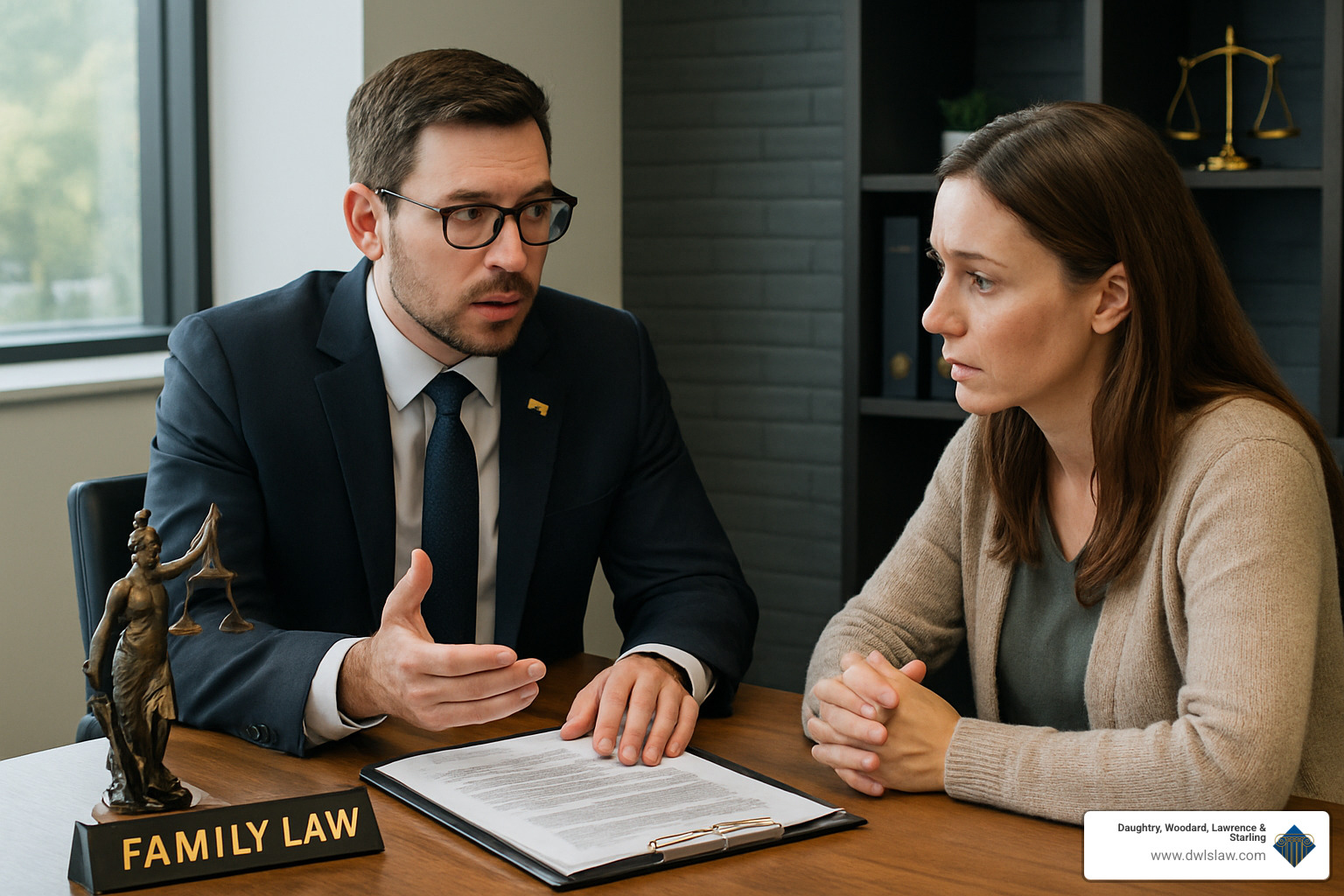
When you’re facing something as personal as divorce or a custody dispute, you need more than just legal expertise—you need someone who genuinely cares about your family’s future. Think of finding the right attorney as starting a relationship, not just hiring a service provider.
The best family attorney NC for your situation will have a blend of experience, specialized knowledge, and a communication style that resonates with you. Look for an attorney who has significant experience handling cases similar to yours. Have they worked with families in your specific situation? Do they understand the nuances of your particular concerns?
Board certification matters tremendously in family law. Only about 1% of North Carolina lawyers hold the distinction of being Board Certified Family Law Specialists. This rare credential signals that an attorney has demonstrated exceptional knowledge through rigorous examination, peer recognition, and experience in family law matters.
Pay attention to an attorney’s approach during your initial meeting. Do they listen more than they speak? The best family attorney NC will take time to understand your unique situation before proposing solutions. Some attorneys lean toward settlement while others are more litigation-focused—neither approach is inherently better, but one may better suit your needs.
Accessibility is another crucial factor. Will you work directly with the attorney or primarily with paralegals? How quickly do they typically respond to client communications? During emotional family transitions, knowing you can reach your attorney when needed provides invaluable peace of mind.
At Daughtry, Woodard, Lawrence & Starling, we serve families throughout Johnston and Sampson Counties from our offices in Smithfield and Clinton. We offer comprehensive consultations to help you determine if our approach aligns with your needs and goals. Learn more about our services at Family Law Attorneys in Smithfield, NC.
Why a Board-Certified Family Attorney NC Matters
When you’re entrusting someone with matters as important as your children’s future or your financial security, expertise matters. Board Certification as a Family Law Specialist represents the highest level of recognition for family law attorneys in North Carolina.
This prestigious distinction requires passing an intensive examination specifically focused on family law principles and procedures. It’s not just about book knowledge—certification requires positive evaluations from judges and fellow attorneys who are familiar with the lawyer’s work and reputation.
To maintain this certification, attorneys must demonstrate substantial ongoing involvement in family law, with specific percentages of their practice devoted to various family law matters. They must also complete additional continuing legal education focused exclusively on family law—staying current with evolving statutes and case law.
When you work with a board-certified family attorney NC, you’re getting more than just experience—you’re benefiting from recognized excellence. This certification provides peace of mind that your attorney has demonstrated mastery of family law principles and best practices.
How to Prepare for Your Consultation with a Family Attorney NC
Your initial consultation sets the foundation for your case, so coming prepared helps your family attorney NC hit the ground running. Think of this meeting as a two-way interview—you’re evaluating the attorney, but they’re also gathering critical information to help you.
Before your consultation, gather key financial documents that paint a picture of your situation. Recent tax returns, pay stubs, bank statements, and information about assets like property deeds and retirement accounts give your attorney the financial landscape they need to advise you properly. Don’t worry about having everything perfectly organized—just bringing what you have is tremendously helpful.
If children are involved, come ready to discuss your current parenting arrangements and any concerns you have. Bring school schedules, information about extracurricular activities, and thoughts about your ideal parenting arrangement moving forward. Be honest about any concerns regarding the other parent, as these details help your attorney develop appropriate strategies.
Take some time to reflect on your priorities before the meeting. What matters most to you? Is maintaining the family home your top concern? Maximizing time with your children? Financial security? Having clarity about your goals helps your attorney develop strategies aligned with what truly matters to you.
Prepare questions that will help you understand the attorney’s approach and what to expect. Ask about their experience with cases like yours, their communication style, typical timelines, and what you can do to strengthen your position. A good family attorney NC welcomes these questions and provides straightforward answers.
This initial meeting is just the beginning of what may be a long relationship. Being open, honest, and prepared helps establish trust and sets the stage for effective representation during one of life’s most challenging transitions.
Frequently Asked Questions about North Carolina Family Law
How long does it take to finalize a divorce in NC?
When clients walk into my office, this is often their first question. The honest answer? It depends, but there’s a minimum timeline we can’t avoid in North Carolina.
The clock starts with our mandatory separation period – one year and one day. This isn’t just a suggestion; it’s required by state law before you can even file for divorce.
After that waiting period, the process varies:
– For uncontested divorces (where you agree on everything), expect about 45-90 days from filing to finalization
– If you’re disputing property, support, or custody matters, the timeline stretches considerably longer
What surprises many clients is that you don’t have to resolve everything before finalizing the divorce itself. Property division and alimony can be settled either before or after your divorce is granted. And you don’t have to wait on addressing child custody and support – we can tackle those issues during your separation year.
For most straightforward cases, you’re looking at about 13-15 months from separation to final decree. Complex or high-conflict cases can take significantly longer – sometimes years rather than months.
Can one lawyer represent both spouses?
I’m often asked this question by couples hoping to save money, and I have to give them the straightforward answer: No, one lawyer cannot ethically represent both spouses in a divorce or family law matter.
Even in the most amicable splits, spouses have inherently competing interests. As a family attorney NC, I’m bound by ethical rules that prevent me from representing two parties with conflicting goals.
That said, you do have options:
– One spouse can hire an attorney while the other represents themselves (though I generally don’t recommend this)
– You could work with a neutral mediator (who can’t give either of you legal advice)
– You might each hire your own attorney but pursue a collaborative approach
– Some attorneys offer limited services like document review for the unrepresented party
At Daughtry, Woodard, Lawrence & Starling, we’re happy to represent one spouse while explaining the importance of independent legal advice for the other. This protects everyone’s interests while keeping the process as streamlined as possible.
What rights do grandparents have for visitation?
Grandparents often call our office deeply concerned about maintaining relationships with their grandchildren during family upheaval. North Carolina law provides more limited grandparent rights than some states, but there are important pathways to pursue visitation.
As a family attorney NC, I help grandparents understand when they can legally seek visitation:
– During an active custody case between parents
– When a parent has passed away and the surviving parent restricts contact
– If custody has been awarded to someone other than a parent
– When the grandparent has essentially acted as a parent (what the law calls “in loco parentis”)
Success in these cases requires demonstrating three key elements: an existing meaningful relationship with the grandchild, evidence that visitation serves the child’s best interests, and showing that denying contact would harm the child’s well-being.
These cases can be challenging because courts generally respect fit parents’ decisions about who their children spend time with. However, when circumstances warrant intervention, our experienced family attorneys NC can help grandparents steer the legal process with sensitivity and care.
The emotional stakes in grandparent visitation cases are incredibly high. We approach these matters with both legal expertise and compassion for the complex family dynamics involved.
Conclusion
When your family’s future hangs in the balance, having the right legal guidance isn’t just helpful—it’s essential. Family law matters touch the most intimate parts of your life: your children, your home, your financial security, and your emotional well-being.
At Daughtry, Woodard, Lawrence & Starling, we don’t just practice family law—we live it every day, walking alongside our clients through life’s most challenging transitions. As family attorneys NC, we bring both legal expertise and genuine compassion to each case, recognizing that behind every legal document is a family in transition.
What makes our approach different? We see you as a person first, not just a case number. Your family’s unique dynamics, concerns, and goals shape our strategy from the very beginning. Whether you’re navigating a difficult divorce, fighting for time with your children, or building your family through adoption, we tailor our approach to what matters most to you.
Our family law team offers comprehensive support across all areas:
– Guiding you through the separation and divorce process with clarity and compassion
– Advocating fiercely for your parental rights in custody proceedings
– Protecting your financial future through skillful property division and support negotiations
– Providing immediate assistance and protection in domestic violence situations
– Creating new family bonds through adoption
– Offering peaceful alternatives to courtroom battles through mediation and collaborative law
With convenient offices in Smithfield and Clinton, we’re accessible to families throughout Johnston County, Sampson County, and neighboring communities. Our team includes board-certified family law specialists—a distinction held by less than 1% of North Carolina attorneys—reflecting our commitment to excellence in family law practice.
We also proudly offer bilingual support, ensuring that language barriers never stand between you and the quality legal representation your family deserves.
Family law matters are deeply personal journeys that no one should walk alone. When you need a family attorney NC who combines legal firepower with a genuinely caring approach, Daughtry, Woodard, Lawrence & Starling stands ready to help you write your family’s next chapter.
For specific information about divorce representation, visit our Divorce Lawyer page and take the first step toward the resolution and peace of mind your family deserves.