
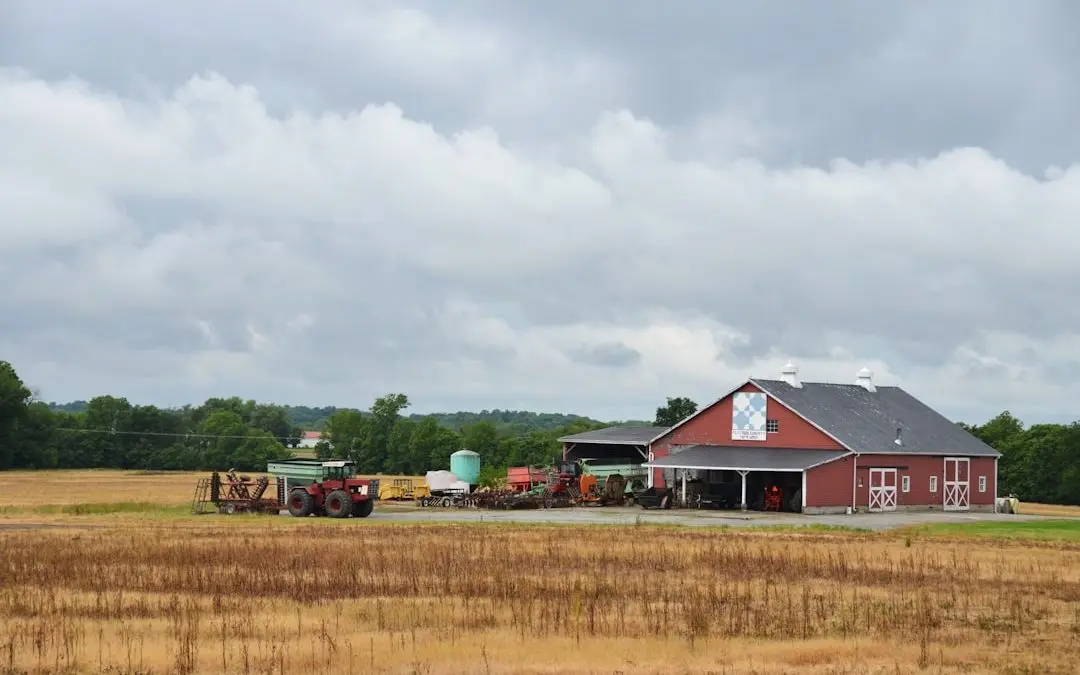
Why Farm Estate Planning Demands Immediate Attention
Estate planning for farmers creates unique challenges that go far beyond a simple will. Unlike other business owners, farmers face the complex task of transferring land-rich but cash-poor operations while preserving family legacy and ensuring business continuity.
Key components of effective farm estate planning include:
- Business structure selection – LLC, partnership, or corporation for liability protection
- Tax minimization strategies – Special-use valuation and gifting programs
- Succession planning – Identifying and training the next generation
- Asset equalization – Balancing farming and non-farming heirs fairly
- Risk management – Life insurance and buy-sell agreements
The numbers tell a sobering story. According to USDA data, only 30% of family farms have formal succession plans, yet roughly 70% of U.S. farmland will change hands in the next 20 years. With the average farmer now 58 years old and more than 80% of farm assets tied up in land, the window for planning continues to narrow.
Without proper planning, families risk losing multi-generational operations to estate taxes, family disputes, or forced liquidation. Equal division among heirs – while seeming fair – often destroys the farm’s viability when parcels become too small for efficient operation.
I’m Kelly K. Daughtry, and through decades of legal practice at Daughtry, Woodard, Lawrence & Starling, I’ve helped countless North Carolina farming families steer the complexities of estate planning for farmers while preserving their agricultural legacy.
Estate Planning for Farmers: Why It’s Different
Estate planning for farmers presents unique challenges that make it absolutely essential. Farm families face what I call the “agricultural paradox” – you may be land-rich but cash-poor. More than 80% of farm assets are tied up in land, creating substantial estate tax exposure despite cash flow struggles.
Unlike other businesses, you can’t divide a farm into equal pieces and expect it to remain viable. When farmland gets split among multiple heirs, parcels often become too small for efficient operation, destroying the very thing you’re trying to preserve.
Farmland represents generations of family history and identity. The emotional weight of keeping land “in the family name” creates intense pressure that clouds practical decision-making. Agricultural operations also face unique creditor risks from environmental regulations to product liability claims.
Special tools exist specifically for agriculture, like special-use valuation under IRC Section 2032A, which allows qualified farm property to be valued at agricultural use rather than development value, potentially reducing estate taxes by up to $1.19 million.
The most challenging aspect is navigating complex family dynamics. Farms often require hands-on involvement from the next generation, creating tension when one child wants to continue farming while siblings pursue different careers.
Key Goals of Estate Planning for Farmers
Effective estate planning for farmers must accomplish five critical objectives:
Transferring ownership efficiently means ensuring the farm passes to the next generation without disrupting operations or destroying economies of scale.
Minimizing tax liability requires understanding federal estate tax rules and special agricultural provisions. Strategic planning can use annual gifting programs and other techniques to protect your family’s wealth.
Securing the retiring generation’s financial future without jeopardizing the farm’s cash flow often requires creative solutions like life insurance strategies or installment sales.
Developing management skills in the next generation involves gradual transfer of responsibilities and sometimes formal training programs.
Keeping land in agriculture through conservation easements, agricultural covenants, and specialized trust structures ensures your land stays in farming for generations.
Common Reasons Farmers Avoid Planning
Time constraints top the list of obstacles. Farming demands long hours, making legal planning feel like an unaffordable luxury. However, spending time planning now prevents much bigger time commitments later when crisis strikes.
Cost concerns prevent many families from seeking help, often based on misconceptions. Inadequate planning creates far higher expenses down the road through forced land sales, family lawsuits, and unnecessary tax bills.
The “equal is fair” myth causes more farm destruction than almost any other factor. Well-intentioned equal distribution frequently destroys the farm’s viability, leaving everyone worse off than thoughtful, unequal distribution would have.
The biggest risk is having no plan. When families don’t plan, state intestacy laws control asset distribution regardless of what the family wants, often resulting in forced sales and complete loss of multi-generational farming operations.
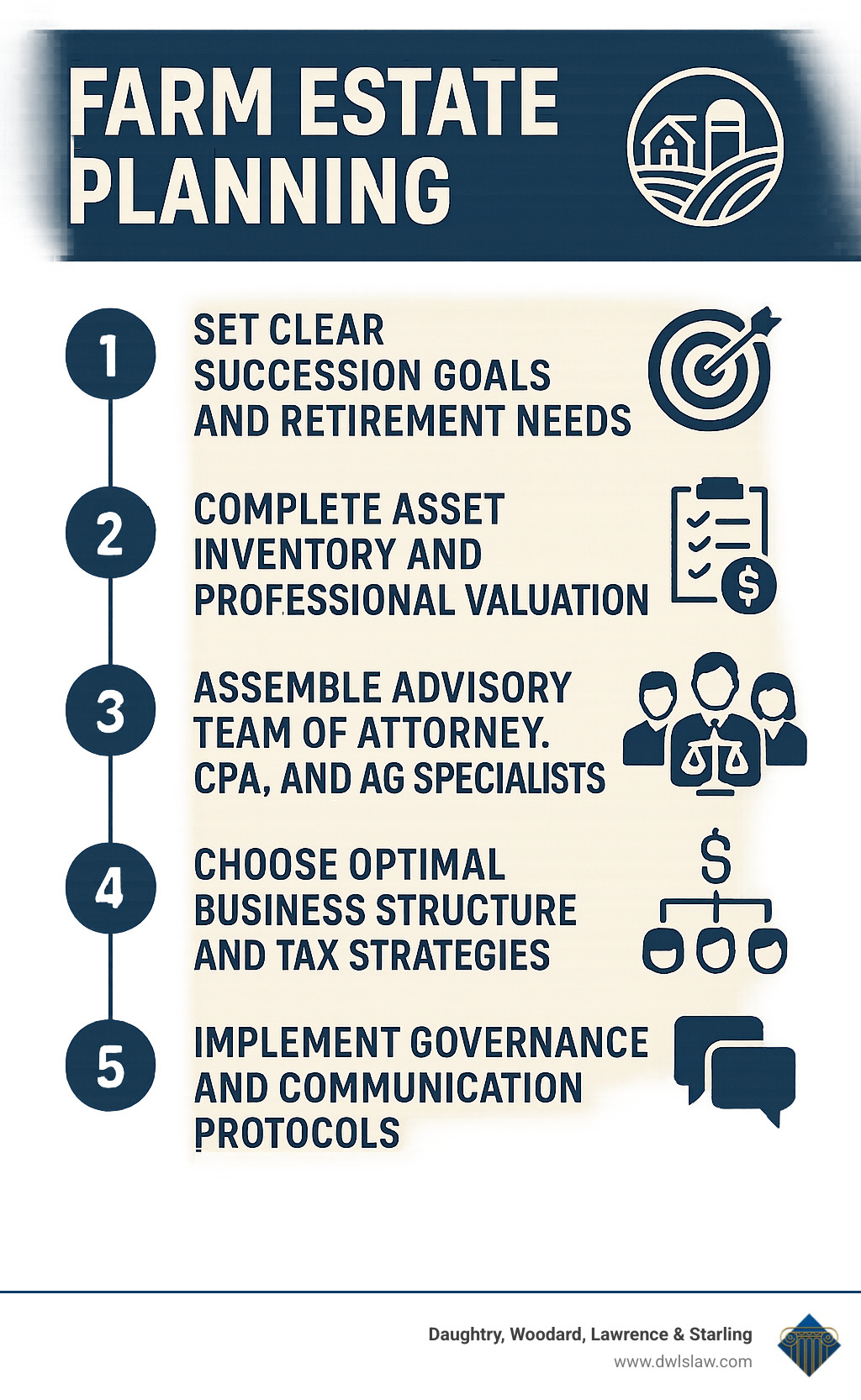
Building Your Farm Estate Plan: Step-by-Step Roadmap

Creating an effective estate planning for farmers strategy requires a systematic approach addressing both immediate needs and long-term goals. Successful plans follow a structured roadmap adaptable to each family’s unique circumstances.
The foundation starts with clear goal-setting and honest family communication. Asset inventory and valuation form the next critical step – many farming families are surprised to find their true net worth when land purchased decades ago has appreciated significantly.
Professional team assembly brings together specialists who understand agricultural operations. Communication planning ensures all family members understand their roles and the reasoning behind estate planning decisions.
Succession planning for farms: Ensuring a smooth transition requires careful coordination of all these elements.
Starting Your Estate Planning for Farmers Checklist
Set Your Vision: What do you want your farm to look like in 10, 20, or 30 years? Understanding your long-term vision guides every other decision.
Define Retirement Needs: How much income will you need in retirement, and where will it come from? Clear financial projections help determine how much of the farm can be transferred and when.
Clarify Heirs’ Roles: Which family members are interested and capable of continuing the farming operation? This requires honest assessment of skills, commitment, and family dynamics.
Prepare Emergency Documents: Every farmer needs basic emergency documents including durable powers of attorney, healthcare directives, and updated beneficiary designations.
Inventory & Valuation
Land Assets: Document all real estate holdings including farmland, buildings, and development rights. Professional appraisal is essential, as land values vary significantly based on soil quality, location, and development potential.
Equipment and Livestock: Farm machinery and livestock require specialized valuation methods. Consider both replacement cost and actual market value for estate planning purposes.
Water Rights and Mineral Rights: These often-overlooked assets can represent significant value, especially as agricultural water becomes scarcer.
Assemble Your Advisory Team
Estate Planning Attorney: Choose an attorney with specific experience in agricultural estate planning who understands special-use valuation and farm-specific challenges.
Agricultural CPA: Tax planning for farms involves specialized knowledge of agricultural accounting, depreciation recapture, and farm-specific tax elections.
Insurance Professional: Life insurance often plays a key role in farm estate planning, providing liquidity for estate taxes and equalizing inheritances.
Estate planning essentials: Protecting your assets and loved ones provides additional guidance on building your advisory team.
Choosing the Right Business Structure
Limited Liability Company (LLC): Provides liability protection while maintaining tax flexibility. LLCs have become popular for farm succession planning because membership interests can be gifted gradually.
Family Limited Partnership (FLP): Allows senior generation to maintain control while gradually transferring ownership to younger family members.
Joint Tenancy Pitfalls: Many farmers title property jointly with children, thinking this avoids probate. However, joint ownership exposes the farm to creditors and divorce settlements of all joint owners.
Estate Planning for Farmers Tax Toolkit
Federal Estate Tax Exemption: For 2023, the federal exemption is $12.92 million per individual ($25.84 million for married couples).
Section 2032A Special-Use Valuation: Allows qualified farm property to be valued at agricultural use rather than highest-and-best-use value, with maximum reduction of $1.19 million.
Annual Gifting Programs: The annual gift tax exclusion ($17,000 per recipient in 2023) allows gradual transfer of farm assets without using lifetime exemptions.
Advanced Strategies to Keep Land and Legacy Intact
When your family has farmed the same land for generations, sophisticated estate planning for farmers strategies can preserve your agricultural legacy while providing significant tax benefits and family flexibility.
Conservation easements represent one of the most powerful tools for permanent farmland protection. These voluntary deed restrictions prevent non-agricultural development while allowing continued farming operations. The tax benefits can be substantial, often providing income tax deductions worth hundreds of thousands of dollars.
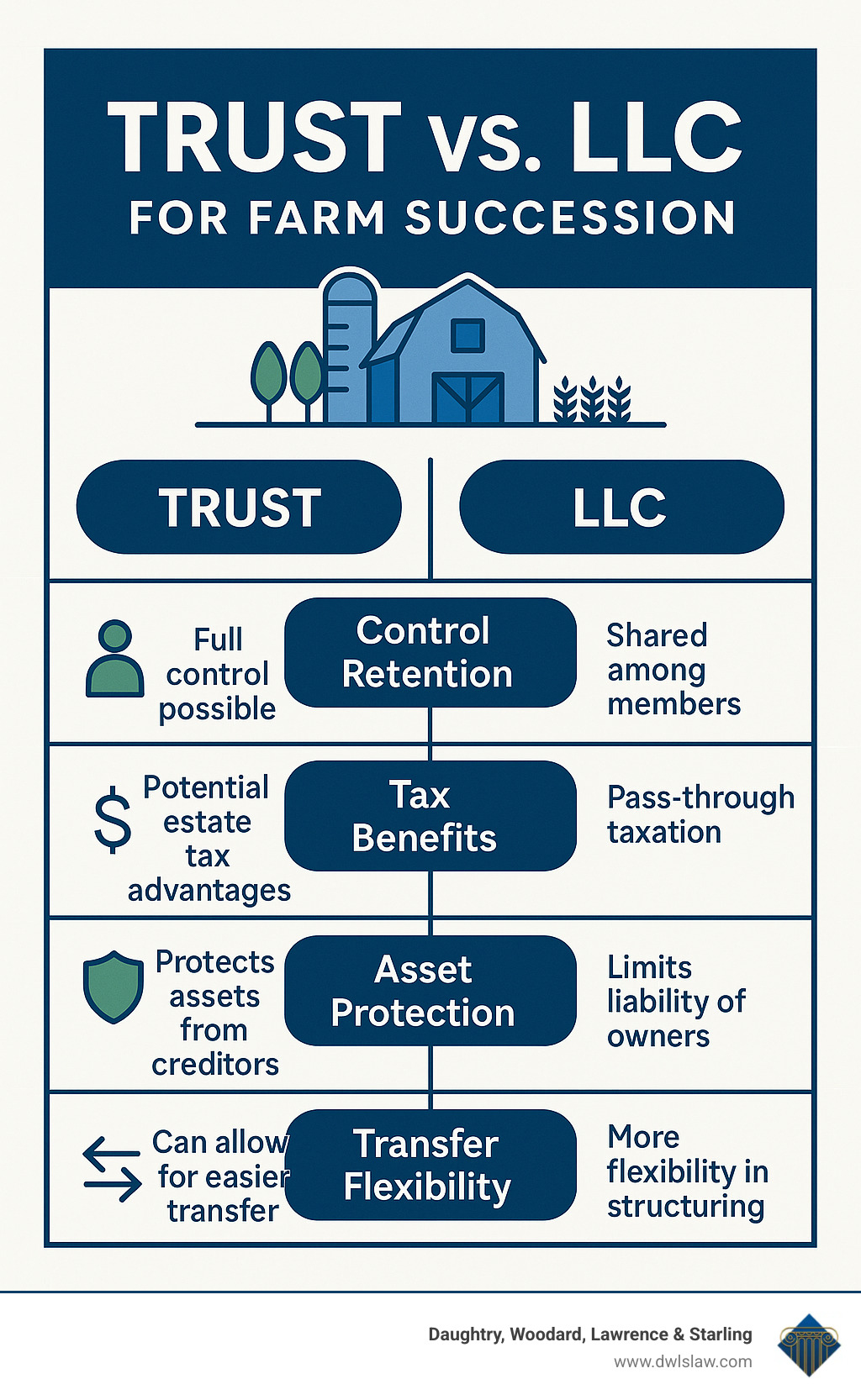
Trust structures offer protection and control that can benefit multiple generations while maintaining specific requirements for agricultural use. Intentionally Defective Grantor Trusts (IDGTs) are incredibly effective for large farm estates, allowing trust assets to grow tax-free for beneficiaries.
Family LLC structures offer tremendous flexibility. Different classes of membership interests allow senior family members to retain control while gradually transferring ownership to the next generation.
Trusts & Entities for Estate Planning for Farmers
Living trusts avoid probate while allowing you to maintain complete control during your lifetime. For farms with property in multiple states, living trusts eliminate the need for probate proceedings in each state.
Irrevocable Life Insurance Trusts (ILITs) address farming families’ biggest challenges: providing liquidity for estate taxes and equalizing inheritances among heirs. The farming heir gets the land and equipment, while non-farming heirs receive life insurance proceeds.
Operating LLCs have revolutionized farm succession planning because of their incredible flexibility. The operating agreement becomes your family’s constitution, spelling out management responsibilities, profit distributions, and succession terms.
Buy-Sell & Installment Agreements
Buy-sell agreements specify exactly what happens when certain events occur, preventing family disputes during stressful times. Trigger events need clear definition – death, disability, retirement, divorce, or fundamental disagreements about farm direction.
Payment terms must be realistic based on actual farm cash flow. Installment payments allow the farming heir to buy out siblings over time without jeopardizing operations.
Protecting Farmland for Future Generations
Conservation easements represent the gold standard for permanent farmland protection. These voluntary deed restrictions prevent development while allowing continued agricultural use, providing substantial tax benefits.
The Buy-Protect-Sell model offers an innovative solution for farmers without family successors. Land trusts can purchase farmland, place conservation easements, then resell to qualified farmers at agricultural value.
Estate and Succession Planning for the Farm provides additional resources for farmland preservation strategies.
Avoiding Pitfalls and Preventing Family Disputes

Most farm succession failures happen not because of poor legal planning, but because families can’t get along. Estate planning for farmers becomes exponentially more complex when family relationships are strained.
Communication protocols form the backbone of successful family farm transitions. This means regular, structured family meetings where everyone has a voice and concerns can be addressed openly.
Written governance structures take the guesswork out of daily operations and major decisions. When everyone knows who makes what decisions and how conflicts get resolved, there’s less room for misunderstandings.
Top 5 Mistakes (and Fixes)
No written plan tops the list of costly errors. Verbal promises create confusion and heartache when memories differ or circumstances change. The fix: put everything in writing, signed and witnessed properly.
Joint titling with in-laws seems generous but creates legal nightmares. When you add your daughter-in-law’s name to the deed, you’re also adding her creditors and potential divorce settlement to your farm’s risk profile.
Outdated land valuations catch many families off guard. That $2,000-per-acre farmland might now be worth $15,000 per acre, completely changing your estate tax picture.
Equal-split liquidation destroys more family farms than drought and disease combined. When parents divide 800 acres equally among four children, the farming child rarely has enough cash to buy out three siblings.
Copy-and-paste neighbor plans ignore the unique aspects of your family situation. What worked for another farm might be completely wrong for your operation.
Decision-Making & Governance Structures
Operating agreements spell out who has authority over different aspects of the farm operation. Voting rights don’t have to follow ownership percentages exactly – you might give the actively farming child more say in operational decisions.
Compensation for the on-farm heir addresses one of the biggest sources of family resentment. The child who stays home to work the farm deserves fair pay for their labor, separate from any ownership distributions.
Conclusion

As the sun rises over your family’s acreage each morning, it illuminates more than just crops and pastures – it shines on a legacy that deserves protection. Estate planning for farmers isn’t just about legal documents and tax strategies. It’s about honoring the generations who worked this land before you and ensuring it continues to thrive long after you’re gone.
The journey we’ve taken together through this guide shows that farm succession planning doesn’t have to feel impossible. Yes, the challenges are real – from being land-rich but cash-poor to balancing the needs of farming and non-farming heirs. But with the right approach and professional guidance, these challenges become manageable steps toward securing your family’s future.
Every successful farm estate plan starts with clear communication and shared vision. When families take time to sit around the kitchen table and talk honestly about their hopes and concerns, magic happens. Suddenly, what seemed like impossible problems become opportunities for creative solutions.
The systematic approach we’ve outlined – from setting goals through implementing advanced strategies – has helped countless North Carolina farming families protect their agricultural heritage. Whether you’re managing a small tobacco farm or extensive livestock operations, the principles remain the same: start early, plan thoroughly, and work with people who understand agriculture.
At Daughtry, Woodard, Lawrence & Starling, we’ve seen how proper planning transforms family stress into family confidence. Our board-certified specialists don’t just understand estate law – we understand the unique rhythm of farm life and the deep connections families have to their land.
Time is your most valuable ally in this process. The earlier you start, the more options you’ll have for minimizing taxes, training successors, and creating win-win solutions for all family members. Don’t let another planting season pass without taking action.
Modern farming involves more than just land and equipment. Consider digital assets in the estate planning process as you plan for succession. Farm management software, online banking, and digital records are increasingly important parts of agricultural operations that need protection too.
Your farm represents something precious – a living legacy that connects past, present, and future. With thoughtful planning, that legacy can continue nurturing both your family and your community for generations to come. The peace of mind that comes from knowing your life’s work is protected is truly priceless.
We understand the weight of these decisions because we’ve walked this path with farming families throughout North Carolina. Our compassionate, experienced team is ready to help you craft a succession plan that honors your values while protecting your assets.
Your agricultural legacy deserves expert protection. Contact Daughtry, Woodard, Lawrence & Starling today to begin creating a farm succession plan that ensures your family’s farming tradition continues to flourish for generations to come.
Frequently Asked Questions
How early should I start estate planning for farmers?
The ideal time to begin is when you have significant assets or family responsibilities. The sweet spot for comprehensive planning typically falls in your 50s and 60s, giving you the perfect balance of accumulated assets with enough runway for gradual implementation strategies.
Starting early opens doors that slam shut as time passes. Gradual transfer strategies work best when you have years to minimize gift and estate taxes while giving the next generation time to develop real management skills.
The average American farmer is now 58 years old, meaning succession planning has moved from “someday” to “right now” territory for many families.
Can I treat farming and non-farming heirs fairly without dividing land?
Absolutely. Fairness doesn’t mean identical treatment – it means appropriate treatment based on each person’s role, contribution, and life circumstances.
Smart families use different types of assets to create equitable inheritances. The farming operation goes to the active heir, while life insurance proceeds, retirement accounts, or other investments go to non-farming heirs.
Buy-sell agreements offer another solution. The farming heir can purchase siblings’ interests over time, providing fair compensation without forcing an immediate fire sale of the land.
Will the federal estate tax really hit my farm?
For most farming families today, federal estate taxes won’t be a concern. The 2023 exemption sits at $12.92 million per individual – $25.84 million for married couples.
However, land appreciation can push farm estates above these thresholds faster than expected. Fortunately, farmers have special tools like special-use valuation under Section 2032A, which can slice up to $1.19 million off your taxable estate.
Current estate tax exemptions are scheduled to decrease significantly after 2025 unless Congress acts, which could suddenly bring many more farm estates into taxable territory.