

Why Finding the Right DWI Criminal Defense Lawyer Can Change Everything
A DWI criminal defense lawyer is your frontline defender when a night on the road turns into flashing lights and handcuffs. Facing a DWI charge can be overwhelming, but the right attorney can often turn what feels like the end of the world into a manageable legal problem by providing a clear strategy and seasoned guidance.
- Immediate protection – From the moment you hire them, a lawyer safeguards your constitutional rights, advising you on how to interact with law enforcement and ensuring no procedural missteps compromise your case. They also take immediate action to protect your driving privileges.
- Evidence challenges – A skilled attorney carefully scrutinizes every piece of evidence, questioning the validity of breath tests, the administration of field sobriety steps, and the legality of the initial police stop.
- Penalty reduction – Your lawyer is your advocate, negotiating with prosecutors for lesser charges or alternative sentencing options like community service or substance abuse treatment programs, which can be far preferable to jail time.
- Court navigation – The legal system is a maze of deadlines, hearings, and paperwork. A DWI lawyer handles all these complexities, including all communication with the prosecutor’s office, so you can focus on your life.
- Long-term impact – A conviction has consequences far beyond the courtroom. An experienced lawyer works to protect your job, prevent catastrophic insurance rate hikes, and keep your permanent record clean.
North Carolina treats DWI harshly: mandatory jail time, steep fines, license suspension, and a lifelong criminal record are all on the table, even for a first offense. Yet many cases end in reduced charges—or even dismissal—when handled quickly and aggressively by a focused lawyer who understands the local legal landscape.
I’m Kelly K. Daughtry of Daughtry, Woodard, Lawrence & Starling. My team has guided countless clients through this exact crisis across Johnston and Sampson counties. With an attorney who knows DWI law inside and out, you can start reclaiming your future within hours, not weeks.
Understanding the Stakes: What a DWI Charge Really Means
In North Carolina, a DWI is never “just a ticket.” It’s a serious criminal offense that initiates two separate legal battles the moment you are charged:
- The criminal charge – This is handled in criminal court and can range from a misdemeanor (Levels 5 through Aggravated Level 1) to a felony for habitual offenders or in cases involving serious injury or death.
- Administrative license revocation (ALR) – This is a civil action handled by the DMV. It begins immediately and can result in the loss of your license long before your criminal case is resolved.
Sentencing is determined by a complex balancing of aggravating and mitigating factors. Here is a brief overview of the penalty range:
- Level 5 – The least severe, typically for cases with more mitigating factors. Penalties include up to a $200 fine and 24 to 60 days in jail, which can often be suspended in favor of probation and community service.
- Level 1 – A serious misdemeanor with significant aggravating factors. Penalties include up to a $4,000 fine and a jail sentence from 30 days to 2 years, with the minimum 30 days being mandatory.
- Habitual – A felony charge for individuals with multiple prior convictions, leading to much harsher sentencing, including significant mandatory prison time.
The Domino Effect of a DWI Conviction
A guilty plea or verdict sets off a cascade of collateral consequences:
- Steep insurance hikes, often requiring expensive SR-22 coverage for years.
- Ignition interlock device installation on your vehicle at your own expense, or a complete loss of your license.
- Threats to professional licenses for nurses, pilots, commercial drivers, and others, potentially ending your career.
- Loss of student financial aid and potential disciplinary action from your university.
- Possible firearm restrictions, especially if the conviction is a felony.
Why “Any Lawyer” Won’t Do
DWI defense is a highly technical field that blends constitutional law, forensic science, and intricate local courtroom customs. A general practitioner who only occasionally handles DWI cases may overlook critical defense opportunities, such as:
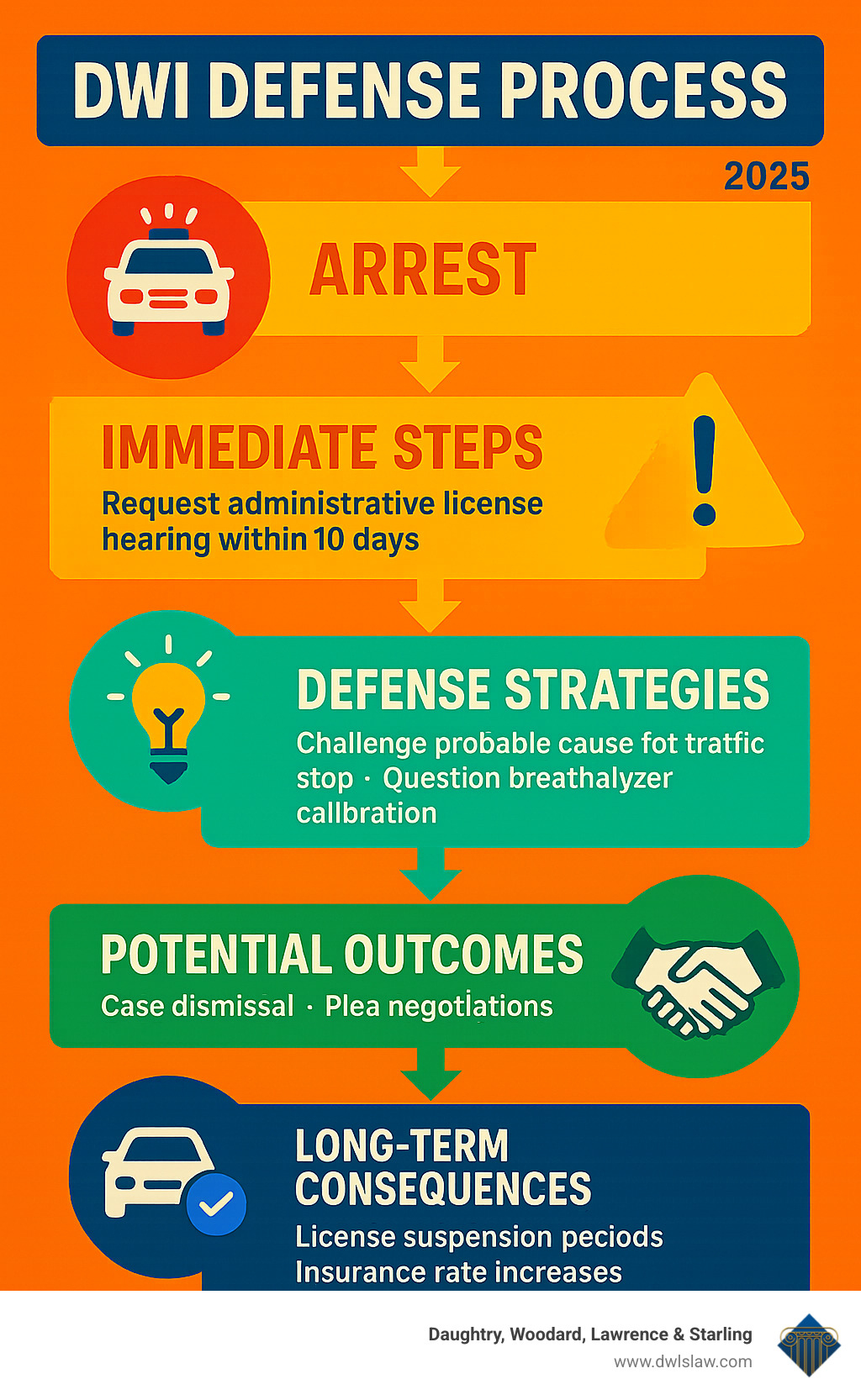
- The strict 10-day deadline to challenge the administrative license revocation.
- Inconsistencies in the maintenance and calibration records for breath testing instruments.
- Breaks in the chain of custody for blood test samples, which can render them inadmissible.
- Subtle but critical errors in how police administered the field sobriety tests.
These seemingly minor details are often the key to a successful defense. Overlooking them can be the difference between freedom and a lifelong conviction.
How to Choose the Right DWI Criminal Defense Lawyer for Your Case

Choosing your legal representative is one of the most important decisions you’ll make. Most dedicated DWI lawyers offer a free consultation, which is your opportunity to interview them. Come prepared with pointed questions so you can decide quickly and confidently.
Core Qualities to Seek
- Former prosecutor insight: Lawyers who have worked as prosecutors understand the opposition’s playbook and can build a stronger defense by anticipating their strategies.
- Advanced training: Look for specific training in the administration of Standardized Field Sobriety Tests (SFST) and the science behind breath testing devices.
- Criminal-law board certification: This is a significant achievement that indicates a lawyer has been recognized by their peers for their high-level skill in criminal defense.
- Documented case results: While no attorney can promise a specific outcome, a history of successful results (like dismissals and reductions) demonstrates experience and competence.
- Respectful, bilingual communication: Your lawyer should be able to communicate clearly and respectfully, with bilingual support available if you need it.
Crucial Questions to Ask
- Who will handle my case day-to-day? (Ensures you know who your primary contact will be.)
- What are the realistic best- and worst-case outcomes for a case like mine?
- Which specific pieces of evidence do you plan to challenge and how?
- How do you keep clients updated on case progress?
- What is your fee structure, and what total costs should I expect?
Defenses an Attentive Lawyer Will Explore
A thorough defense investigates every angle. An experienced lawyer will explore possibilities such as:
- Unlawful traffic stop: Did the officer have the legally required reasonable suspicion to pull you over in the first place?
- Botched field sobriety tests: Were the tests administered correctly according to national standards? Were conditions (weather, lighting, surface) appropriate?
- Breathalyzer malfunctions: Was the machine properly calibrated and maintained? Did the officer operate it correctly?
- Contaminated blood samples or bad chain-of-custody: Was the blood sample handled properly from collection to testing to prevent contamination or misidentification?
- Medical or medication-related false positives: Could a medical condition like GERD or a prescribed medication have skewed the test results?
- Involuntary intoxication defense: Were you drugged without your knowledge or did you have an unexpected reaction to a prescribed medication?
Your Immediate Next Steps After a DWI Arrest

The moments following a DWI arrest are critical. A few calm, informed choices right now can reshape the entire trajectory of your case.
- Stay polite, but say little. You are required to provide your license and registration. Beyond that, you should politely invoke your right to remain silent. You are not obligated to answer questions about where you were going or what you’ve had to drink. You can also refuse to perform field sobriety tests—this is your right in North Carolina.
- Consider the breath test carefully. Under North Carolina’s “implied consent” law, refusing a chemical test (like a breathalyzer at the station) results in an automatic one-year license suspension. However, providing a sample gives the prosecution powerful evidence. This is a difficult trade-off, and it’s a decision best made with legal advice if possible.
- Call a lawyer immediately. Do not wait. The sooner you have an attorney, the sooner they can begin protecting your rights, preserving evidence, and preparing your defense. Most importantly, they can meet the critical 10-day deadline for your license hearing.
- Document everything. As soon as you are able, write down every detail you can remember. This includes the time of the stop, everything the officer said, the sequence of events, any medication you took, what you ate and drank, and the names and badge numbers of the officers involved. Find any receipts or phone records that can help establish a timeline.
Act Fast—Your License Clock Is Ticking
After a DWI arrest, you have only 10 calendar days to request an administrative license revocation (ALR) hearing with the DMV. This hearing is your only chance to challenge the immediate, automatic suspension of your license. If you miss this deadline, you will lose your license for at least 30 days (for a first offense if you blew over the limit) or one year (for a refusal), regardless of the outcome of your criminal case. An experienced lawyer can file this request for you and represent you at the hearing.
At Daughtry, Woodard, Lawrence & Starling, we guide clients in Smithfield, Clinton, and throughout Johnston and Sampson counties through each step—often starting the same day we’re hired. Contact a DWI Lawyer to start your defense. Waiting only makes the mountain steeper.
A DWI arrest isn’t the end. With quick, focused legal help, it can become just one hard chapter in a much longer story.
Frequently Asked Questions
Why should I hire a DWI criminal defense lawyer immediately after an arrest?
Timing is critical. A DWI criminal defense lawyer can preserve evidence, meet the strict 10-day DMV license hearing deadline, and begin building a strong defense strategy from day one.
How can a DWI criminal defense lawyer reduce penalties?
An experienced lawyer can negotiate lesser charges, alternative sentencing like community service or substance abuse programs, and work to minimize long-term impacts on your driving record and insurance.
What makes a DWI criminal defense lawyer different from a general lawyer?
DWI defense is highly technical, involving constitutional law, forensic science, and local courtroom practices. A specialized DWI criminal defense lawyer knows how to spot errors in traffic stops, testing devices, and police procedure that a general attorney might miss.
Can a DWI criminal defense lawyer help with administrative license revocation (ALR)?
Yes. A DWI criminal defense lawyer files for your ALR hearing within the 10-day limit, challenges the suspension, and represents you at the DMV to protect your driving privileges.
What should I ask a DWI criminal defense lawyer during a consultation?
Ask about their experience with DWI cases, success rates, how they handle evidence challenges, who will manage your case day-to-day, realistic outcomes, and their fee structure.


