

Why Board Certification Matters for Your Criminal Defense
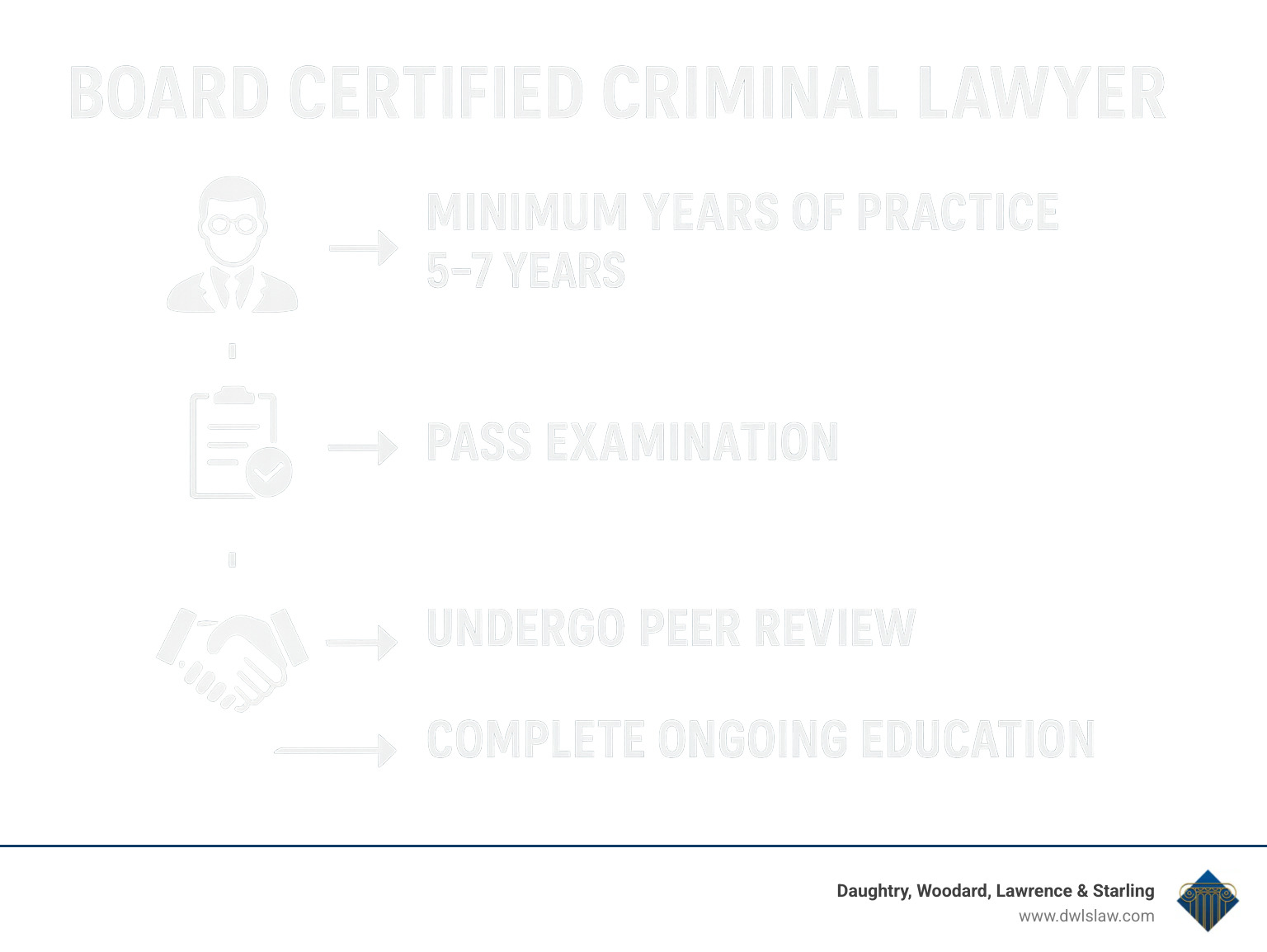
A board certified criminal lawyer has met rigorous standards beyond basic licensing – including years of criminal law practice, peer review, and passing demanding exams. Here’s what board certification means:
Key Requirements:
- Minimum 5-7 years of criminal law practice
- Substantial courtroom experience in criminal cases
- Pass cthe omprehensive written examination
- Undergo peer review by judges and attorneys
- Complete ongoing continuing legal education (CLE)
- Annual recertification and compliance reporting
Quick Facts:
- Only about 10% of criminal lawyers in Texas are board certified
- Less than 100 lawyers in Ontario hold criminal law certification
- Board certified attorneys must complete 10+ hours of additional CLE annually
- Certification is granted by state bars or organizations like the National Board of Trial Advocacy
Board certification serves as quality assurance. It tells you that a criminal lawyer has demonstrated advanced knowledge, substantial experience, and ongoing commitment to their field. When facing criminal charges – whether it’s a DWI, drug possession, or more serious felony – this credential can make a real difference in your defense.
The path to certification is demanding. Lawyers must practice criminal law for years, handle significant caseloads, and prove their competence through rigorous testing and peer evaluation. They can’t just hang up a shingle and call themselves criminal defense attorneys – they must earn recognition from their peers and regulatory bodies.
I’m Kelly K. Daughtry, and I’ve been practicing criminal defense in North Carolina for decades, helping clients understand their options when facing criminal charges. Having worked with board certified criminal lawyer colleagues and seen the difference certification makes in complex cases, I can guide you through what this credential really means for your defense.
What Does It Take to Become a Board Certified Criminal Lawyers?
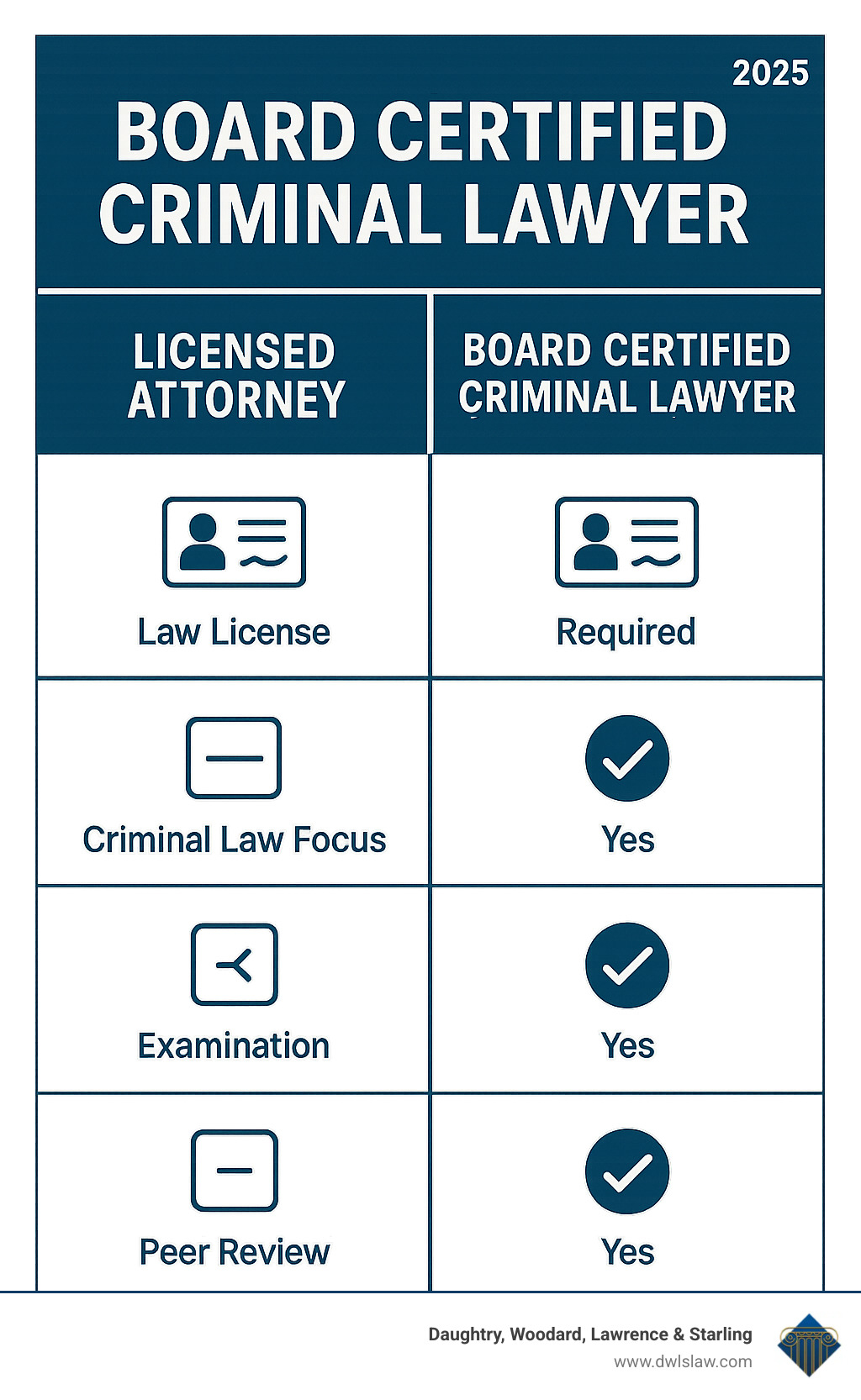
Becoming a board certified criminal lawyer demands far more than a law license. Candidates must log serious courtroom time, clear a challenging exam, and keep learning year after year.
Every attorney is licensed, but certification is a higher bar—think driver’s license versus NASCAR credentials. That helps explain why fewer than 100 lawyers in Ontario and only about 10 % of Texas criminal attorneys have earned the designation.
Board certified criminal lawyer: meaning & requirements
When you see this credential, you know the attorney has met these core benchmarks:
- 5–7 years of active criminal practice
- Documented jury-trial and courtroom experience
- Additional continuing legal education (often 10+ hours annually)
Certification process step-by-step
- Detailed application outlining criminal caseload
- Comprehensive written exam covering law, procedure, evidence, and ethics
- Peer and judicial references evaluating skill and professionalism
- Ethics and disciplinary screening
- Ongoing renewal with proof of CLE
Credentialing bodies in the U.S. and Canada
- United States: state bar programs such as the Texas Board of Legal Specialization and the National Board of Trial Advocacy.
- Canada: the Law Society of Ontario awards the “C.S.” designation in criminal law.
While details vary, each program insists on substantial experience, rigorous testing, and yearly compliance reporting.
Hiring, Verifying, and Working With a Board Certified Criminal Lawyers
When you’re facing criminal charges, choosing the right attorney can feel overwhelming. You’re dealing with stress, uncertainty, and the very real possibility that your future hangs in the balance. This is exactly when understanding the value of a board certified criminal lawyers becomes crucial.
The benefits to clients go far beyond impressive credentials on a wall. Board certification represents something tangible – proven competence that’s been tested, reviewed, and verified by the legal community itself. It’s like the difference between a mechanic who claims to fix transmissions and one who’s been certified by the manufacturer. Both might get the job done, but one has proven they know what they’re doing.
Why clients choose a Board certified criminal lawyers
Let’s be honest – when your freedom is on the line, you don’t want to be anyone’s learning experience. That’s why smart clients seek out board certified criminal lawyers who have already proven themselves in the courtroom.
Higher standards aren’t just marketing talk. Board certified attorneys must maintain strict professional standards that regular bar membership doesn’t require. They’ve been evaluated by judges and fellow attorneys who’ve seen their work firsthand. These aren’t self-proclaimed credentials – they’re peer-verified competence.
Proven courtroom skill makes all the difference. Certification requires substantial trial experience. These attorneys haven’t just read about criminal defense in law books – they’ve stood before juries, cross-examined witnesses, and steerd complex criminal procedures under pressure. When you’re facing charges for DWI, drug possession, or white-collar crimes, that real-world experience becomes invaluable.
Ongoing education keeps them sharp. Board certified attorneys must complete additional continuing legal education hours every year, staying current on new laws, defense strategies, and court decisions. Criminal law changes constantly, and certified attorneys are required to keep up.
At Daughtry, Woodard, Lawrence & Starling, we understand how important proven competence is in Criminal Defense. Our approach emphasizes the kind of thorough preparation and ongoing professional development that makes a real difference in case outcomes.
Reputation opens doors. Here’s something most people don’t realize – prosecutors and judges recognize board certification too. When a certified attorney walks into a courtroom, there’s an immediate level of professional respect that can translate into better negotiations and more favorable outcomes for clients.
The case types that certified attorneys handle typically span the full range of criminal matters. Whether it’s a first-time DWI or complex federal charges, their certification demonstrates competency across all areas of criminal defense practice.
How to confirm certification & find one
Verifying an attorney’s board certification is easier than you might think – and absolutely essential. Unfortunately, not every attorney who claims advanced credentials actually has them.
Start with state bar websites. Most states maintain searchable databases of board certified attorneys. These official sources are your best bet for accurate, up-to-date information. In Texas, the Texas Board of Legal Specialization website lists all certified attorneys. Ontario residents can check the Law Society of Ontario’s certified practitioner directory.
Go straight to the source. Contact the National Board of Trial Advocacy or relevant state organization directly. They can confirm not just certification status, but also whether the attorney is current on all requirements.
Ask direct questions during consultations. A truly certified attorney will be proud to discuss their credentials and provide verification information. If someone seems evasive about their certification details, that’s a red flag.
Look for specific certifications, not just memberships. Being a member of a criminal defense association is different from being board certified. Make sure you’re seeing actual certification, not just professional memberships.
Check that certifications are current. Board certification must be renewed regularly. An attorney who was certified five years ago but hasn’t maintained their status isn’t currently board certified.
When you’re dealing with specific charges like drug possession, having an attorney with verified credentials becomes even more important. Our guide on What should you expect from a possession charge? shows how experienced representation can make a significant difference in these cases.
What to ask before signing a retainer
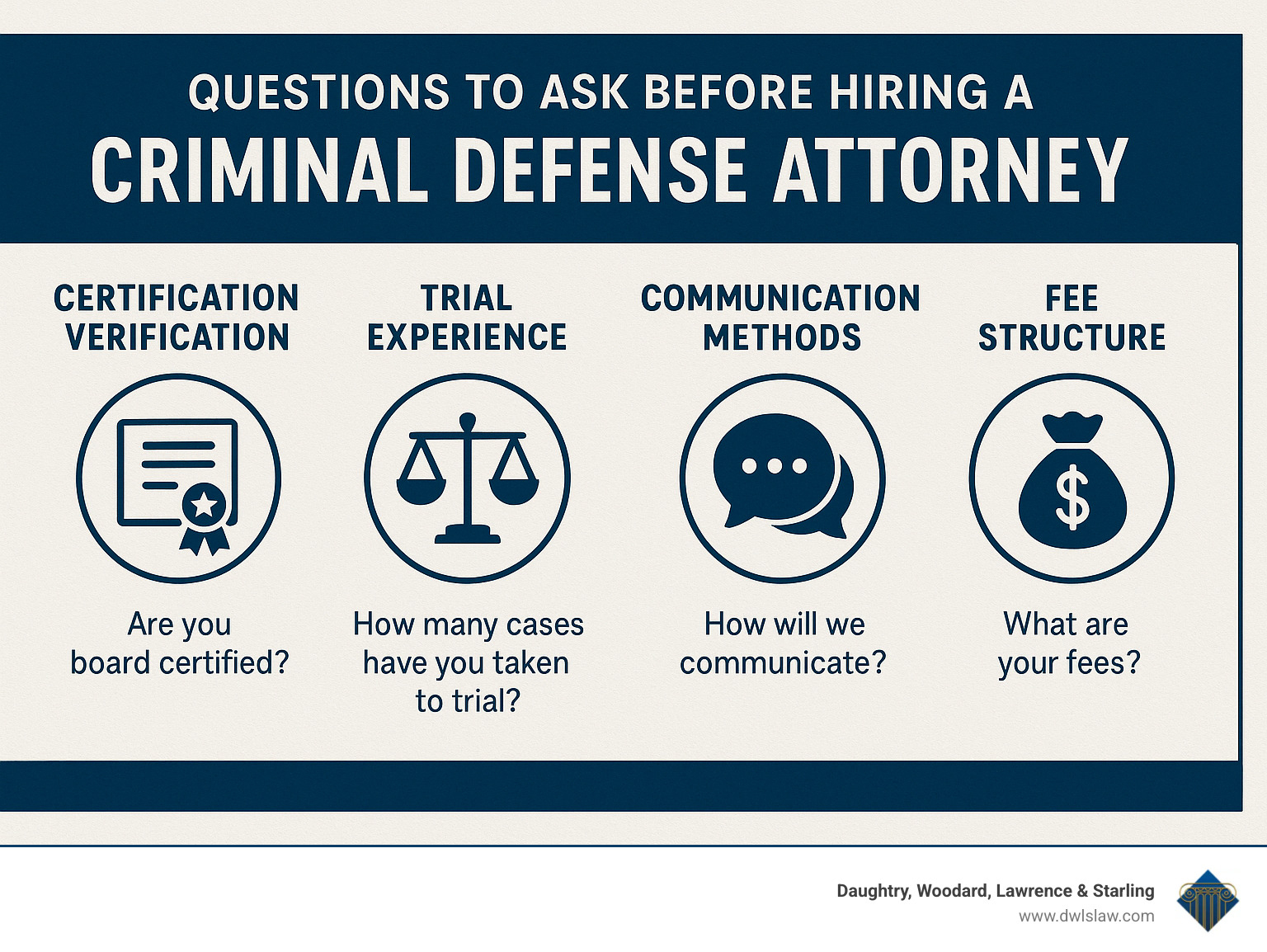
Before you hire any criminal defense attorney, you need to ask the right questions. Think of this as your interview process – after all, you’re hiring someone to protect your future.
Trial history tells the real story. Ask how many criminal jury trials they’ve handled and what percentage of their practice focuses on criminal defense. You want someone who lives and breathes criminal law, not someone who handles divorce cases on Monday and criminal cases on Tuesday. Find out about their recent case outcomes and whether they’ve handled cases similar to yours.
Certification details matter. If they claim board certification, ask when they received it and from which organization. Request verification information – a truly certified attorney will provide this without hesitation. Make sure they’re current on all continuing legal education requirements.
Peer feedback reveals character. Ask if they can provide references from judges or other attorneys. Find out about any professional recognition or awards they’ve received. Most importantly, confirm they’re in good standing with the bar association and haven’t faced disciplinary action.
Communication sets expectations. Discuss how they’ll keep you informed throughout your case. Find out who else in their firm might work on your matter and what their typical timeline looks like for case resolution.
Practical matters affect your experience. If you need bilingual support, make sure it’s available. Understand how they structure their fees and what additional costs you might face. Ask about payment plans if needed.
At Daughtry, Woodard, Lawrence & Starling, we believe in complete transparency from day one. Whether you need a DWI Lawyer or you’re facing other criminal charges, we answer all these questions honestly during our initial consultations.
Complex cases require extra attention. If you’re facing federal charges or white-collar crime allegations, board certification becomes even more valuable. These cases involve intricate legal issues and sophisticated prosecution strategies that demand advanced knowledge and proven experience.
Location considerations in North Carolina. In areas like Smithfield, Clinton, and Sampson County, finding a board certified criminal attorney might mean looking beyond your immediate area. However, the investment in certified representation often pays off in better outcomes and greater peace of mind.
Here’s the bottom line – criminal charges can change your life forever. A conviction can affect your job, your housing options, your professional licenses, and your personal relationships for years to come. When the stakes are this high, the extra assurance that comes with board certification isn’t just nice to have – it’s essential.
Board certification doesn’t guarantee you’ll win your case, but it does guarantee that your attorney has met objective standards for knowledge, experience, and professionalism. In a field where marketing claims are everywhere and credentials can be confusing, board certification cuts through the noise and gives you clarity.
Whether you’re facing your first criminal charge or dealing with complex federal allegations, understanding what board certification means helps you make informed decisions about your representation. The time you spend finding and hiring a board certified criminal lawyer could make the difference between conviction and dismissal, between jail time and probation, between a permanent criminal record and a fresh start.
If you’re facing criminal charges in North Carolina and want to discuss your case with attorneys who understand the value of proven credentials and ongoing professional development, we invite you to talk with our criminal defense team. Your future is too important to leave to chance – make sure you have the right representation from the very beginning.
Frequently Asked Questions
How does a lawyer become board certified in criminal law?
To become a board certified criminal lawyer, attorneys must meet minimum practice years, document extensive courtroom experience, pass a comprehensive written exam, undergo peer and judicial review, and complete annual continuing legal education.
Are board certified criminal lawyers more experienced in trials?
Yes. Certification requires significant jury trial and courtroom experience. A board certified criminal lawyer has demonstrated real-world competency handling criminal cases under pressure.
How can I verify if an attorney is truly board certified?
You can confirm a board certified criminal lawyer by checking your state bar’s certification directory, contacting organizations like the National Board of Trial Advocacy, or asking the attorney directly for verification details.
Do board certified criminal lawyers handle all types of criminal cases?
Most board certified attorneys handle a wide range of criminal matters, including DWI, drug possession, misdemeanors, felonies, and complex federal charges, demonstrating broad competency across criminal defense.
Does board certification guarantee a better outcome?
While board certification doesn’t guarantee a win, it does guarantee that the attorney has met objective standards for skill, ethics, and experience—often leading to stronger defense strategies and better case preparation.


