

The Gold Standard in Family Law Representation
When facing the emotional and financial complexities of divorce, having a board certified divorce lawyer by your side can make a significant difference in your case outcome. Board certification represents the highest level of professional recognition in specialized areas of law.
What is a Board Certified Divorce Lawyer?
- A lawyer who has demonstrated exceptional knowledge, experience, and skill in family law
- Has passed a rigorous specialized examination beyond the standard bar exam
- Maintains substantial involvement in family law cases (typically 15+ contested hearings annually)
- Has received positive peer and judicial references confirming their competence
- Completes significant continuing legal education in family law (typically 45+ hours every 3-5 years)
- Must recertify periodically (usually every 5 years) to maintain their specialist status
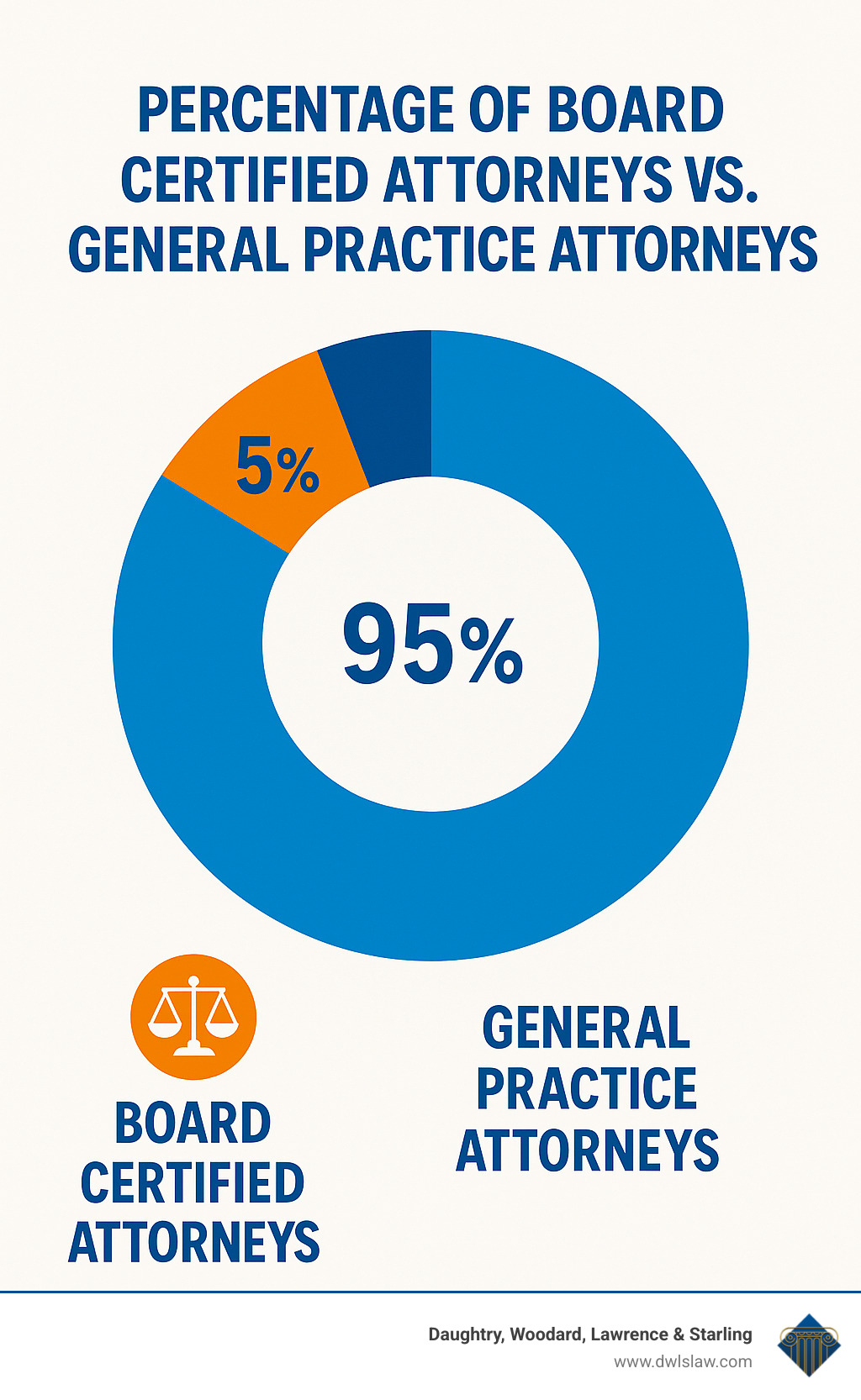
Only a small percentage of attorneys achieve board certification—in North Carolina, for example, just 3.9% of all attorneys are board certified specialists. This designation helps protect consumers from false advertising and ensures you’re working with a proven expert in divorce law.
Board certified divorce attorneys have demonstrated mastery in complex aspects of divorce including property division, alimony, child custody, and support issues. They bring specialized knowledge to negotiate settlements effectively and, when necessary, present compelling arguments in court.
My name is Kelly K. Daughtry, and as an attorney at Daughtry, Woodard, Lawrence & Starling, I’ve witnessed how working with a board certified divorce lawyer can transform the trajectory of complex family law cases through specialized expertise and strategic representation. Our firm has been serving North Carolina families since 1969, providing the comprehensive legal guidance needed during life’s most challenging transitions.

Key terms for Board certified divorce lawyer:
– Board certified family attorney
– Divorce Lawyer Clinton NC
What Is a Board Certified Divorce Lawyer?
When you’re facing a divorce, the difference between an average attorney and a board certified divorce lawyer can be significant. Think of this certification as the gold standard in family law—it’s a special designation that shows an attorney has gone the extra mile to master the complexities of divorce and family law.
Board certification isn’t just another certificate to hang on an office wall. It represents a lawyer’s commitment to excellence in family law and proves they’ve demonstrated specialized knowledge, substantial real-world experience, and exceptional skill in handling divorce matters. While general practice attorneys might dabble in various legal areas, board certified divorce lawyers focus primarily on family law, developing the deep expertise that complex divorce cases often require.
These prestigious certifications come from respected organizations including:
- The North Carolina State Bar Board of Legal Specialization
- The Texas Board of Legal Specialization
- The California Board of Legal Specialization
- The New Jersey Supreme Court Board on Attorney Certification
As the New Jersey Supreme Court Board thoughtfully puts it, certification serves as “a service to the public by providing information concerning attorneys who have demonstrated proficiency in specialized fields.” In other words, this certification helps you identify lawyers who have proven their expertise—not just claimed it.

Key Traits of a Board Certified Divorce Lawyer
What makes these specialists different? A board certified divorce lawyer stands out in several important ways:
They’ve conquered rigorous examinations that specifically test their knowledge of family law—covering everything from complex property division to child custody, support issues, tax implications, and ethical considerations. This isn’t your standard bar exam; it’s a specialized test that proves deep understanding of divorce law.
Experience matters tremendously in certification. These attorneys have handled a substantial number of family law cases. In New Jersey, for instance, attorneys must have led at least 15 contested matrimonial hearings per year over three years before they can even apply. This means your case isn’t their first rodeo—they’ve steerd similar situations many times before.
Their reputation speaks volumes. Certification requires positive evaluations from both judges and fellow attorneys who can vouch for the lawyer’s competence, ethics, and professionalism. This peer review ensures certified attorneys are respected within the legal community—something that often translates to more effective representation for you.
Ethical standards are non-negotiable. Board certified divorce lawyers must maintain spotless ethical records, as any history of disciplinary actions typically disqualifies an attorney from certification. You can trust that these professionals uphold the highest standards of conduct.
Their specialized knowledge extends to the most complex aspects of divorce, including business valuations, retirement account divisions, and interstate custody matters. This expertise often proves invaluable when navigating complicated financial situations or custody arrangements.
Perhaps most importantly, these attorneys never stop learning. Certified specialists complete significantly more continuing legal education in family law than is required of other attorneys, ensuring they stay current with evolving laws and procedures that might affect your case.
At Daughtry, Woodard, Lawrence & Starling, we understand that these qualities translate into more effective representation for our clients throughout Smithfield, Clinton, and Sampson County, NC. When your future is on the line, having a board certified divorce lawyer can make all the difference.
Certification Requirements at a Glance
Becoming a board certified divorce lawyer isn’t a simple process—it’s a journey that demonstrates an attorney’s commitment to excellence in family law. While requirements vary from state to state, the path always demands dedication, experience, and proven expertise.
Looking across the country, the certification standards maintain consistently high bars, though each state adds its own unique requirements:
| Requirement | North Carolina | Texas | New Jersey | California |
|---|---|---|---|---|
| Years in Practice | 5+ years | 5+ years | 5+ years | 5+ years |
| Substantial Involvement | Substantial experience in family law matters | 25% of practice devoted to family law | 15+ contested hearings per year for 3 years | 25% of practice devoted to family law |
| Trial Experience | Demonstrated trial experience | Handled 5+ contested family law trials | 5+ contested trials in 3 years | Demonstrated trial experience |
| CLE Hours | 36+ hours in family law within 3 years | 60+ hours in family law within 3 years | 45+ hours in family law within 3 years | 45+ hours in family law within 3 years |
| Peer References | 5+ references from attorneys/judges | 10+ references from attorneys/judges | 8+ references (3 judges, 5 attorneys) | References from attorneys/judges |
| Written Examination | Comprehensive exam | Comprehensive exam | Comprehensive exam | Comprehensive exam |
| Recertification | Every 5 years | Every 5 years | Every 5 years | Every 5 years |
New Jersey’s standards are particularly noteworthy, requiring attorneys to have handled at least 25 negotiated matrimonial judgments over a three-year period—on top of their contested hearing and trial requirements. This ensures that certified attorneys have experience with both settlement negotiations and courtroom advocacy.

The certification journey typically unfolds in six key steps. First, attorneys submit detailed applications documenting their experience and education. Next comes the documentation phase, where applicants provide evidence of their substantial involvement in family law cases. The third step involves collecting peer and judicial references who can speak to the attorney’s skills and ethics. Then comes the challenging written examination covering all aspects of family law. After the certification board reviews all materials, successful candidates finally receive their board certification status.
Ongoing Duties After Certification
Earning that certification plaque isn’t the end of the story—it’s just the beginning of a career-long commitment to excellence. Board certified divorce lawyers must continuously prove they deserve this distinction.
Recertification comes around every five years for most specialists. This isn’t just paperwork—it’s a comprehensive review ensuring attorneys continue meeting the high standards required for specialization. The ongoing education requirements are particularly demanding, with certified specialists completing substantially more family law continuing education than general practitioners. In New Jersey, for example, attorneys must complete 45 hours of matrimonial law CLE during each five-year certification period.
Board certified divorce lawyers must maintain spotless ethical records, promptly reporting any complaints or disciplinary actions that could affect their specialist status. They must also demonstrate ongoing substantial involvement in family law matters—certification isn’t for dabblers or part-time practitioners.
There are practical considerations too: annual fees to maintain the certification and the constant need to stay current with evolving family law statutes, regulations, and case precedents.
At Daughtry, Woodard, Lawrence & Starling, our Board Certified Family Attorney accepts these ongoing requirements not as burdens but as opportunities to provide our clients with the most knowledgeable, current, and effective representation possible. When family matters are at stake, we believe our clients deserve nothing less than an attorney who has proven their dedication to family law excellence.
The Board Certified Advantage: Why It Matters
When you’re facing a divorce, the attorney you choose can dramatically shape your future. A board certified divorce lawyer brings something special to the table – expertise that’s been verified, tested, and proven.

Think about what happens in the negotiation room. Board certified specialists have sat at that table hundreds of times before. They’ve seen the tactics, know the pressure points, and understand how to advocate for you without unnecessarily inflaming tensions. This expertise doesn’t just happen – it comes from handling case after case and developing a sixth sense for negotiation strategy.
When settlement talks break down, you’ll appreciate the courtroom confidence your certified attorney brings. They’re at home in front of the judge, familiar with local court procedures, and ready to present your case persuasively. There’s simply no substitute for this kind of trial experience.
Your attorney’s reputation matters too. Judges and opposing counsel often give additional weight to arguments made by board certified attorneys. This professional respect isn’t just about prestige – it can translate into real advantages for your case.
With a certified specialist, you’ll also benefit from greater efficiency. They don’t need to research basic family law concepts or learn procedures on your time. They already know the roadmap and can steer it efficiently, often saving you money in the long run despite potentially higher hourly rates.
Perhaps most valuable is the peace of mind that comes from knowing your future is in capable hands. During a divorce, when so much feels uncertain, this reassurance is priceless.
How a Board Certified Divorce Lawyer Safeguards Your Future
Divorce isn’t just about ending a marriage – it’s about building a foundation for what comes next. A board certified divorce lawyer helps protect that future in several crucial ways.
When it comes to dividing assets, precision matters. Certified specialists understand the complexities of property valuation – whether it’s a family business, retirement accounts, or investment portfolios. They ensure nothing falls through the cracks and that you receive your fair share.
For parents, nothing matters more than their children. Board certified attorneys develop thoughtful custody strategies that protect your parental rights while keeping your children’s best interests at the center. They understand what makes for enforceable parenting plans and how to steer the emotional terrain of custody negotiations.
The agreements your attorney drafts today will affect you for years to come. Certified specialists craft settlements with careful attention to detail, eliminating ambiguities that could spark future conflicts. They also consider the tax implications of different settlement structures – something easily overlooked by less experienced attorneys.
At Daughtry, Woodard, Lawrence & Starling, we see beyond the immediate divorce process to how these decisions will shape your life five, ten, or twenty years from now. We build protections into your agreements that anticipate potential changes in circumstances, helping you avoid returning to court for modifications later.
Cost vs. Value of Hiring a Board Certified Divorce Lawyer
Let’s talk honestly about money. Yes, a board certified divorce lawyer may charge more than a general practitioner. But focusing solely on hourly rates misses the bigger financial picture.
Consider the cost of mistakes. When inexperienced attorneys overlook important details, you might end up back in court trying to fix problems – paying twice for what should have been done right the first time. Certified specialists help you avoid these expensive errors.
The efficiency factor also matters. Board certified attorneys typically resolve cases more effectively because they know exactly what information is needed, what arguments work, and how to cut through complications. This expertise often means fewer billable hours overall, despite a higher hourly rate.
Then there’s the outcome itself. Even a small improvement in your property settlement can dwarf any difference in legal fees. For example, a certified specialist who secures an additional $20,000 in assets or negotiates a more favorable support arrangement provides value that far exceeds their fee premium.
Perhaps most significant is the long-term value. A properly drafted agreement by a certified specialist is less likely to require future litigation. This means you’re not just paying for today’s representation but also buying protection against tomorrow’s legal expenses.
When you work with us at Daughtry, Woodard, Lawrence & Starling, we view our relationship as a long-term investment in your future. We understand that the decisions made during your divorce will echo through your life for years to come, and we’re committed to getting those decisions right.
How to Verify and Find Your Board Certified Divorce Lawyer
Finding and verifying a board certified divorce lawyer is a straightforward process if you know where to look:
State Bar Association Directories: Most state bar associations maintain searchable directories of board certified specialists. For example, North Carolina residents can search the NC State Bar’s directory of board certified specialists.
Certification Board Websites: Organizations like the New Jersey Supreme Court Board on Attorney Certification provide resources to Find a Certified Attorney.
Legal Directories: Specialized legal directories like Lawyer Legion maintain a directory of board certified matrimonial law specialists in New Jersey and other states.
Certification Seals: Legitimate board certified attorneys typically display their certification seals on their websites and marketing materials. These seals should include the certifying organization and specialty area.
Direct Verification: You can contact the certifying board directly to verify an attorney’s certification status.
When interviewing potential divorce attorneys, don’t hesitate to ask about their certification status and experience. A board certified specialist should be able to clearly explain their credentials and how their specialized knowledge will benefit your case.
Board Certified Divorce Lawyer Search Checklist
Use this checklist when searching for a board certified divorce lawyer:
Verify Certification Status: Confirm the attorney’s board certification in family or matrimonial law through official sources.
Check Bar Standing: Ensure the attorney is in good standing with the state bar association with no disciplinary actions.
Review Experience: Ask about the attorney’s experience with cases similar to yours, particularly if you have complex financial issues, business interests, or challenging custody matters.
Assess Communication Style: Choose an attorney whose communication style matches your preferences. Even the most qualified attorney may not be right for you if their approach doesn’t align with your needs.
Evaluate Resources: Consider whether the attorney has adequate staff and resources to handle your case efficiently.
Read Client Reviews: Look for reviews or testimonials from former clients, particularly those with cases similar to yours.
Understand Fee Structure: Get clear information about how fees are structured and billed.
Consider Location: For convenience, consider attorneys like our Divorce Lawyer Clinton NC team who serve your local area.
Assess Comfort Level: Trust your instincts about whether you feel comfortable working closely with this attorney during a difficult personal transition.
Inquire About Approach: Ask about the attorney’s general approach to divorce cases—whether they favor negotiation, mediation, or litigation—and ensure it aligns with your goals.
Board certification is an important credential, but it’s also essential to find an attorney who understands your specific needs and with whom you can establish a good working relationship.
Conclusion
When life’s toughest transitions arrive, having a board certified divorce lawyer in your corner isn’t just a luxury—it’s a decision that can fundamentally reshape your future. The gold standard in family law representation doesn’t come easily; these attorneys have earned their credentials through years of focused practice, rigorous examination, and the respect of judges and peers alike.
Think of board certification as your assurance that the person guiding you through this challenging chapter has proven themselves at the highest levels of their profession. These specialists bring more than just legal knowledge—they offer strategic vision that comes only from handling hundreds of similar cases and understanding the nuances that can make or break a fair settlement.
The emotional weight of divorce is heavy enough without wondering if your legal representation is truly qualified. When you work with a board certified specialist, that uncertainty disappears. You gain a partner who can anticipate problems before they arise, steer complex financial divisions with precision, and craft custody arrangements that truly serve your children’s best interests.
While the initial investment in a board certified divorce lawyer may be higher than choosing a general practitioner, the long-term value often proves immeasurable. Properly structured settlements, accurately valued assets, and carefully drafted agreements can prevent years of costly post-divorce litigation and provide the stable foundation you need to rebuild.
At Daughtry, Woodard, Lawrence & Starling, we’ve witnessed countless times how specialized expertise transforms outcomes for our clients in Smithfield, Clinton, and throughout Sampson County. Our team approaches each case with both professional excellence and genuine compassion, recognizing that behind every legal matter is a family in transition.
The path forward after divorce should be clear and hopeful, not clouded by legal complications or unfair arrangements. Board certified specialists help ensure your agreements stand the test of time, allowing you to focus on healing and building your new life rather than returning repeatedly to court.
Whether your situation involves substantial assets, complex custody arrangements, or high-conflict dynamics, a board certified divorce lawyer brings the depth of knowledge needed to protect what matters most. The specialized training these attorneys receive in negotiation, litigation, and settlement strategies pays dividends in both immediate outcomes and long-term peace of mind.
For more information about how our board certified specialists can provide the strategic guidance you deserve during this challenging time, please visit our divorce lawyer information page. While divorce may be a common legal proceeding, your case is uniquely yours—and deserves the highest level of professional care and attention.
Frequently Asked Questions
What does the certification exam cover?
When attorneys pursue board certification in divorce and family law, they face a rigorous examination that truly separates the specialists from general practitioners. This comprehensive test dives deep into the complexities of family law – and it’s not for the faint of heart!
The exam thoroughly assesses knowledge across the entire spectrum of family law issues. Attorneys must demonstrate mastery of divorce procedures and grounds, child custody determinations, and the often-complicated calculations for child and spousal support. They’re tested on their ability to properly characterize property as separate or marital, accurately value assets (including tricky items like businesses), and understand the proper division of retirement accounts.
Perhaps most importantly, a board certified divorce lawyer must show they understand the tax implications that can make or break a settlement’s long-term value. The exam also covers prenuptial agreements, domestic violence protections, ethical considerations, and specialized procedural rules.
For families dealing with international or interstate custody matters, having an attorney who has proven their knowledge in these complex jurisdictional issues can be invaluable. The examination format typically blends multiple-choice questions with essay portions and practical scenarios that test an attorney’s analytical abilities – not just their memorization skills.
How often must certification be renewed?
Board certification isn’t a one-and-done achievement – it requires ongoing commitment to excellence. Typically, a board certified divorce lawyer must renew their certification every five years, ensuring they maintain the high standards that earned them the designation initially.
The recertification process is quite demanding. Attorneys must show they’ve remained actively involved in family law practice, often needing to document specific numbers of cases handled during the certification period. They must also complete substantial continuing education – usually 45-60 hours focused specifically on family law topics during those five years.
Peer and judicial references continue to play an important role, as the attorney must submit new references confirming their continued competence and professionalism. Of course, they must also maintain good standing with their state bar and pay any required recertification fees.
Some states take renewal even further, requiring recertifying attorneys to pass another examination or submit writing samples demonstrating their current knowledge. This rigorous renewal process gives clients confidence that their board certified divorce lawyer hasn’t just rested on past achievements but continues to sharpen their skills and stay current with evolving family law.
Can non-certified lawyers advertise as specialists?
The short answer is no – and for good reason. Most states have implemented strict regulations that prohibit attorneys from marketing themselves as “specialists” or “experts” in family law unless they’ve earned formal board certification from an authorized organization.
These rules protect you as a consumer from potentially misleading advertising. When you see an attorney claiming specialist status, you should be able to trust that this claim is backed by verified credentials and demonstrated expertise – not just marketing language.
Non-certified attorneys still have options, though. They can truthfully state that they “focus on” family law or that it constitutes a significant portion of their practice. They can list family law as a practice area without claiming specialized status. The key distinction is that terms like “specialist” and “expert” are reserved for those who have earned formal certification.
If you’re ever uncertain about an attorney’s claimed specialization, you can easily verify their status with your state’s legal specialization board or bar association. Any legitimate board certified divorce lawyer will be happy to provide proof of their certification upon request.
At Daughtry, Woodard, Lawrence & Starling, we believe transparency about qualifications builds trust with our clients. We encourage all prospective clients to verify the credentials of any attorney they’re considering for something as important as their divorce or family law matter.